The Best Houseplants for South-Facing Windows
A south-facing window (in the northern hemisphere) gets the most intense, direct sun of any exposure — often several hours of unfiltered light in the middle of the day. That’s a problem for a lot of common houseplants, which evolved under a forest canopy and scorch or bleach when pressed right up against that much heat and light. The plants below are different: they come from full-sun or desert-like conditions and can actually take direct sun on the glass itself, or need only a few feet of buffer from it. See how much light do houseplants need if you’re not sure how to judge what a given spot in your home is actually offering, or which window direction is best for houseplants for how all four exposures compare.
Succulents
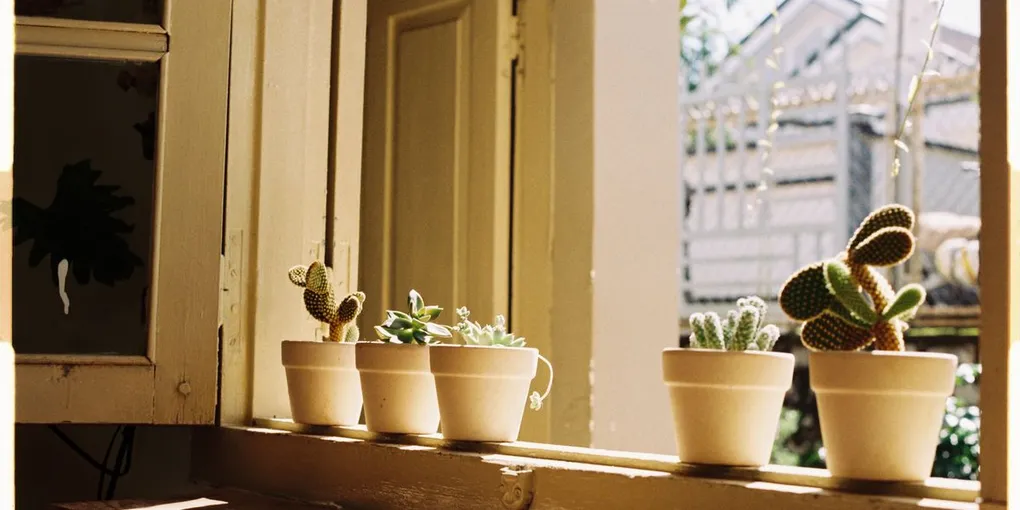
Most succulents are built for exactly this kind of light — thick, water-storing leaves evolved to handle intense sun without scorching the way a thinner tropical leaf would. A south-facing sill is one of the few indoor spots that can actually replicate the full sun a lot of succulents get outdoors, and many color up more vividly the more direct light they receive.
Aloe vera
Aloe vera wants as much direct sun as a south window can offer, especially in the cooler months. If it’s been growing in lower light and you move it into full sun, do it gradually — even sun-loving succulents can get a sunburned patch if they’re suddenly moved from shade into hours of unfiltered midday light.
String of pearls
The thin, round leaves of string of pearls store water like any other succulent, and the plant colors and trails best with strong, direct light. A hanging basket right in a south-facing window is one of the better spots in the house for it.
Pencil cactus
Pencil cactus is about as drought- and sun-tolerant as houseplants get, and its color — especially on the orange-red “firesticks” cultivar — only intensifies with more direct light. Just keep the caustic sap in mind when placing and pruning it near a busy window.
Fiddle leaf fig
Fiddle leaf fig wants bright light to keep its large leaves full and to avoid the leggy, sparse growth it’s prone to in dimmer rooms. A spot near, but not jammed against, a south-facing window — enough space that the leaves aren’t pressed to hot glass — tends to work better than deep shade elsewhere in the house.
Bird of paradise
Bird of paradise is one of the few common houseplants that genuinely wants hours of direct sun to grow full-sized leaves and, eventually, flower indoors. A south-facing window is usually the brightest spot most homes have to offer it.
Croton
Croton’s red, orange, and yellow leaf coloring depends directly on how much light it gets — in a dim room the color fades toward plain green, while strong direct sun keeps the pattern vivid. It’s a good pick for a bright window that a lot of other colorful foliage plants can’t handle.
Jade plant
Jade plant is a slow-growing succulent that holds up well to hours of direct sun and, with enough of it, develops a reddish tinge along the leaf edges. It’s a sturdy, forgiving choice for a hot windowsill that gets neglected on watering.
Ponytail palm
Ponytail palm stores water in its swollen, bulb-like base and handles bright, direct light without complaint. It’s a good option if you want something with more height and structure than a typical succulent in a sunny spot.
When a south window is still too much
Even sun-loving plants can get scorched if they’re moved into hours of direct summer sun too abruptly, or if the window has no sheer curtain to soften the most intense midday hours. If leaves start bleaching, browning at the tips, or developing dry, papery patches facing the glass, pulling the plant back a foot or two — rather than assuming it needs even more light — is usually the fix.