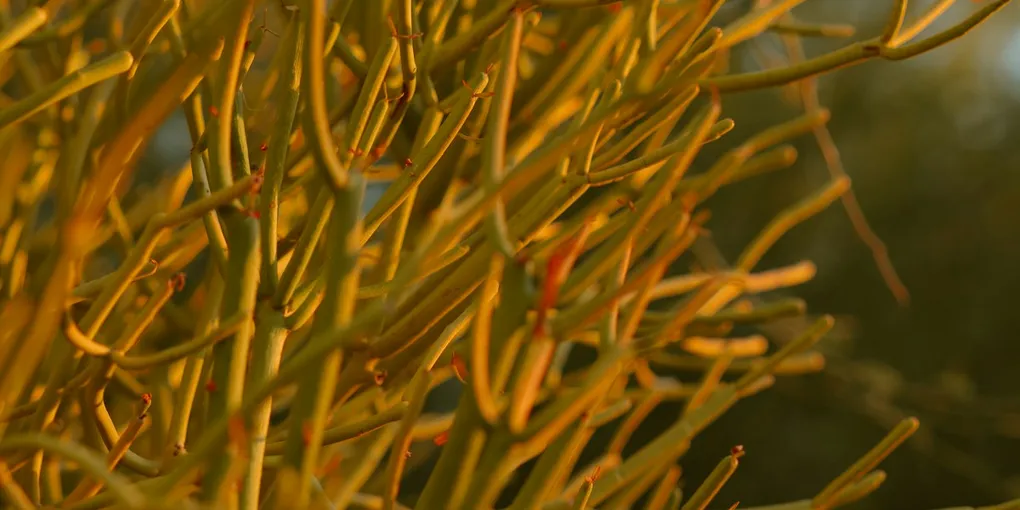
How to Care for a Pencil Cactus
Pencil cactus (Euphorbia tirucalli) isn’t a cactus at all — it’s a succulent euphorbia, made up of thin, branching, pencil-thick green stems instead of leaves. A popular orange-and-red cultivar sold as “firesticks” is the same plant, just bred for color. Either way, it’s one of the most drought-tolerant houseplants you can own, and also one of the few with sap dangerous enough that handling it deserves real caution, not a footnote.
Light
Give pencil cactus as much bright light as you can, ideally with several hours of direct sun from a south- or west-facing window. In strong light, the stems stay compact and the firesticks cultivar develops its best orange and red color. In low light, growth turns leggy and pale, and colored cultivars fade back toward plain green. If your space doesn’t get much direct sun, see how much light do houseplants need for how to judge whether a spot is bright enough, or supplement with a grow light.
Watering
Let the soil dry out completely between waterings, then water thoroughly and let it drain fully. Pencil cactus stores water in its stems and handles drought without complaint, so when in doubt, wait longer rather than watering again. It’s much less forgiving of the opposite mistake — soil that stays wet leads to root rot quickly, similar to an elephant bush or other succulents covered in how to care for succulents. Cut back watering further in winter when growth slows.
Soil and pot
Use a fast-draining cactus or succulent mix, or amend a standard potting mix with extra perlite or coarse sand — see the best soil mix for houseplants for ratios. A pot with a drainage hole is non-negotiable here; this plant’s roots rot fast in soil that holds moisture. Because pencil cactus can eventually grow tall and top-heavy, a wider or heavier pot helps keep it from tipping.
Toxicity
This is the single most important thing to know about pencil cactus. The milky white latex sap inside every stem is caustic — more so than the irritant sap of a crown of thorns or similar euphorbias. On skin it causes burning, redness, and blistering; in the eyes it can cause serious, sometimes lasting damage; swallowed, it causes severe mouth and throat irritation, vomiting, and stomach upset. Wear gloves and eye protection when pruning or propagating, work somewhere you can rinse off immediately, and keep the plant well out of reach of pets and small children — this is not a plant to grow around a curious cat or a toddler who pulls on leaves. If you want a spiny or architectural-looking plant without this level of risk, check pet-safe houseplants for cats and dogs instead.
Propagation
Pencil cactus propagates easily from stem cuttings, but the sap makes the process a little different from a typical cutting. Wear gloves, snip a 4-6 inch section, and immediately rinse the cut end under water to stop the sap flow. Then set the cutting aside somewhere dry for several days to a week so the cut end calluses over — skipping this step and potting a fresh, wet cut almost guarantees it rots before it roots. Once calloused, plant it in dry succulent mix and hold off on watering for another week or so. For the general technique this builds on, see how to propagate houseplants from cuttings.
Common problems
Leggy, sparse growth with long gaps between branches almost always means the plant isn’t getting enough light. Move it somewhere brighter; new growth will come in more compact.
Faded color on firesticks cultivars — a shift from orange/red back toward green — is the same low-light issue. More direct sun restores the color on new growth.
Shriveling or sudden branch drop usually signals stress from a big environmental change, such as a cold draft, a sudden move, or a temperature swing, rather than a watering problem outright. Check that the cause isn’t sitting in cold drafts near a door or window.
Soft, discolored stems at the base point to root rot from soil that’s stayed wet too long. Pull the plant, trim away mushy tissue with gloves on, let everything dry out, and repot into fresh, dry mix.