How to Care for a Ponytail Palm
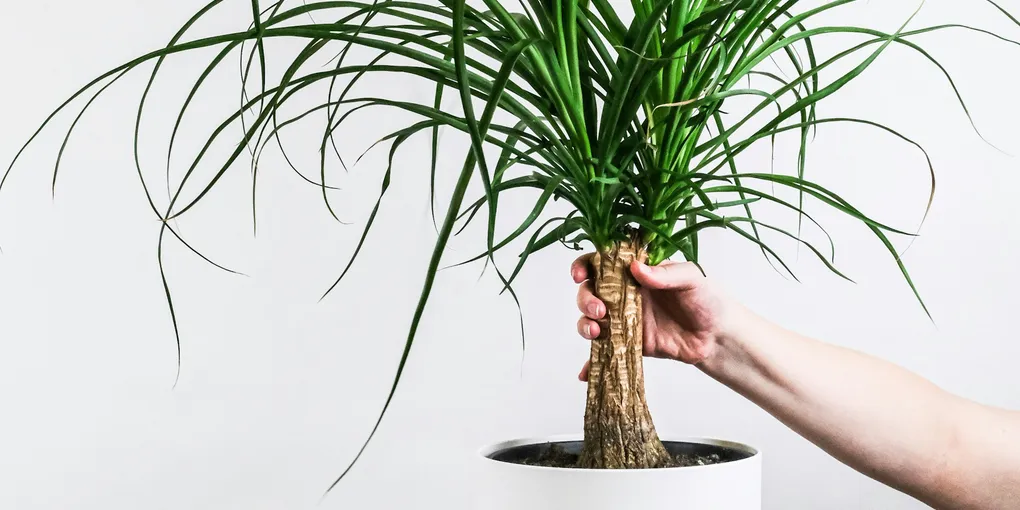
Ponytail palm (Beaucarnea recurvata) isn’t a palm at all. Despite the name and the fountain of long, curling leaves that make it look like a miniature palm tree, it’s actually a succulent in the Asparagaceae family, related to plants like the dracaena more than any true palm. The giveaway is the swollen, bulbous base of the trunk — that’s a caudex, a water-storing structure that lets the plant go a long time without watering. Once you treat it like the drought-tolerant succulent it is instead of a thirsty tropical, it’s one of the easiest houseplants you can own.
Light
Ponytail palm wants bright light and tolerates several hours of direct sun without complaint — a south- or west-facing window is ideal. It will survive in medium light, but growth slows down even further and the leaves can lose some of their rich color. If you don’t have a bright spot available, see how much light houseplants need to figure out what your space can realistically support, or consider whether a grow light is worth it.
Watering
This is where most ponytail palms get killed, and it’s almost always from too much water, not too little. The caudex is a built-in reservoir, so the plant needs the soil to dry out completely between waterings — treating it like a regular houseplant that wants consistent moisture is the single most common mistake owners make. Water thoroughly until it drains from the pot’s bottom, then leave it alone until the soil is bone dry all the way through, not just on the surface. In a bright spot during the growing season that might mean watering every 2-3 weeks; in winter, stretch it out even further, since the plant is barely growing and using almost no water. If you’re unsure whether a droopy or discolored leaf means you’ve under- or overdone it, overwatering vs. underwatering houseplants walks through how to tell the difference, and the same general watering logic in watering houseplants the right way applies here too, just stretched out over a much longer interval.
Soil and pot
Use a fast-draining cactus or succulent mix, never a standard moisture-retentive potting soil. Regular potting mix holds water around the caudex for too long, and a trunk that’s supposed to store water instead sits in it — a fast track to rot. If you want to build your own blend, see the best soil mix for houseplants for a base ratio and add extra perlite or coarse sand to make it drain even faster. A pot with a drainage hole is essential, and terracotta is a good choice since it wicks away excess moisture through its walls instead of trapping it against the roots. Ponytail palms also do fine somewhat pot-bound, so there’s no need to size up every year — a snug pot is easier to keep on the dry side than an oversized one.
Humidity
Unlike a lot of houseplants that fuss over dry indoor air, ponytail palm doesn’t care. It’s built for arid conditions and does perfectly well at normal household humidity levels, with no misting or humidifier required. If you’re focused on humidity-loving plants elsewhere in your collection, does misting houseplants increase humidity is worth a read, but you can skip that entire category of worry with this one.
Toxicity
Ponytail palm is non-toxic to cats and dogs, which makes it a solid pick if you have pets that like to nibble on leaves. For more low-risk options, see pet-safe houseplants for cats and dogs.
Common problems
Soft, mushy, or discolored trunk is the most serious sign of trouble and usually means root rot from overwatering — the caudex should feel firm, not squishy. Stop watering immediately, pull the plant to check the roots, and repot into fresh, dry succulent mix if the rot is caught early. See how to identify and fix root rot for the full process.
Brown leaf tips are common and usually come from either the soil drying out a bit too long between waterings, or from fluoride and mineral buildup from tap water, which ponytail palm can be sensitive to. Watering with filtered or distilled water helps if tips keep browning even on a reasonable watering schedule — see best water for houseplants for more on which water sources cause this.
Slow growth is completely normal. Ponytail palm is a slow grower even in ideal conditions, and it can take years to add noticeable height. That’s not a sign something’s wrong — it’s just how the plant is built, and part of why the trunk gets more impressive with age rather than the leaves getting more numerous.
Yellowing leaves, especially lower or older ones, can be a natural part of leaf turnover, but widespread yellowing usually points back to watering issues. Check why are my plant’s leaves turning yellow if it’s happening across more than the oldest leaves.