How to Care for a Croton
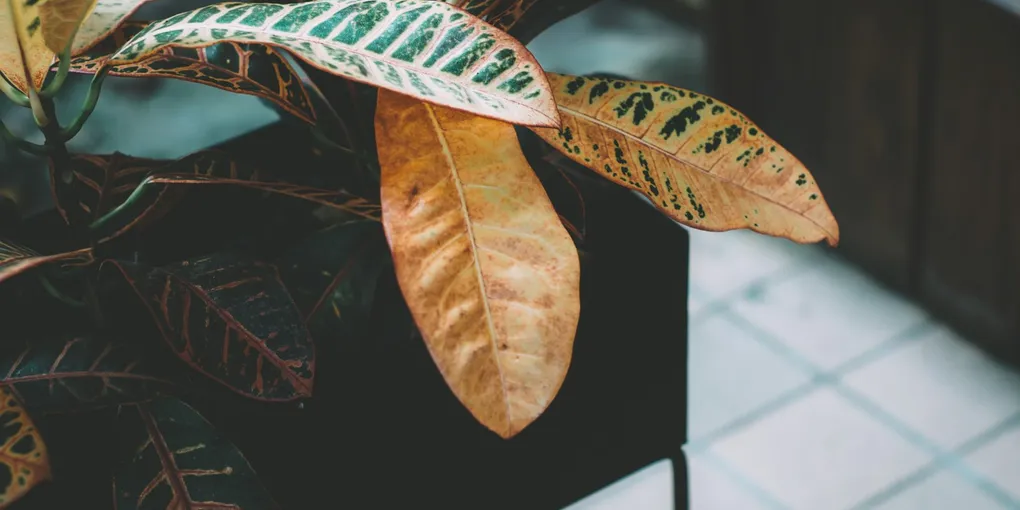
Croton (Codiaeum variegatum) is grown for one thing: leaf color. Red, orange, yellow, and green often show up on the same plant, sometimes on the same leaf, and no two crotons look quite alike. The color is also the source of most croton complaints, because it’s directly tied to light, and the plant has an infamous habit of dropping leaves the moment it changes location. Neither problem is hard to manage once you know what’s driving it.
Light
Croton needs bright light to hold its color. Give it direct sun for at least a few hours a day — an unobstructed south- or west-facing window is ideal. In lower light, new leaves come in mostly green instead of the red and orange the plant is known for, and existing color can fade over time. If you’re not getting the saturated color you expected, light is almost always the reason, not the variety or the soil.
That said, don’t jump straight from a dim spot to harsh all-day sun. Increase light gradually over a week or two, the same way you’d acclimate any new houseplant — croton leaves can scorch if they’re moved into intense direct sun too abruptly.
Watering
Water when the top inch of soil is dry, and don’t let croton sit completely bone-dry for long stretches. It’s less forgiving of drought than a lot of common houseplants and will drop leaves as a stress response to both under- and overwatering. Water thoroughly until it runs from the drainage hole, then let the excess drain away completely — croton hates wet feet as much as it hates drying out. If you’re unsure whether a droopy, dropping plant is thirsty or drowning, overwatering vs. underwatering walks through the tells side by side.
Soil and pot
Use a well-draining potting mix and a pot with a drainage hole, non-negotiable. A standard mix cut with some perlite works well. Croton roots that sit in soggy soil are prone to rot, and a plant already stressed by root rot will drop leaves on top of whatever else is going wrong, which makes diagnosis confusing. Repot only when it’s actually rootbound — croton doesn’t love being disturbed, so don’t size up the pot more than an inch or two at a time.
Humidity
Croton prefers moderate to high humidity and can get crispy brown leaf edges in dry indoor air, especially in winter when heating runs constantly. Misting helps a little but doesn’t last; a humidifier or a pebble tray under the pot makes a bigger difference. See how to increase humidity for houseplants for setups that actually move the needle instead of just misting and hoping.
Why crotons drop leaves after a move
This is the single most common croton question, and it has a simple explanation: croton is unusually sensitive to any change in its environment, and it responds to that stress by shedding leaves. A new plant brought home from the nursery, a plant moved to a new room, or even one rotated to face a different direction can drop a meaningful number of leaves within days.
What’s happening is acclimation shock. The plant grew accustomed to a specific level of light, humidity, and airflow wherever it was before, and a sudden change in any of those disrupts it enough that it sheds leaves it can’t currently support. This is a stress response, not a sign the plant is dying, and it’s the same underlying mechanism covered in how to acclimate a new houseplant — croton just reacts to it more visibly and more dramatically than most.
The leaf drop usually stops on its own within a few weeks once the plant adjusts to its new spot. Don’t respond by moving it again to “fix” it, and don’t overcorrect with extra water or fertilizer — that adds a second stressor on top of the first. Keep the light, watering, and location as stable and consistent as you can, and resist the urge to move the pot around while it settles in. New growth coming in is the sign it has stabilized.
Toxicity
Croton is toxic to cats and dogs, and the milky white sap that leaks from broken stems or leaves is a skin and mouth irritant on top of the plant’s toxicity. Keep it away from pets that chew on leaves, and wear gloves if you’re pruning or propagating one, since the sap can irritate human skin too. If pets are a bigger concern than the color payoff, a browse through pet-safe houseplants for cats and dogs is worth it before you commit to a croton.
Common problems
Sudden leaf drop is almost always the relocation stress described above. Check that nothing else changed at the same time — a draft from an AC vent or door, a sudden temperature swing, or a big change in watering habits can compound it.
Leaves losing their color and coming in mostly green means the plant needs more light. Move it closer to a window or into a brighter room; the color on new growth will improve within a few weeks.
Crispy, browning leaf edges point to low humidity, especially if it’s paired with dry indoor heating in winter. See winter houseplant care for other seasonal adjustments worth making at the same time.
Yellowing lower leaves with soft, mushy stems signal overwatering and possible root rot. Pull the plant and check the roots if you suspect this — how to identify and fix root rot covers what healthy roots should look like versus what to cut away.