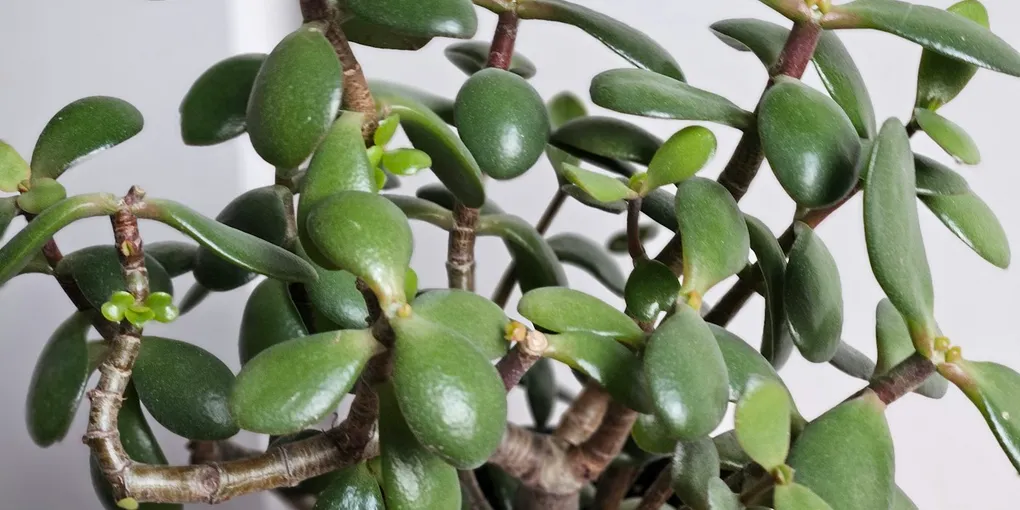
How to Care for a Jade Plant
Jade plant (Crassula ovata) is the thick-stemmed, round-leaved succulent people gift as a “lucky plant” or friendship tree — and it’s a fitting gift, since a well-cared-for jade can live for decades, slowly building the woody, branching structure of a miniature tree. Some owners even prune and train theirs into a bonsai shape. None of that longevity requires much fuss. Jade is a succulent through and through, and it wants to be left alone more than it wants to be tended.
Light
Jade needs bright light, ideally several hours of direct or near-direct sun — a south- or west-facing window is the best spot indoors. Without enough light, the plant doesn’t just grow slowly; it gets leggy and stretched, with long gaps of bare stem between leaves instead of the tight, compact, tree-like form most people are going for. If your jade looks sparse or floppy rather than dense, more light is almost always the fix. Moving a jade outdoors for summer sun is fine and often produces the best growth of the year, but acclimate it gradually — a plant used to indoor light can get sunburned and scarred if it’s moved straight into full afternoon sun.
Watering
Jade follows the classic succulent rule: let the soil dry out completely, then water thoroughly and let it drain. Don’t sprinkle a little water on a regular schedule — soak it, then leave it alone until the soil is bone dry again. Cut back even further in winter, when the plant is semi-dormant and using very little water. Overwatering causes far more jade plant deaths than underwatering does — leaves turn mushy and start dropping, and the roots rot in soil that stays wet. If that’s already happening, see how to identify and fix root rot for how to catch it early and what to do next.
Soil and pot
Use a fast-draining cactus or succulent mix, not a standard moisture-retentive potting mix — jade roots sitting in damp, dense soil is a rot problem waiting to happen. A drainage hole in the pot is non-negotiable. It’s also worth choosing a heavier pot, like terracotta or ceramic, once your jade matures — the thick, woody stems put on real weight over the years, and a top-heavy plant in a light plastic pot can tip right over.
Propagation
Jade is about as easy to propagate as houseplants get. Take a single leaf or a stem cutting, and let the cut end callous over for a couple of days in a dry spot before doing anything else. Then set it on top of, or just barely into, dry succulent soil — no water needed at first. Roots will form on their own, and you only start misting lightly once you see new growth. That’s even less effort than the typical water-rooting method described in how to propagate houseplants from cuttings, since jade cuttings root without sitting in liquid at all.
Toxicity
Jade plant is mildly toxic to cats and dogs if ingested, and can cause vomiting, incoordination, or a slowed heart rate. If pets in your home like to chew on leaves, keep jade out of reach or browse pet-safe houseplants for cats and dogs for safer options.
Common problems
Shriveled, wrinkled leaves mean the plant is underwatered. Give the soil a thorough soak — the leaves should plump back up within a day or two once the roots take up water.
Soft, mushy, translucent leaves that drop easily are a sign of overwatering or root rot. Pull back on watering right away and check that the soil and pot are actually draining as they should.
Leggy growth with sparse, widely spaced leaves means the plant isn’t getting enough direct light. Move it to a brighter spot, and new growth will come in tighter and more compact.