How to Care for a String of Pearls
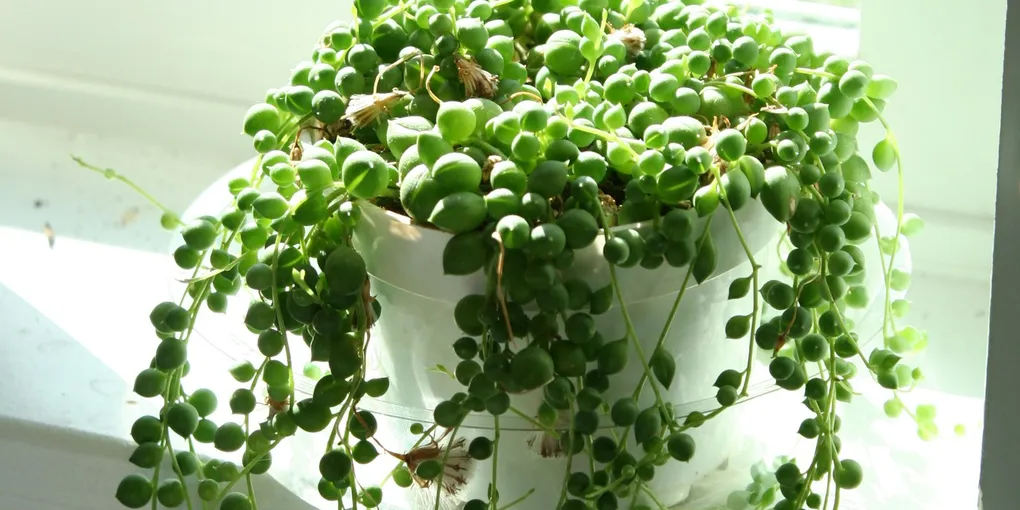
String of pearls (Senecio rowleyanus, recently reclassified as Curio rowleyanus) is a trailing succulent named for its stems of small, round, bead-like leaves that cascade over the edge of a pot like a strand of green pearls. Those spheres aren’t just decorative — they’re water-storage organs, which makes this plant behave much more like a cactus than a typical trailing houseplant. Most string of pearls problems come from treating it like a leafy vine instead of the drought-adapted succulent it actually is.
Light
String of pearls wants bright light, including a few hours of direct sun if you can give it. A south- or west-facing window is ideal indoors. In lower light the plant survives but stretches: the pearls grow smaller and more widely spaced along the stem instead of packed in tight, and new growth reaches thin and pale toward the light source. That’s etiolation, the same stretching response that affects other sun-loving succulents — more light, not fertilizer or water, is the fix.
Watering
Each pearl is a tiny water reservoir, so this plant is built to go a long time between waterings. Let the soil dry out completely — not just the surface, but a couple of inches down — before you water again, then soak it thoroughly and let it drain fully. In a bright spot during the growing season that’s often every 2-3 weeks; in winter, when growth slows, stretch it out even further. This is the same soak-and-dry approach used for succulents in general, and it’s the opposite of the little-and-often habit that works for moisture-loving houseplants — see watering houseplants the right way if you’re used to watering on a fixed schedule. Overwatering is by far the more common killer: pearls sitting in constantly damp soil turn soft, mushy, and split open, and the roots rot quickly in soil that doesn’t dry out.
Soil and pot
Plant string of pearls in a fast-draining cactus or succulent mix, never a standard moisture-retentive potting soil. A pot with a drainage hole is essential — without one, water has nowhere to go and the roots sit wet. Terracotta is a good choice because it wicks away excess moisture through its walls, which helps compensate for a slightly heavy hand with the watering can. Because the plant trails rather than growing upright, a hanging basket or a pot set on a shelf or ledge works better than a tall floor pot — it lets the strands cascade down instead of pooling on the soil surface, where they’re more prone to rot from contact with damp dirt. Size the pot only slightly larger than the root ball, and repot every couple of years at most — string of pearls does fine a little snug.
Propagation
String of pearls is easy to propagate from stem cuttings, and it’s the fastest way to fill out a sparse pot or replace a leggy one. Snip a few inches of healthy stem, let the cut end callous over for a day, then lay the cutting flat across the surface of dry succulent soil — you don’t need to bury it, since roots form along the stem wherever it touches soil. Mist lightly every few days until you see new growth, then taper off to a normal succulent watering routine. This surface-laying method is a variation on the general approach in how to propagate houseplants from cuttings, adapted for a plant that roots along its stem rather than just at a single cut end.
Toxicity
String of pearls is toxic to cats and dogs (and mildly irritating to people) — the ASPCA toxic and non-toxic plants database lists it as toxic — containing compounds that can cause vomiting, drooling, and skin or mouth irritation if chewed or ingested. Hang it well out of reach of curious pets, or check pet-safe houseplants for cats and dogs for trailing alternatives that are safer around animals.
Common problems
Shriveled, flat, or wrinkled pearls mean the plant is underwatered and drawing down its stored reserves. Give the soil a thorough soak — the pearls should plump back up within a day or two.
Soft, mushy, or translucent pearls that split or fall off in clumps point to overwatering or root rot. Stop watering, check that the pot and soil are actually draining, and let it dry out fully before watering again. If the stems near the soil are black and mushy, see how to identify and fix root rot.
Thin stems with small, widely spaced pearls, stretching toward the window is legginess from too little light. Move the plant somewhere brighter — new growth will come in fuller and more tightly packed, though older stretched growth won’t correct itself and is best trimmed back or used for propagation.