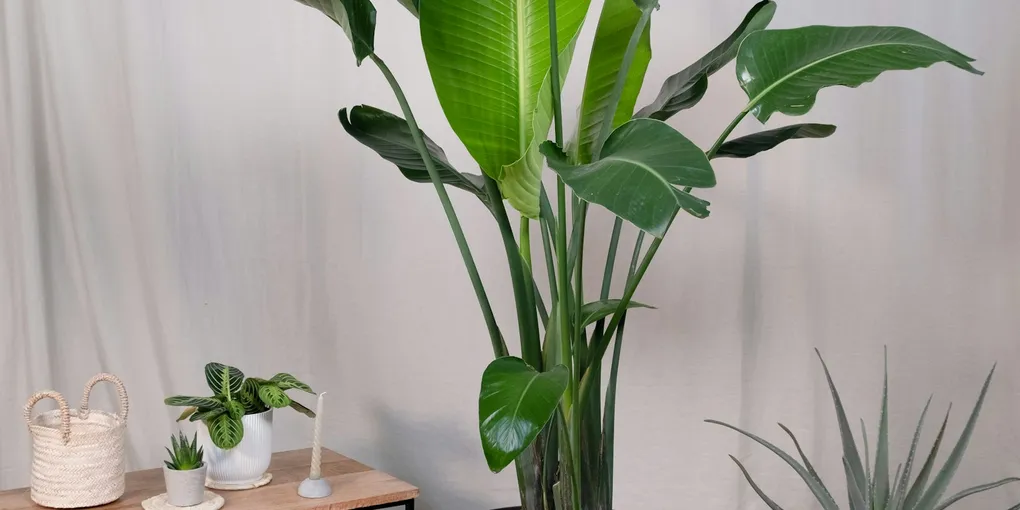
How to Care for a Bird of Paradise
The bird of paradise most people grow indoors is Strelitzia nicolai, the white bird of paradise — a big, architectural plant with paddle-shaped leaves that can eventually reach the ceiling in the right spot. It’s sold as a statement plant for a reason: nothing else on a windowsill makes this kind of impact. But it’s also one of the more demanding houseplants on this site, mostly because of how much light it wants. Get that right and the rest of the care is fairly straightforward.
Light
This is the one non-negotiable. Bird of paradise needs bright light, and it needs a lot more of it than the typical houseplant — several hours of direct or near-direct sun a day, ideally in front of an unobstructed south- or west-facing window. Compare that to something like a pothos or philodendron, which tolerate medium light without complaint; a bird of paradise in that same spot will survive but won’t thrive. It’ll hold on, sit there, and refuse to put out new growth.
If you don’t have a bright, sunny window, this isn’t the plant to force into a dim corner. Check how much light your houseplants actually need before you buy one, and if your home runs low-light, a grow light can make the difference between a plant that limps along and one that actually grows.
Watering
Water when the top 2 inches of soil have dried out, then water thoroughly until it runs out the drainage hole. During active growth in spring and summer this might mean watering every week to ten days; in winter, when growth slows, it can stretch to every two or three weeks. Always check the soil rather than watching the calendar — see watering houseplants the right way for the general method. Bird of paradise doesn’t like sitting in soggy soil, but it also doesn’t want to dry out completely for long stretches, especially in bright light where it’s using water faster.
Soil and pot
Use a well-draining potting mix with some chunky material worked in — perlite or orchid bark help keep it from staying wet. See the best soil mix for houseplants for a mix that works well here. A pot with a drainage hole is essential. Because these plants get large and top-heavy, choose a sturdy, wide-based pot that won’t tip over as the plant grows, and don’t size up the pot too aggressively — see how to choose the right pot size. Bird of paradise actually does fine being slightly rootbound and only needs repotting every couple of years.
Humidity
Average household humidity is fine for most of the plant’s needs, but it appreciates more humidity than that if you can offer it — it’ll reward you with larger, less crispy-edged leaves. If your home runs dry, especially in winter with the heat on, see how to increase humidity for houseplants. This isn’t as critical as the light requirement, but it helps.
Why the leaves split
New owners often panic the first time a leaf tears, assuming they’ve damaged the plant or that pests are involved. They haven’t. Splitting — technically called fenestration — is completely normal and happens on its own as leaves mature, especially on larger, older leaves that catch more wind or brushing contact. The splits let air move through the leaf instead of the whole thing acting like a sail, which is thought to help the plant handle wind and heavy rain in its native habitat. Indoors, where there’s no wind to speak of, the splits still show up simply because that’s how the leaf is built to mature. There’s nothing to fix here — a torn leaf is not a sick leaf.
Size and growth expectations
Indoors, a white bird of paradise can realistically reach 6 to 8 feet or more given enough light and time, with individual leaves 2 feet or longer. It’s a slow grower for the first year or two after being repotted or brought home, then picks up speed once it’s settled in and rooted into its pot. One thing to set expectations on: it rarely flowers indoors. The dramatic orange-and-blue bird-shaped blooms that give the plant its name typically need more light and more maturity than most houseplants get inside a home — some indoor plants never flower at all. Grow it for the leaves, not the flowers, and treat a bloom as a bonus if it ever happens.
Toxicity
Bird of paradise is mildly toxic to cats and dogs if chewed or ingested — it can cause nausea, vomiting, and drowsiness. It’s not typically severe, but it’s worth keeping in mind if you have pets that like to chew on leaves. For a fuller list of options, see pet-safe houseplants for cats and dogs.
Common problems
No new growth for months almost always comes back to light. If the plant isn’t getting several hours of bright, direct-ish sun, it will simply stall rather than struggle visibly. Moving it to a brighter window is the fix more often than anything you’d do to the soil or water.
Brown, crispy leaf edges usually point to low humidity, underwatering, or a buildup of mineral salts from tap water. Check your watering consistency first, then consider what water you’re using if the problem persists.
Yellowing lower leaves can be normal as older leaves are shed to make way for new growth, but if several leaves yellow at once it’s often overwatering. See why plant leaves turn yellow to sort out which cause fits your situation.
Leaves splitting — see above. This is not a problem at all, just the plant’s normal growth pattern.