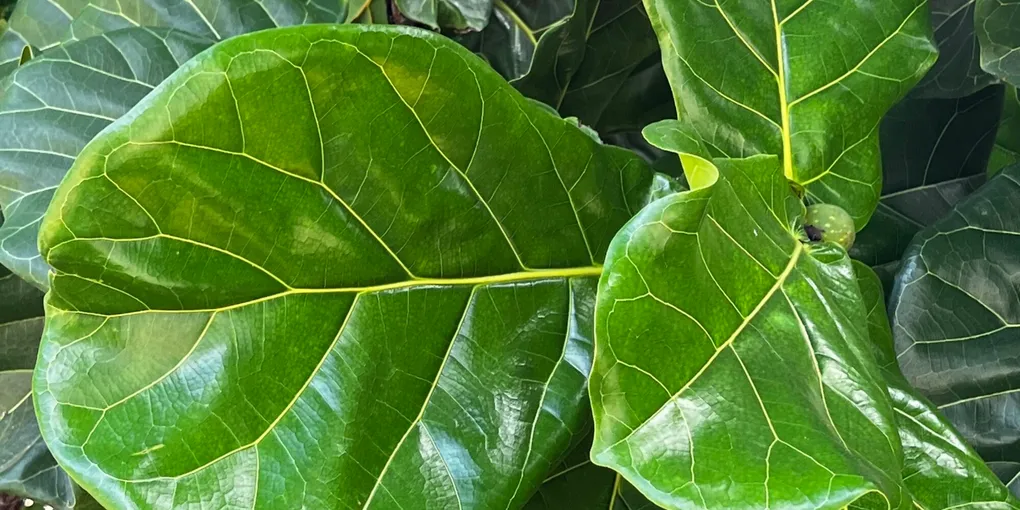
How to Care for a Fiddle Leaf Fig
Fiddle leaf figs (Ficus lyrata) have a reputation for being fussy, and it’s earned. This isn’t a plant that forgives neglect the way a pothos does, and it isn’t shy about telling you something’s wrong — usually by dropping leaves or growing a brown spot right where you’ll notice it. None of that means it’s a bad choice. It means you should go in with accurate expectations instead of the Instagram version.
Light
Fiddle leaf figs want bright, indirect light — as close to a large, unobstructed window as you can get without direct sun scorching the leaves for hours a day. In anything dimmer, growth turns sparse and leggy, and new leaves come in smaller than the ones below them.
Pick a spot and leave it there
This is the part people underestimate. Fiddle leaf figs dislike being moved, rotated suddenly, or shuffled between rooms, and they’ll often respond to the disruption by dropping leaves — even if the new spot is objectively fine. Choose a location with good light and stable temperature, then resist the urge to keep adjusting it. A little rotation every few weeks to even out growth is fine; dragging it around the house every time you rearrange furniture is not.
Watering
Check the top 2 inches of soil before watering, and water only when it’s dry to that depth. Fiddle leaf figs punish both extremes — soggy soil leads to root rot, and letting the plant dry out completely leads to crispy, dropped leaves. What matters more than hitting a “perfect” schedule is consistency: erratic watering, where the plant swings between bone-dry and soaked, causes more damage than a steady routine that’s slightly off-ideal. For the general method, see watering houseplants the right way.
Humidity
These plants come from tropical West African forests and appreciate more humidity than the average living room provides. You don’t need a rainforest in your house, but if the air is very dry — especially in winter with the heat running — expect crispier edges than you’d otherwise see. Increasing humidity around the plant helps, but it’s a secondary fix; get the light and watering right first.
Pot size
Don’t jump to a pot much bigger than the one it’s already in. A fiddle leaf fig’s roots need to fill the soil around them reasonably well; an oversized pot holds excess moisture far longer than the roots can use it, which sets up exactly the overwatering problem this plant is least tolerant of. Go up one size at a time. See how to choose the right pot size if you’re not sure what that looks like in practice.
Common problems
Brown spots or edges usually come down to inconsistent watering, low humidity, or too much direct sun hitting the leaves for part of the day. Check which of the three has changed recently before assuming it’s something more serious.
Leaf drop is most often shock — from being moved, rotated too aggressively, sat near a cold draft or an AC vent, or overwatered. A fiddle leaf fig that drops a leaf or two occasionally as it grows is normal; losing several at once means something in its environment changed.
Dust on the leaves matters more here than on smaller-leaved plants, simply because there’s so much surface area to collect it. A dust layer blocks light the plant is already working hard to use, and it gives pests a place to hide undetected. See how to clean houseplant leaves for the right method.