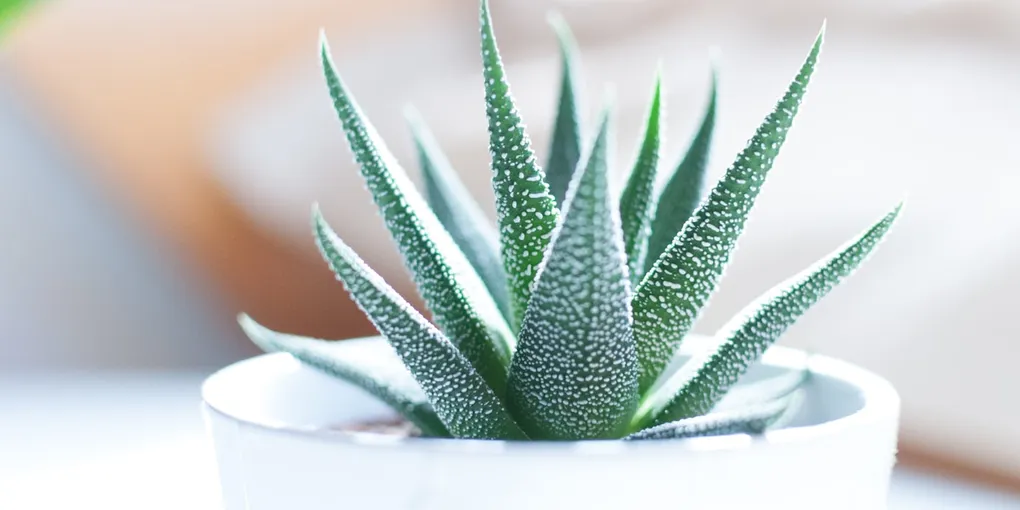
How to Care for an Aloe Vera Plant
Aloe vera is the succulent everyone recognizes for its thick, gel-filled leaves — the same gel people snap off a leaf tip to soothe a sunburn. But that gel-storing structure is exactly why aloe needs a fundamentally different care approach than a tropical foliage plant. It’s built to survive drought, not steady moisture, so it behaves a lot more like a cactus than like a pothos or philodendron.
Light
Aloe wants bright light, and it’s one of the few common houseplants that genuinely benefits from some direct sun — a south- or west-facing window is ideal. Without enough light, the plant doesn’t just grow slowly; it gets “etiolated,” stretching its leaves thin and pale as it reaches toward whatever light source it can find, instead of staying compact and plump. If your aloe looks stringy or washed out rather than thick and firm, the fix is almost always more light, not more water.
Watering
Overwatering is the single biggest killer of aloe plants. Let the soil dry out completely before watering again, then soak it thoroughly so water reaches the whole root ball. In winter, when growth slows way down, cut back watering even further — the plant simply doesn’t use much water during this period, and soil that stays damp for weeks has nowhere good to go. If you notice leaves turning mushy, translucent, or blackened at the base, that’s rot from too much water, not a sign the plant is thirsty. For more on diagnosing that specific failure mode, see how to identify and fix root rot.
Soil and pot
Standard potting mix holds far too much moisture for aloe — use a fast-draining cactus or succulent mix instead. If you want to blend your own, see the best soil mix for houseplants for a starting ratio you can adjust with extra perlite or coarse sand for aloe specifically. A terracotta pot is a good match here too, since the porous material lets excess moisture evaporate through the sides instead of staying trapped against the roots. Whatever pot you use, a drainage hole isn’t optional — without one, even a good soil mix will eventually stay too wet.
Propagation
Mature aloe plants send up “pups” — small offsets that grow from the base of the parent plant. Once a pup has developed its own small root system, you can separate it with a clean cut close to the parent’s stem. Before potting it up, let the cut end callous over for a day or two in a dry, open spot. Potting a fresh, wet cut directly into soil is a common way to introduce rot before the new plant has even gotten started.
Toxicity
Aloe vera is mildly toxic to cats and dogs if ingested, and can cause vomiting or diarrhea — this is separate from the topical gel, which is generally used safely on skin. If you have pets that like to chew on leaves, keep aloe out of reach or choose from pet-safe houseplants for cats and dogs instead.
Common problems
Mushy or translucent leaves are the classic aloe problem, and they mean overwatering or root rot, not a plant that needs more water. Pull back on watering frequency immediately and check that the soil and pot are actually draining.
Thin, stretched-out growth leaning toward a window means the plant isn’t getting enough light. Move it somewhere brighter — ideally with some direct sun — and new growth will come in more compact.
Brown leaf tips are usually caused by underwatering or too much fertilizer applied directly to the plant, though this is far less common than the overwatering issues above. If you’re seeing broader yellowing rather than just tip browning, see why are my plant’s leaves turning yellow for other possible causes.