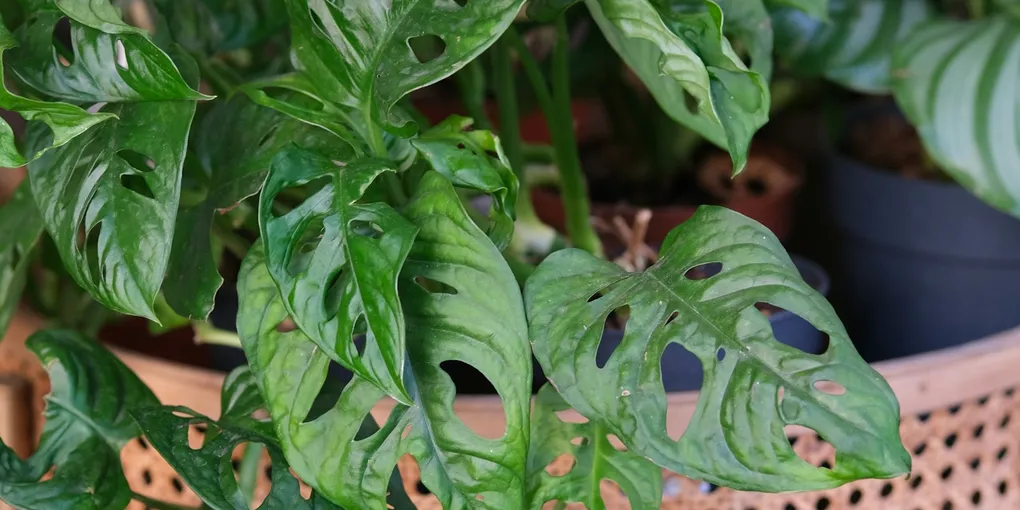
How to Care for a Swiss Cheese Plant (Monstera Adansonii)
Monstera adansonii, commonly called the swiss cheese plant or swiss cheese vine, is the small, fast-growing cousin of the much bigger Monstera deliciosa. Both have leaves punched through with holes, both are aroids, and both get sold under the vague label “monstera” at plant shops, which is exactly how so many people end up with one thinking it’s the other. Monstera adansonii care is easier in some ways and less forgiving in others — here’s what it actually needs.
Light
Bright, indirect light is best — a spot a few feet from an east-facing window, or set back from a south- or west-facing one out of direct sun. Direct afternoon sun will scorch the thin leaves with pale or crispy patches. Low light won’t outright kill the plant, but it will slow growth and produce smaller leaves with fewer of the characteristic holes. See how much light do houseplants need if you’re not sure how to judge the light in a given spot.
Watering
Let the top 1-2 inches of soil dry out before watering again. Monstera adansonii likes to stay lightly moist more than a deliciosa does, but it still won’t tolerate sitting in soggy soil — overwatering is the fastest way to lose one to root rot. Check with a finger before every watering rather than following a fixed schedule; see watering houseplants the right way for how to judge this by feel. If leaves start yellowing or the stems feel mushy, check how to identify and fix root rot right away.
Soil and pot
A well-draining aroid mix works best — standard potting soil cut with perlite and a bit of orchid bark gives the roots the air pockets they need. See the best soil mix for houseplants for ratios. Always use a pot with a drainage hole; this plant’s fine roots are quick to rot in standing water.
Humidity
Swiss cheese plants come from humid tropical forests and do noticeably better above 50% humidity, more so than a Monstera deliciosa does. In an average home they’ll survive at normal humidity but may develop dry, curling leaf edges. If your home runs dry, especially in winter, increasing humidity will make a visible difference in leaf size and glossiness.
Growth habit and climbing support
Monstera adansonii is a true vine, and a much thinner, wirier one than Monstera deliciosa. Left alone, it trails beautifully out of a hanging basket, with vines easily reaching several feet. But like a pothos or philodendron, giving it something to climb — a moss pole or trellis — triggers noticeably larger, more fenestrated leaves as it matures, because climbing is how the plant grows in the wild. A vine left to sprawl without support will keep producing smaller leaves with fewer holes indefinitely.
Monstera Adansonii vs. Monstera Deliciosa
These two get confused constantly since both are aroids with holey, fenestrated leaves sold under similar names. Here’s how to tell them apart:
- Size. Monstera adansonii leaves top out at around 6-8 inches, and the whole plant stays a compact, trailing vine. Monstera deliciosa leaves can reach two feet or more on a mature plant, with a much thicker, upright-climbing stem.
- Hole pattern. Adansonii leaves have oval or round holes scattered across the leaf surface, with the leaf edge itself staying mostly intact. Deliciosa leaves develop deep splits that cut in from the edge, in addition to holes, as the plant matures.
- Growth habit. Adansonii is a slender vine that trails or climbs on thin supports. Deliciosa starts more upright before eventually vining, with a much sturdier stem and larger aerial roots.
- Fenestration timing. A young adansonii can show holes on its very first few leaves. A young deliciosa’s early leaves come in solid and heart-shaped, only developing splits after the plant matures — see the Monstera deliciosa care guide for more on that process.
If you’re comparing two plants side by side, leaf size and hole shape are the quickest tells: small leaves with round holes scattered across the surface means adansonii, large leaves with deep edge splits means deliciosa.
Toxicity
Monstera adansonii is toxic to cats and dogs if chewed, containing the same insoluble calcium oxalate crystals as Monstera deliciosa and other aroids. Keep trailing vines up and out of reach. If you need a plant that’s safe around pets, see pet-safe houseplants for cats and dogs.
Common problems
Yellowing leaves almost always mean overwatering — soil staying wet too long between waterings. Let it dry out further and confirm the pot drains. See why plant leaves turn yellow for other causes.
Brown, crispy leaf edges point to low humidity or underwatering. Check your watering routine first, then work on raising humidity if the soil moisture checks out fine.
Leggy vines with small, unfenestrated leaves usually mean insufficient light, a lack of climbing support, or both. Move the plant closer to a bright window and add a moss pole or trellis; new growth should come in larger and holier within a few leaves. If the vine is already long and bare at the base, see how to fix a leggy houseplant for how to salvage it.
No holes on new leaves can be normal on very young plants or fresh propagations, but if a mature plant stops producing fenestrated leaves, low light is the most common cause. Increasing light usually brings holier leaves back within a few growth cycles.