How to Fix Root Rot in Houseplants (Before It's Too Late)
Root rot happens when roots sit in wet soil too long, get starved of oxygen, and start to break down — often with fungal decay moving in right behind. The fix is to pull the plant, cut away every rotten root, and repot into fresh, dry soil. Caught early, most plants recover fully.
How to tell it’s root rot
Root rot mimics underwatering above the soil line, which is what makes it confusing. The plant droops, and the instinct is to water more — which only makes things worse. Look for this combination instead:
- Yellowing leaves that feel soft, not crispy, often starting with the lower/older leaves
- A sour, swampy smell coming from the soil
- Soil that stays wet for days longer than it used to
- Stunted or stalled growth despite otherwise consistent care
- Stems that feel mushy near the soil line
If the leaves are crispy and brown at the edges instead of soft and yellow, that’s usually underwatering, not rot — check our guide on watering houseplants the right way before you assume the worst.
Pull the plant and check the roots
This is the only way to confirm root rot — you can’t diagnose it from the leaves alone. Ease the plant out of its pot (squeeze the sides and tip it sideways rather than pulling on the stem), and gently brush away the soil around the root ball.
Healthy roots are firm and usually white, tan, or light brown. Rotten roots are brown or black, mushy, and will often slip apart or squish between your fingers instead of holding together. A healthy root resists a gentle tug; a rotten one comes away with almost no effort.
The rescue: step by step
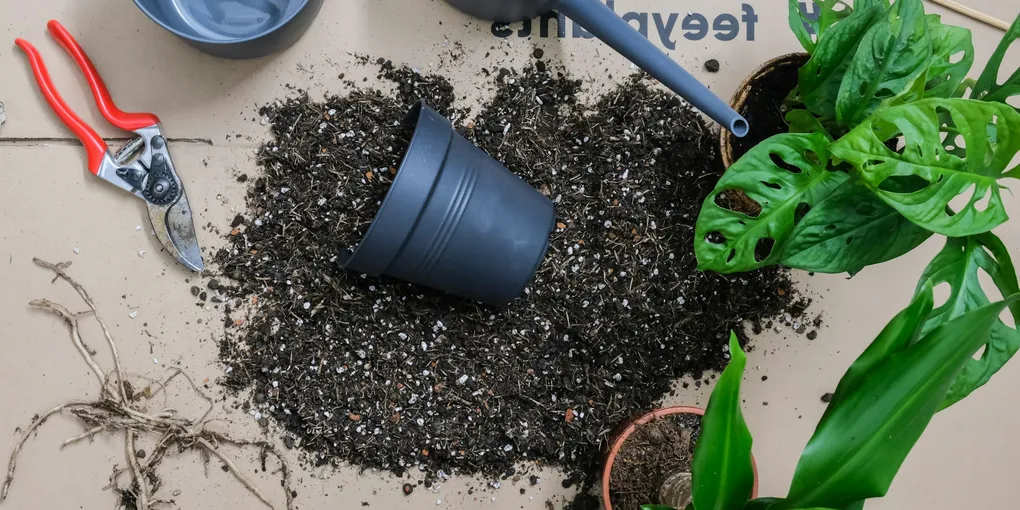
- Trim away every rotten root with clean, sharp scissors or pruners, cutting back to firm, healthy tissue. Don’t leave any mushy sections behind — they’ll keep spreading rot to whatever’s left.
- Rinse the remaining roots gently under lukewarm water to wash off old soil and fungal residue, since replanting rotten soil back around clean roots reintroduces the problem.
- Let the roots air-dry for a few hours before repotting. Planting wet, freshly cut roots straight into damp soil gives any remaining fungus ideal conditions to take hold again.
- Repot into fresh, dry, well-draining soil in a clean pot with a drainage hole — reusing the old soil or an unwashed pot risks recontaminating the plant. See our guide on choosing the best soil mix for houseplants if you’re not sure what to use.
- Size the pot to the roots you have left, not the pot the plant used to fill. A plant that’s lost half its root system doesn’t need — or want — the same pot size as before; too much soil around too few roots just sets up the same problem again. Our repotting guide covers picking the right size.
- Hold off on watering for several days after repotting, until the top inch or two of soil is fully dry, to give the cut roots time to callus over rather than sitting in moisture right away.
If more than half the root system was rotten, don’t expect a fast recovery — the plant needs to regrow roots before it can support much top growth, and some leaf loss afterward is normal, not a sign the rescue failed.
Aftercare
Keep the plant out of direct sun and in a lower-stress spot for a couple of weeks while it recovers — bright, indirect light is enough. Resist the urge to fertilize right away; a plant with a damaged root system can’t use the extra nutrients and it can stress it further. Watch new growth rather than existing leaves as your sign of recovery: a few new leaves, even small ones, mean the roots are working again.
Preventing it from happening again
Root rot is almost always a symptom of a watering or drainage habit, not bad luck. To keep it from coming back:
- Water based on the soil, not a schedule. Check with a finger before watering rather than watering on a fixed day every week.
- Always use a pot with a drainage hole, and empty the saucer after watering — a pot sitting in standing water will eventually rot roots no matter how careful you are otherwise.
- Match the pot size to the plant. An oversized pot holds far more water than the roots can use, so it stays wet much longer than the plant needs.
- Use a fast-draining soil mix, especially for thicker-rooted plants — dense, moisture-retentive potting soil is one of the most common hidden causes of rot.
Root rot is recoverable far more often than people expect, but only if you act as soon as you see the signs — the longer wet, mushy roots sit in the pot, the less of the plant there is left to save.