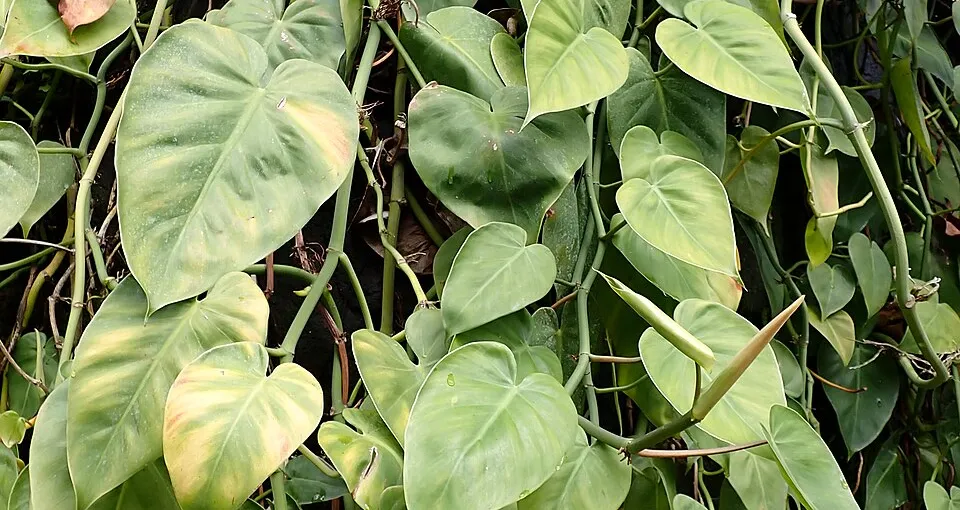
How to Care for a Philodendron
The heartleaf philodendron (Philodendron hederaceum) is one of the easiest vining houseplants to keep alive, which is exactly why it gets confused with a pothos so often. The care is forgiving and nearly identical between the two, but they aren’t the same plant, and knowing which one you have changes a few small details.
Light
Bright, indirect light is ideal — a few feet back from an east- or north-facing window, or just out of the direct rays of a south- or west-facing one. Philodendrons tolerate medium light better than most houseplants, so a spot a bit farther from the window won’t kill it. Growth just slows down and leaves come in smaller and farther apart as the light drops.
Watering
Let the top 1-2 inches of soil dry out before watering again. This is the same routine you’d use for a pothos — check with a finger before every watering rather than sticking to a fixed schedule, since light, pot size, and season all change how fast the soil dries.
Soil and pot
A standard well-draining potting mix works fine. If you want a mix that dries a bit faster and resists compaction, cut it with perlite. Make sure the pot has a drainage hole; philodendrons are more tolerant of underwatering than overwatering, and standing water at the roots is the fastest way to lose one.
Growth habit and support
Heartleaf philodendron is a vine. Left alone, it’ll trail attractively out of a hanging pot or off a shelf, and that’s a perfectly good way to grow it. But if you give it something to climb — a moss pole or a stake — it will produce noticeably larger, more mature leaves as it grows upward, the same way a Monstera deliciosa does when it’s given support instead of left to sprawl. A philodendron without a climbing surface tends to stay in a smaller-leafed, trailing juvenile form indefinitely.
Philodendron vs. pothos: how to tell them apart
These two get mixed up constantly, sometimes even at the nursery, because the leaf shape and care needs are so similar. A few reliable tells:
- Leaf texture. Philodendron leaves are thinner and have a soft, semi-matte to satin finish. Pothos leaves are noticeably thicker and waxier, almost rubbery to the touch.
- The cataphyll. As a new philodendron leaf unfurls, it’s wrapped in a thin, papery sheath called a cataphyll that eventually browns and falls off. Pothos doesn’t produce this — a new pothos leaf just unrolls directly from the stem.
- Petiole shape. Philodendron petioles (the stem connecting leaf to vine) are rounded and smooth. Pothos petioles have a slight groove or ridge running down the top.
- New growth color. New philodendron leaves often emerge a light bronze or reddish tint before turning green. New pothos leaves usually emerge pale yellow-green.
If you’re still not sure, the cataphyll is the single most reliable giveaway — no pothos has one.
Toxicity
Philodendrons are mildly toxic to cats and dogs if chewed, so keep trailing vines out of reach of curious pets.
Common problems
Yellowing leaves almost always mean overwatering — soil that’s staying wet too long between waterings. Let it dry out further before the next watering and confirm the pot drains. See why plant leaves turn yellow for other causes if that doesn’t fix it.
Leggy vines with small, far-apart leaves are a light problem, not a watering one. The plant is stretching toward whatever light it can find instead of filling out. Move it closer to a window, and if you want to salvage the existing growth rather than starting over, see how to fix a leggy houseplant.