How to Care for a Monstera Deliciosa
The Monstera deliciosa’s split, hole-punched leaves are the whole reason people want one — and the most common source of disappointment when a young plant’s new leaves come in solid. The good news is that Monstera care itself is fairly forgiving. The tricky part is understanding what actually controls fenestration, since it isn’t something you can force with a fertilizer or a trick.
Light
Monsteras want bright, indirect light — a few feet back from a south- or west-facing window, or right in an east-facing one. Direct, hot sun for hours a day will scorch the leaves with pale or brown patches. Too little light won’t kill the plant, but it will produce smaller leaves with little to no splitting, and growth will slow to a crawl.
Watering
Check the top 2-3 inches of soil before watering, and only water once it’s dry at that depth. Overwatering is the single biggest killer of Monsteras — the roots need to breathe, and soil that stays wet for days at a time suffocates them and invites rot. For a full walkthrough of how to judge this by feel instead of a fixed schedule, see watering houseplants the right way.
Humidity
Monsteras are native to tropical forests and appreciate higher humidity, but they’re adaptable enough to do fine in the 30-40% humidity of an average home. They’re not a plant you need to fuss over with a humidifier unless you notice crispy brown edges. If your home runs dry, increasing humidity will make the leaves larger and glossier, but it’s a bonus, not a requirement.
Soil and pot
Monsteras are aroids, and aroid roots want air as much as they want moisture. A chunky, well-draining mix — potting soil cut with orchid bark, perlite, and a bit of charcoal — mimics the loose, debris-rich floor of a forest far better than dense standard potting soil does. See the best soil mix for houseplants for ratios. A pot with a drainage hole isn’t optional here; without one, excess water has nowhere to go and sits against the roots.
Why leaves split (fenestration)
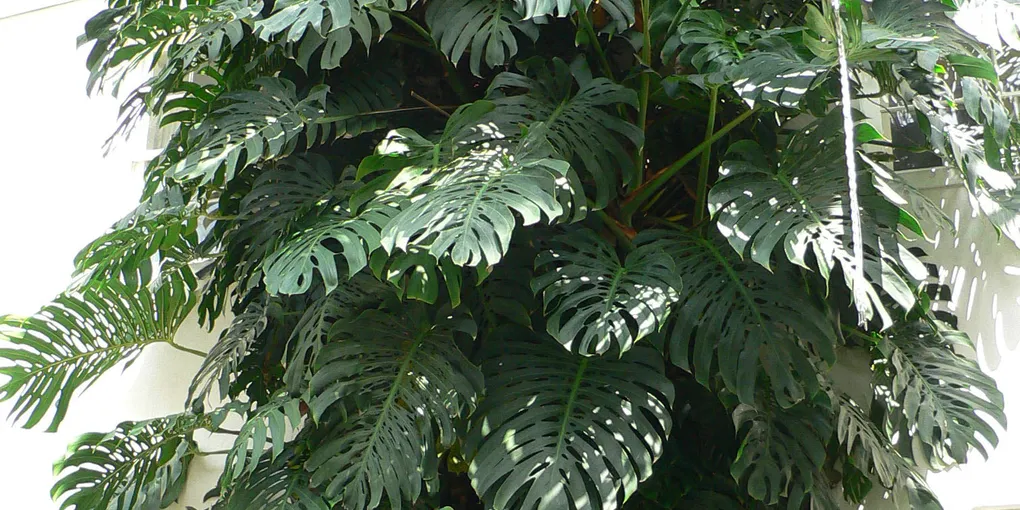
Fenestration is driven by light and plant maturity, not by anything you can force on a young plant. A juvenile Monstera’s first leaves emerge solid and heart-shaped — that’s completely normal, not a sign of a problem. As the plant matures and gets enough light, each new leaf tends to split a little more than the last, eventually producing the deeply cut, hole-punched leaves people associate with the species. A plant kept in low light can stay in that juvenile, unsplit stage indefinitely no matter how old it is, because splitting is the plant’s response to reaching for more light the way it would climbing up a tree trunk in the wild.
Support (moss poles and stakes)
In the wild, Monsteras are climbers — they send out aerial roots to grip tree trunks and pull themselves upward toward the canopy. Those aerial roots on your houseplant are normal, not a problem to fix, and you don’t need to bury them in soil for the plant to be healthy. Giving the plant a moss pole or stake to climb encourages larger, more mature, more fenestrated leaves, because it mimics that natural climbing behavior. A Monstera left to sprawl without support will usually keep producing smaller, less-split leaves on long, leggy vines.
Common problems
Yellowing leaves are almost always overwatering — soil that hasn’t been allowed to dry before the next watering. Cut back on frequency and check that the pot drains freely. See why plant leaves turn yellow for the full range of causes.
Brown, crispy leaf edges point to low humidity, underwatering, or a buildup of mineral salts from tap water and fertilizer. Flushing the soil thoroughly with water every few months helps with the salt buildup specifically.
No fenestration on new leaves almost always means insufficient light, not a lack of maturity. Move the plant closer to a bright window before assuming it just needs more time.
Leggy growth with small leaves and no support means the plant is stretching without anything to climb. Add a moss pole or stake — new growth above it will typically start producing noticeably larger, more split leaves within a few leaf cycles.