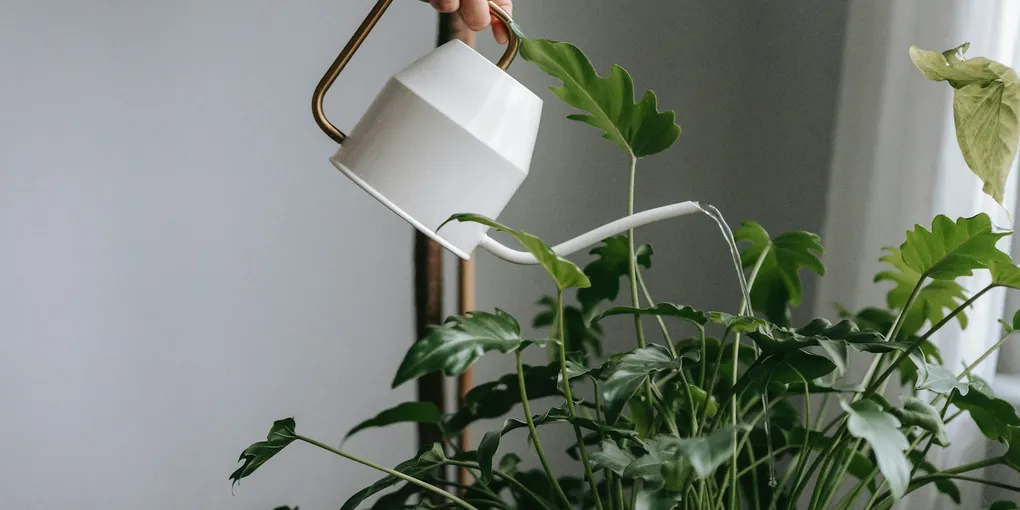
Watering Houseplants the Right Way
More houseplants die from overwatering than almost any other cause. The fix isn’t a stricter schedule — it’s checking the right things before you water at all.
Stop asking “how often”
Watering frequency depends on pot size, soil mix, humidity, light, and season, so a fixed schedule (“every Sunday”) will eventually be wrong in one direction or another. Instead, check the plant each time:
- Finger test: stick a finger 2 inches into the soil. If it’s dry at that depth, water. If it’s still damp, wait.
- Pot weight: lift the pot. A dry pot is noticeably lighter than a recently watered one — once you learn the difference, this becomes the fastest check.
- Leaf feel: for thinner-leaved plants (pothos, peace lily), slight drooping is often the plant’s own signal that it’s ready for water.
The Illinois Extension houseplant pages walk through the same soil-check basics if you want a university-backed reference alongside this list.
How to actually water
When you do water, water thoroughly. Pour until liquid runs from the drainage holes, then let the pot finish draining and empty the saucer — sitting in standing water is one of the most common causes of root rot. This soak-then-drain approach is also what the RHS houseplant advice recommends as the default for indoor plants. A light splash on top every day does more harm than good, since it wets only the top layer and encourages roots to stay shallow.
Adjust for the season
Most houseplants slow their growth in fall and winter as light drops, which means they need less water during that stretch. If you keep watering at a summer pace through winter, you’re very likely overwatering. Ease off as days shorten, and let the finger test guide you rather than the calendar.
Signs you’ve gotten it wrong
- Overwatered: yellowing leaves, soft or mushy stems, a sour smell from the soil, fungus gnats hovering around the pot.
- Underwatered: crispy brown leaf edges, drooping that doesn’t recover after watering, soil pulling away from the pot’s edge.
If you’re not sure which one you’re seeing, check the soil first — it’s a much more reliable signal than the leaves alone.