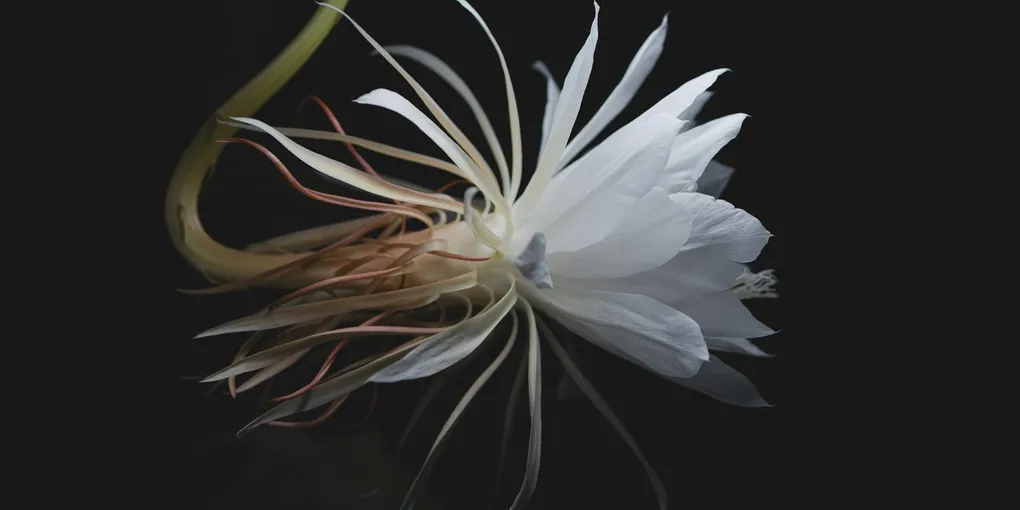
How to Care for an Orchid Cactus
Orchid cactus (Epiphyllum) is grown almost entirely for one thing: flowers that can open to the size of a dinner plate, often overnight, and wither within a day or two. The rest of the plant — long, flat, sometimes scalloped leaf-like stems that sprawl or arch out of the pot — is fairly unremarkable in between bloom events. Like Christmas cactus and fishbone cactus, Epiphyllum is an epiphyte from tropical forest, not a desert plant, so despite the name it wants more water, more shade, and more humidity than a spiny desert cactus. It’s a different genus from both of those relatives, with much larger flowers and a more sprawling, shrub-like habit, so don’t assume the exact same routine carries over — the bloom trigger in particular is different.
Light
Bright, indirect light is what this plant wants most of the year. In the wild it grows tucked into tree crooks under a forest canopy, shaded from direct sun by leaves overhead, so a spot near an east-facing window or a few feet back from a south- or west-facing one works well. Strong direct sun, especially through glass in summer, tends to bleach the flat stems yellow or leave scorched patches. Too little light won’t kill the plant, but it’s the single biggest reason a mature orchid cactus never flowers.
Watering
Water thoroughly, then let the top inch or two of soil dry out before watering again. This is a noticeably wetter routine than true desert cacti want, closer to how you’d treat a tropical foliage plant — see watering houseplants the right way if you want the general logic. The flat stems do hold some reserve moisture, so an occasional missed watering won’t kill it, but letting the soil go bone-dry for long stretches causes the stems to wrinkle and can abort developing flower buds. Good drainage still matters — soggy, waterlogged soil rots the roots just as fast as any other plant.
Soil and pot
Use a loose, fast-draining mix rather than dense standard potting soil. A blend of regular potting mix with extra perlite and some orchid bark mimics the airy material this epiphyte’s roots would cling to in a tree crook — see the best soil mix for houseplants for how to adjust the ratio. Always use a pot with a drainage hole. Orchid cactus also blooms better when it’s a little snug in its pot, so resist sizing up until roots are visibly circling or pushing out of the drainage hole.
Humidity
Average household humidity is tolerated, but this plant does noticeably better with more, especially through a dry winter when indoor heating pulls moisture out of the air. Low humidity tends to show up first as shriveled stem margins or stalled bud development. A pebble tray, grouping it with other plants, or a small humidifier all help — see how to increase humidity for houseplants for the easiest options.
Getting it to bloom
Flowering is the whole point of growing this plant, and it depends on giving Epiphyllum a season it can actually respond to, not identical conditions year-round. Buds typically form in spring after the plant has had a cooler, drier rest period over winter — temperatures around 50-55°F (10-13°C) for six to eight weeks, with watering cut back to just enough to keep the stems from shriveling. Without that rest, many orchid cacti simply stay vegetative.
Once new growth resumes in spring, move the plant back to its bright, indirect spot and resume regular watering; flower buds usually appear along the notches or edges of mature stems within a few weeks. Once buds have set, keep the plant in place — the flowers are already living on borrowed time, often opening for a single night or day, so a stressed or disturbed plant is more likely to drop buds before they open. A regular, dilute feeding schedule through spring and summer also supports better flowering; a fertilizer higher in phosphorus is a reasonable choice during bud formation.
Toxicity
Orchid cactus is considered non-toxic to cats, dogs, and horses, which makes it a solid option if you want something with genuinely showy flowers on a pet-safe houseplant shortlist, rather than sticking to foliage-only picks. The flat stems are still tough and a bit fibrous, so a pet that chews on them can end up with an upset stomach even without true toxins involved.
Common problems
Shriveled, limp stems almost always mean underwatering. A thorough soak usually plumps them back up within a day or two; if not, check that water is actually reaching the root ball rather than running around a dry, compacted one.
Yellow or bleached patches on the stems point to too much direct sun. Move the plant back from the window or add a sheer curtain to diffuse the light.
Buds forming, then dropping before they open is usually caused by moving the plant, a sudden temperature swing, or letting the soil dry out completely right as buds are developing. Keep the plant in a stable spot with consistent watering once buds appear.
A plant that never flowers almost always comes down to a missed rest period, insufficient light during the growing season, or a pot that’s been sized up too soon. Give it the cooler, drier winter it needs and hold off on repotting unless roots are clearly cramped, and see best flowering houseplants to grow indoors for other plants with similar seasonal bloom triggers.
Soft, mushy, discolored stems near the base point to root rot from a pot that doesn’t drain or soil kept wet too long. See how to identify and fix root rot for how to assess and recover the plant.