How to Care for an Old Man Cactus
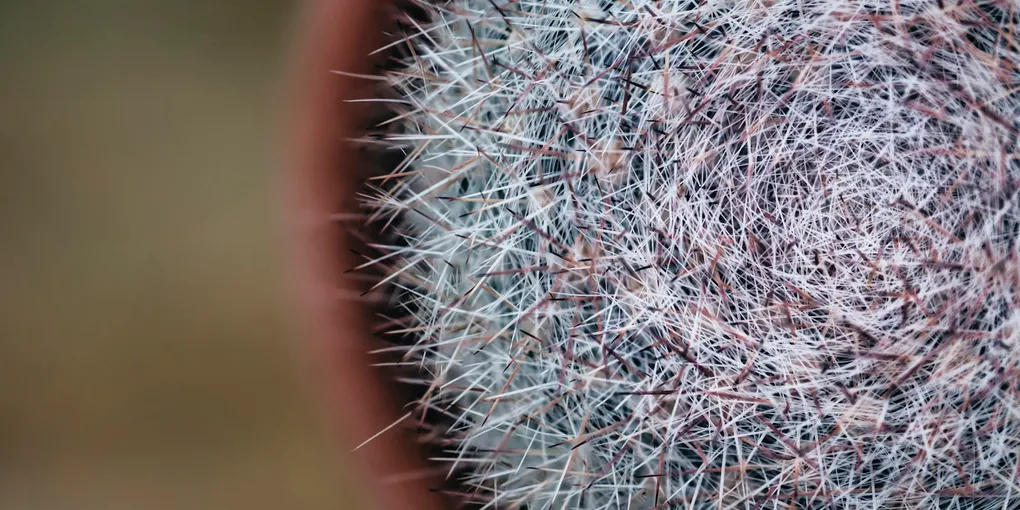
Old man cactus (Cephalocereus senilis) is a columnar desert cactus wrapped in long, white, hair-like fibers that give it a genuinely fuzzy, soft look from across a room. Up close, that softness is misleading in the same way a bunny ear cactus’s fuzz is — the hair isn’t the hazard, what’s underneath it is.
The hair hides real spines
Unlike a bunny ear cactus, which hides barbed glochids under its fuzz, old man cactus hides ordinary but genuinely sharp spines beneath its white hair. The hair itself is soft, but running a hand over the plant to find out is how people end up with a handful of spine pricks they didn’t see coming. Keep it somewhere pets and curious hands won’t brush against it, and if you need to handle the plant directly — repotting, moving it, taking a cutting — use thick gloves or a folded towel rather than bare hands. See how to care for a bunny ear cactus for a similar “looks soft, isn’t” cactus and how that one’s hazard differs.
Light
This is a true desert cactus and wants as much direct sun as you can give it — a south-facing window is close to the minimum, and several hours of direct sun a day is ideal. In lower light the plant survives but grows weak and thin, and the white hair itself tends to thin out and look sparser rather than staying full and dense.
Watering
Let the soil dry out completely before watering again, then water thoroughly. In spring and summer that’s usually every 2-4 weeks depending on pot size and how fast your specific setup dries out; in fall and winter, cut back further still, since the plant goes semi-dormant and needs very little water during the cooler, darker months. Overwatering, not underwatering, is what kills this plant most often — see how to care for succulents for the general watering approach this cactus follows closely.
Soil and pot
Use a fast-draining cactus or succulent mix rather than a standard potting mix — see the best soil mix for houseplants for how to build or buy one suited to a plant like this. A terracotta pot is a good choice, since its porous walls let excess moisture evaporate faster than plastic or glazed ceramic would, adding an extra margin of safety against overwatering. A drainage hole is essential regardless of pot material.
Toxicity and handling
Old man cactus isn’t significantly toxic if eaten, but as with most cacti, that’s not really the relevant risk — the spines hidden under the hair are a physical hazard well before ingestion would ever come up. Keep it out of reach of pets and small children. See pet-safe houseplants for cats and dogs if you want something that poses neither a chemical nor a physical risk.
How fast it grows
Old man cactus is very slow-growing, often adding only an inch or two a year even in excellent conditions. In the wild and in ideal light it can eventually reach many feet tall over decades, but as a houseplant it will stay a small, manageable size for a very long time — don’t expect rapid growth, and don’t mistake its slow pace for a sign that something’s wrong.
Common problems
Mushy, discolored, or collapsing sections are the clearest sign of overwatering or rot, usually from soil that’s stayed damp too long. Let the soil dry out fully and confirm the pot is actually draining; badly rotted sections may need to be cut away to stop the damage from spreading further.
Sparse, dingy, or yellowing hair usually points to insufficient light. It can also happen naturally lower down on the plant as it ages and grows taller, which is normal rather than a problem — new growth higher up should still come in with fuller, whiter hair if light is adequate.
Thin, weak, stretched growth is another sign the plant isn’t getting enough direct sun. Move it to the brightest spot available, ideally with real direct light rather than just a bright room, to bring growth back to its normal dense, compact form.