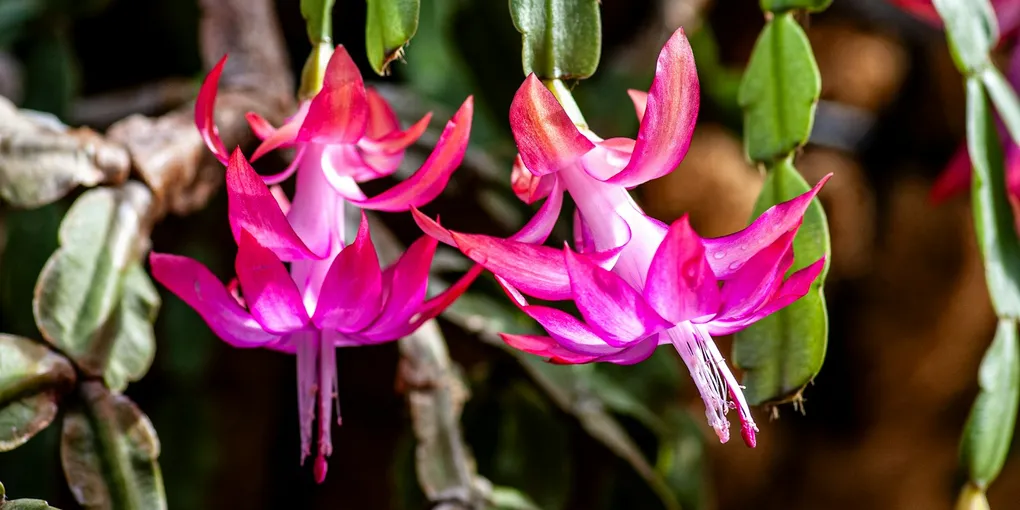
How to Care for a Christmas Cactus
The Christmas cactus (Schlumbergera) looks like a cactus, gets called a cactus, and gets watered like a cactus by almost everyone who owns one — which is exactly the problem. It’s an epiphyte from the Brazilian rainforest, not the desert. In the wild it grows tucked into the crooks of tree branches and rock crevices in humid, shaded forest, closer in habits to an orchid than to a barrel cactus. Treat it like a succulent and it’ll sulk, drop buds, and shrivel. Treat it like the forest plant it actually is and it’s one of the easiest, longest-lived houseplants you can own — some get passed down for generations.
Light
Bright, indirect light works best. An east-facing window is close to ideal; a spot a few feet back from a south- or west-facing window also works well. Avoid direct, hot sun through glass, which can bleach or scorch the flat, segmented leaves (technically stem segments, called cladodes). Too little light won’t kill it, but it will suppress flowering, so if yours never blooms, light is the first thing to check.
Watering
This is where the “cactus” in the name misleads almost everyone. Schlumbergera doesn’t store water the way a desert succulent does, and it doesn’t want to dry out completely between waterings. Let the top inch of soil dry out, then water thoroughly and let it drain. Bone-dry soil for extended stretches causes the flat segments to go limp and shrivel, and it’s a common reason for dropped flower buds. This is a noticeably wetter routine than you’d use for an aloe vera plant or other true succulents — don’t apply the same drought-tolerant logic here.
That said, it’s not a swamp plant either. The roots still rot if the pot sits in standing water, so drainage matters just as much as consistency. Aim for evenly moist, never soggy, and never bone-dry for long.
Soil and pot
A well-draining mix is essential, just not a straight cactus mix. A standard potting mix cut with extra perlite gives you the moisture retention this plant actually wants along with the drainage it needs to avoid rot — similar logic to the best soil mix for houseplants in general, just leaning slightly more retentive than you’d use for a true desert cactus. Always use a pot with a drainage hole. Christmas cacti also bloom better when slightly potbound, so don’t rush to size up the pot — see how to choose the right pot size if you’re not sure it needs repotting at all.
Humidity
Coming from humid rainforest understory, Schlumbergera appreciates more moisture in the air than most houseplants get in a dry living room, especially in winter when heating systems strip humidity out of indoor air. It won’t die without extra humidity, but leaf segments stay plumper and glossier with it. A pebble tray, a spot near other plants, or a small humidifier all help — see how to increase humidity for houseplants for the easiest options. A bathroom with a bright window is a genuinely good spot for this plant, the same logic behind a lot of best houseplants for bathrooms picks.
Getting it to rebloom for the holidays
Christmas cactus flowers on a trigger, not a calendar — it needs a period of long, uninterrupted nights and cool temperatures to set buds, and getting the timing right is the difference between a plant that blooms every December and one that never flowers at all.
Starting in early-to-mid autumn, about 6-8 weeks before you want flowers, give the plant 12-14 hours of complete darkness each night, with bright indirect light during the day. Any light leaking in overnight — a lamp, a hallway light, even a bright streetlamp through a window — can disrupt the trigger and stop bud formation. A closet or a covered spot works, or simply move it to a dark room each evening and back in the morning.
Cool nighttime temperatures help too, ideally in the 50-65°F (10-18°C) range. A plant kept near a cold windowpane or in an unheated room overnight often buds up faster than one in a consistently warm house. Once buds appear, keep the plant somewhere stable — moving it, changing its light, or letting the soil dry out at this stage is the most common cause of buds dropping before they open.
Toxicity
Christmas cactus is non-toxic to cats and dogs, which sets it apart from a lot of common houseplants. It’s a solid pick if you’re building out a pet-safe houseplant collection and want something that actually flowers, rather than defaulting to foliage-only options.
Common problems
Bud drop is the complaint people run into most, usually right when the plant is about to bloom. The most common causes are letting the soil dry out completely while buds are forming, moving or rotating the plant once buds have set, a sudden temperature swing (cold drafts, proximity to a heating vent), or low humidity. Keep watering consistent and leave the plant where it is once you see buds — resist the urge to reposition it for a better view until after it flowers.
Limp, shriveled segments almost always mean underwatering, not overwatering, despite the plant’s cactus reputation. Check the soil; if it’s been dry for more than a few days, that’s the fix.
No blooms at all typically comes down to a missed light/temperature trigger rather than a watering or feeding issue. If the plant sits somewhere with light overnight — even ambient room light — it may never get the dark period it needs to set buds.
Mushy, blackened segments point to root rot from a pot that doesn’t drain or soil that’s stayed wet too long. See how to identify and fix root rot for how to assess and recover the plant.