Why Does My Houseplant Have Brown Spots on Its Leaves?
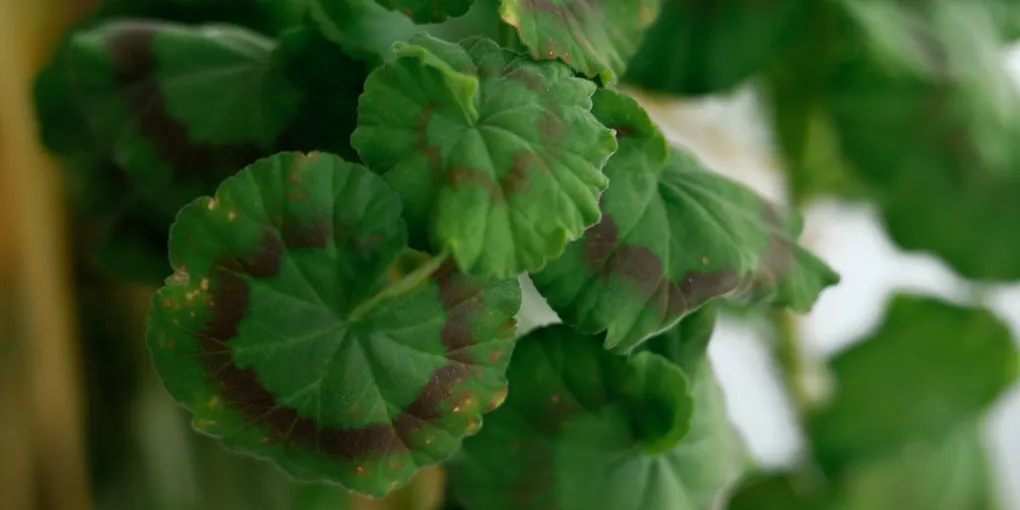
If your plant’s leaves are browning at the very tips or along the outer edges, that’s usually a watering, humidity, or water-quality problem, and it’s covered in why are my houseplants’ leaves turning brown. This post is about something different: spots that show up scattered across the middle of a leaf, not just along its margins. That distinction matters, because spotting usually points to a different set of causes — disease, pests, sun, or fertilizer — rather than a general watering issue.
Fungal leaf spot
The most common cause. Fungal leaf spot typically looks like roundish brown or black spots, sometimes ringed with a yellow halo, and often starts on lower or older leaves first. It thrives in humid, still air where leaves stay wet for long stretches — water splashing onto foliage during watering, poor air circulation, and crowding plants close together all make it more likely. Once you spot it, remove the affected leaves rather than waiting for it to resolve on its own, improve airflow around the plant, and water at the soil line instead of overhead so leaves don’t stay wet. See powdery mildew on houseplants and sooty mold on houseplants for two other fungal issues that show up differently but share the same humid, poorly-ventilated conditions as a trigger.
Bacterial leaf spot
Bacterial spots can look similar to fungal ones at a glance, but they often start with a water-soaked, slightly translucent look around the edge of the spot before it browns and dries out — almost like the tissue is bruised rather than simply discolored. Bacterial infections can also spread faster than fungal ones in warm, humid conditions, and no fungicide will touch them since it’s an entirely different kind of pathogen. Treatment is the same regardless of which one you’re dealing with: remove affected leaves, avoid wetting the foliage, and improve air circulation so new growth doesn’t get infected the same way.
Sunburn and leaf scorch
Not every brown spot is disease. If a plant was recently moved to a brighter spot, or a nearby tree lost its leaves and suddenly let more direct sun through a window, pale, bleached, or crisp brown patches can show up specifically on the side of the leaf that faces the light. This is scorch, not infection — it won’t spread to leaves that weren’t exposed, and it won’t keep spreading on the same leaf once the plant is moved somewhere less intense. Existing scorched tissue won’t heal, but future growth will be fine once the light is dialed back.
Fertilizer or mineral burn
Small brown spots or a crisping leaf margin that shows up shortly after fertilizing usually means the plant got more fertilizer than it could handle, especially if it was already stressed or a little dry when fed. The timing is the tell here — sunburn and fungal spots build up gradually, while fertilizer burn tends to appear within days of a feeding. See signs of overfertilizing houseplants for the fuller picture of what overfeeding looks like and how to flush excess fertilizer out of the soil.
Pest damage
Tiny brown or black speckling across a leaf’s surface can also be feeding damage rather than disease, particularly from spider mites or thrips. Check the undersides of leaves for the pests themselves, fine webbing, or small dark specks of frass before assuming you’re dealing with a fungal or bacterial problem — spraying a fungicide won’t do anything for an infestation. See how to get rid of spider mites on houseplants and how to get rid of thrips on houseplants for how to confirm and treat each one, or common houseplant pests and how to get rid of them for a broader rundown if you’re not sure which pest you’re dealing with.
When to worry more
Most leaf spotting is manageable once you identify the cause and stays limited to a handful of leaves. Treat it as a bigger problem if spots are spreading rapidly across many leaves at once, or if they’re showing up alongside soft, mushy stems or a general wilt — that combination points to a systemic issue like root rot rather than something confined to the leaf surface. See how to identify and fix root rot if that’s what you’re seeing, since at that point the leaves are a symptom of a root problem rather than the problem itself.