How to Choose the Right Pot Size for Houseplants
The right pot size matches the root ball, not the foliage: 1–2 inches wider in diameter for a slow grower, 2–3 inches wider for a vigorous one, with depth about equal to the root ball’s height. Go bigger than that and you’re not giving the plant “room to grow” — you’re giving it excess soil that stays wet for weeks and invites root rot.
Why oversizing is the real risk
A pot that’s dramatically larger than the root ball holds far more soil volume than the roots can actually draw water from. The soil at the edges and bottom stays damp long after the roots near the center have used what they need, and roots sitting in that damp soil are exactly what causes rot. This is also why “sizing up for the future” backfires — a plant potted two or three sizes ahead of its roots is more likely to decline than to grow into the space.
Undersizing has a cost too, just a gentler one: a pot that’s too snug dries out within hours and can restrict growth, but it’s much easier to recover from than rot. When you’re not sure which way to round, go smaller. See signs a plant needs repotting if you’re trying to figure out whether your current pot is already too small.
How to actually measure
- Ease the plant out of its current pot and look at the root ball rather than guessing from the outside of the pot.
- Measure the root ball’s diameter at its widest point.
- Add 1–2 inches for a slow grower (snake plant, ZZ plant, most cacti) or 2–3 inches for a vigorous grower (pothos, philodendron) to get your new pot’s diameter.
- Check depth separately from diameter. A wide, shallow root system doesn’t need a deep pot just because the plant is tall — match the pot to the roots you actually see, not the plant’s overall height.
If the roots fill the container with barely any visible soil, or you see them circling at the surface or emerging from the drainage holes, that’s your sign it’s time to size up — not a fixed yearly schedule.
Drainage holes are non-negotiable
Whatever size and material you choose, the pot needs a drainage hole. Without one, water has nowhere to go, collects at the bottom, and keeps the lowest layer of roots sitting in standing water indefinitely — one of the fastest routes to root rot regardless of how well you’ve sized the pot otherwise. If you’ve fallen for a decorative pot with no hole, use it as a cachepot: keep the plant in a properly drained nursery pot and set that inside the decorative one, then lift it out to water and let it drain before setting it back.
Picking a material
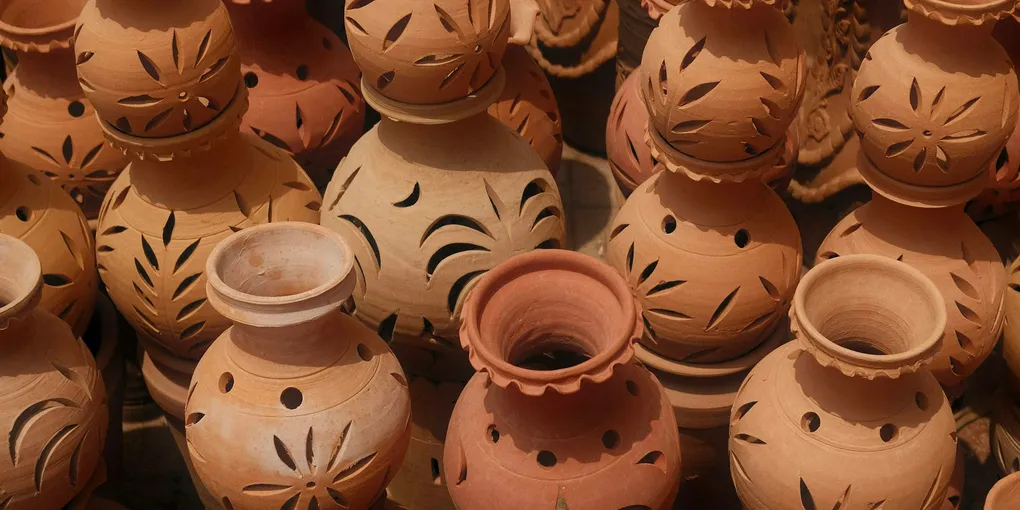
- Terracotta: porous and lets soil dry out faster, which makes it forgiving for plants prone to overwatering (snake plants, succulents, cacti). The tradeoff is more frequent watering, since it pulls moisture out through the walls as well as the top.
- Plastic: holds moisture longer and is lightweight, which suits plants that like to stay evenly moist (peace lilies, ferns) or large plants you’ll need to move. It also won’t crack from a minor bump the way terracotta can.
- Glazed ceramic: behaves more like plastic than terracotta since the glaze seals the pores, so it holds moisture longer — factor that into how often you water rather than assuming all ceramic behaves like raw clay.
None of these fixes a bad size choice. A large terracotta pot still holds enough soil volume to stay damp at the center even though the walls are porous — material adjusts your watering rhythm, but it doesn’t substitute for sizing the pot to the roots in the first place.
When to size up again
Repotting isn’t something to do on a fixed schedule just because a year has passed. A plant that’s root-bound but still growing well can often wait. Once you do size up, resist the urge to jump more than one size — for the full repotting process, including how to ease a plant out without damaging it and what to do in the weeks after, see how to repot a houseplant without stressing it out. If a plant already looks like it’s struggling in its current pot and you’re not sure whether the cause is pot size or something else, check the roots for rot before you assume a bigger pot will solve it.