How to Care for a Calathea Ornata (Pinstripe Calathea)
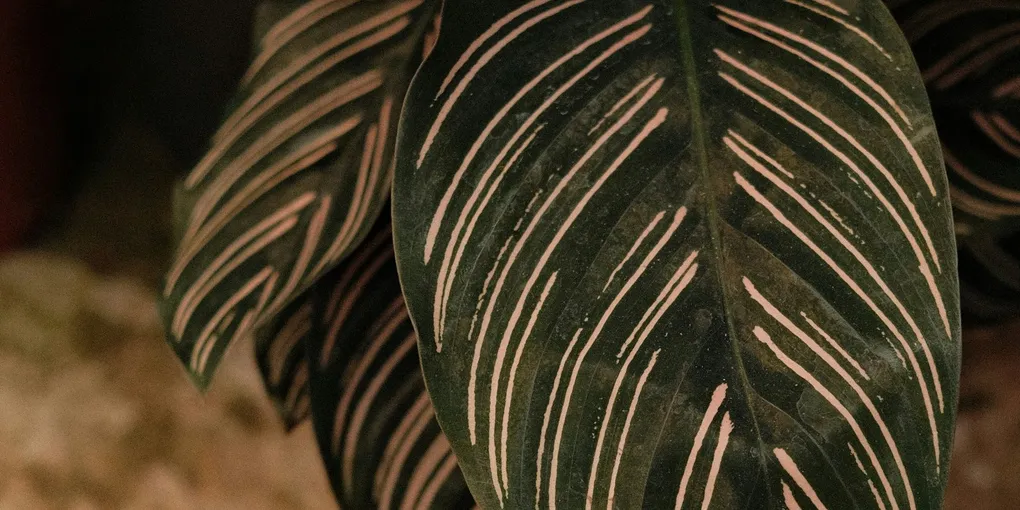
Calathea ornata, commonly called the Pinstripe Calathea, is named for the fine pink and white lines that run out from the midrib across each dark green leaf, giving new growth an almost hand-drawn look. The pink fades toward white or cream as the leaf matures, so a single plant often shows both colors at once across older and newer growth. The undersides are a deep burgundy-purple, and like other members of the Calathea family, it displays nyctinasty — the leaves lift and fold together at night, then lower back out during the day. Of all the calatheas commonly sold, ornata has one of the strongest reputations for being difficult, and most of that reputation comes down to just two things: water quality and humidity.
Light
Medium to bright indirect light is ideal. Direct sun will bleach and scorch the pinstripe pattern, sometimes permanently, while too little light causes new leaves to come in with duller, less defined striping. A spot a few feet back from an east-facing window, or filtered light through a sheer curtain, is a good target. If growth slows and new leaves look plain compared to older ones, move it slightly closer to a light source before changing anything else.
Watering
Keep the soil evenly and lightly moist — never bone-dry, never sitting in water. Water once the top inch of soil feels dry, using room-temperature water. Water quality matters more here than with almost any other common houseplant: ornata is notably sensitive to the chlorine, fluoride, and dissolved minerals in tap water, and the first sign is usually crispy brown edges creeping in along leaves that otherwise look healthy. If you’re seeing that despite watering on a reasonable schedule, switch to filtered, distilled, or rainwater before troubleshooting anything else. See the best water for houseplants and distilled vs. tap water for houseplants for the full breakdown of which options actually help.
Humidity
This is the other half of the equation, and it’s usually the bigger one. Ornata wants humidity of 50-60% or higher — well above what most rooms sit at naturally — and low humidity shows up fast as curling or crisping leaf edges, often before anything else looks wrong. A pebble tray provides some marginal help right around the pot, but a humidifier or a naturally humid room (like a bathroom with decent light) makes the real difference for this plant specifically. See how to increase humidity for houseplants for methods that actually move the needle versus ones that don’t.
Soil and pot
Use a light, well-draining mix that still holds some moisture — a peat or coco coir base cut with perlite works well. The pot needs a drainage hole: ornata wants consistently moist soil but has no tolerance for standing water at the roots, which leads to rot quickly. If you’re not sure whether a soggy pot is the problem, see how to identify and fix root rot.
Toxicity
Calathea ornata is non-toxic to cats and dogs, making it a reasonable pick for a pet-friendly home despite how much attention it demands otherwise. See pet-safe houseplants for cats and dogs for more options. If you like the moving-leaf habit but want something less fussy, the prayer plant is a close relative worth comparing — see calathea vs. prayer plant for how they differ.
Common problems
Crispy, brown leaf edges are the single most common complaint with this plant, and they almost always trace back to low humidity, hard or chlorinated tap water, or both together. Fix both before looking for another cause.
Leaves curling or rolling tightly beyond the plant’s normal daily movement is a stress response, usually to dry air or a missed watering. A calathea’s leaves do shift position through the day as part of their regular rhythm, but a leaf that stays curled tight is asking for water or humidity.
Faded or washed-out pinstripes on new growth point to too much direct light. Move the plant somewhere with strong indirect light instead, and the next leaves should come in with sharper contrast.
Yellowing lower leaves with soft, mushy stems signal overwatering rather than underwatering. Let the soil dry slightly more between waterings and confirm the pot is actually draining.
No nighttime leaf movement can be an early sign of stress from inconsistent watering, low humidity, or too little light. A healthy ornata’s nyctinasty is fairly dependable, so a plant that stops doing it is worth a closer look at its overall conditions.