How to Care for a Prayer Plant (Maranta)
The prayer plant (Maranta leuconeura) gets its name from the way its leaves fold upward at night, edges lifting to meet like a pair of praying hands, then lowering flat again once the sun comes up. That movement — nyctinasty — is the whole reason people fall for this plant, and it happens on its own schedule regardless of what you do. The care itself is closer to a Calathea than to something forgiving like a pothos, so it pays to get the basics right before you bring one home.
Light
Medium to bright indirect light is the target — a few feet back from an east- or north-facing window, or set well back from a south- or west-facing one. Direct sun is the main danger: it scorches and bleaches the leaf pattern, and once a leaf is sun-damaged it stays that way. Too little light isn’t fatal, but the bold markings fade and the plant stretches toward whatever brightness it can find. If you’re choosing between a spot that’s slightly too dim and one that’s slightly too bright, pick the dim one — a prayer plant is more forgiving of low light than of direct sun.
Watering
Keep the soil evenly moist without letting it go soggy. Prayer plants have thin roots that don’t hold a reserve of water the way a succulent’s do, so a full dry-out causes fast wilting and crisping, while waterlogged soil brings on root rot just as quickly. Check the top inch with a finger and water once it starts to feel dry — see watering houseplants the right way for judging this by feel instead of a fixed schedule. Water quality matters here too: Maranta is sensitive to the chlorine, fluoride, and salts in tap water, which tend to show up as browned leaf tips and edges over time. Filtered, distilled, or rested tap water at room temperature is worth the extra step if you’re seeing that kind of tip burn.
Soil and pot
A light, well-draining mix that still retains some moisture works best — a peat or coco coir base cut with perlite gives the roots something to hold onto without staying airless or waterlogged. See the best soil mix for houseplants if you want to build your own rather than buying a pre-mixed blend. A pot with a drainage hole is non-negotiable; this plant wants consistent moisture but has zero tolerance for standing water at the bottom.
Humidity
Prayer plants want humidity noticeably above what most homes sit at on their own — 50% or higher is a good target. When the air runs too dry, curling or crisping leaf edges are usually the first sign, often before anything else looks off, so it’s worth checking humidity before you start second-guessing your watering routine. Grouping plants together, running a pebble tray, or adding a humidifier all help; full methods are covered in how to increase humidity for houseplants. A spot in a naturally humid room, like a bright bathroom, can also make a real difference — see the best houseplants for bathrooms for other plants that do well in that kind of spot.
Growth habit and propagation
Maranta grows low and spreading rather than upright, which makes it a good fit for a shelf, a wide shallow pot, or a hanging planter where the trailing stems can drape over the edge. It propagates easily from stem cuttings taken just below a node — root them in water or moist soil, and you’ll usually see new roots within a few weeks. See how to propagate houseplants from cuttings for the general technique, which applies to Maranta with no real modification.
Prayer Plant vs. Calathea
These two get lumped together constantly, and it’s an easy mix-up: both are grown for bold patterned leaves, both fold their leaves up at night, and both want similar humidity and water quality. But they’re different genera with a few reliable differences.
- Botanical relationship. Maranta and Calathea are both members of the Marantaceae family, which is why they behave so similarly — but they’re separate genera, not the same plant under two names.
- Growth form. Prayer plant stays low and spreading, often trailing over a pot’s edge. Calathea tends to grow more upright, with leaves rising on longer stalks from a central clump.
- Fussiness. Calathea has the stronger reputation for being finicky about humidity and water quality; Maranta wants the same things but is somewhat more tolerant of small lapses.
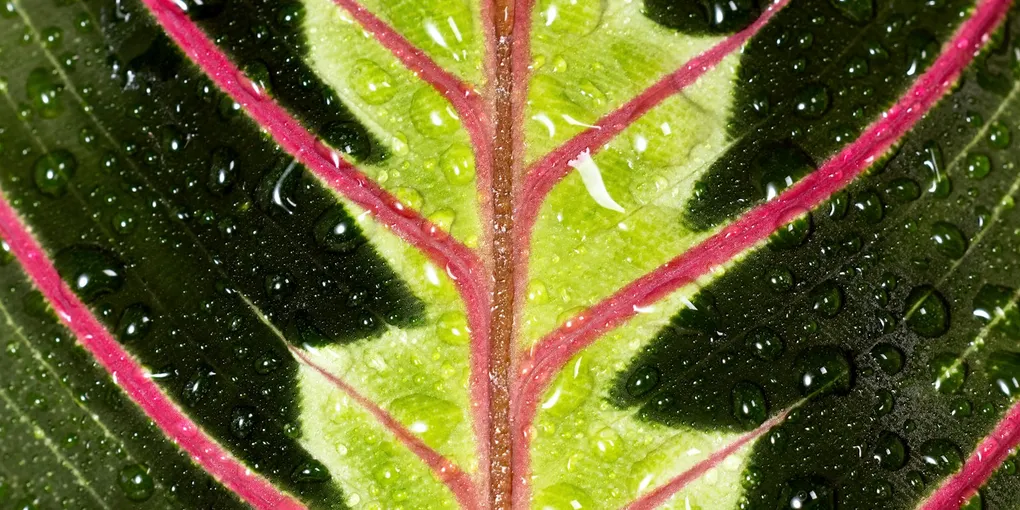
- Leaf pattern. Maranta leuconeura varieties (like the classic “rabbit’s foot” pattern with dark blotches along the veins) tend toward a more uniform, symmetrical look. Calathea patterns are typically bolder and more varied between species.
If you already own a Calathea and are debating a Maranta as well, know that the two will happily sit side by side under the same light and humidity setup.
Toxicity
Prayer plants are non-toxic to cats and dogs, making them a safe choice if you share your home with pets that like to investigate leaves. See pet-safe houseplants for cats and dogs for more options if you’re building a pet-friendly collection.
Common problems
Leaves not folding at night usually means the plant is stressed by low light or an inconsistent environment rather than anything urgent. Give it a few days in a stable spot before assuming something’s wrong.
Curling, browning edges point to low humidity, hard tap water, or both — check humidity first, since it’s the more common culprit, then switch to filtered water if the problem persists.
Yellowing leaves are most often a sign of overwatering or a pot that isn’t draining. Let the soil dry slightly more between waterings and confirm the pot has a drainage hole; see why plant leaves turn yellow for other causes if that doesn’t resolve it.