How to Care for a Calathea
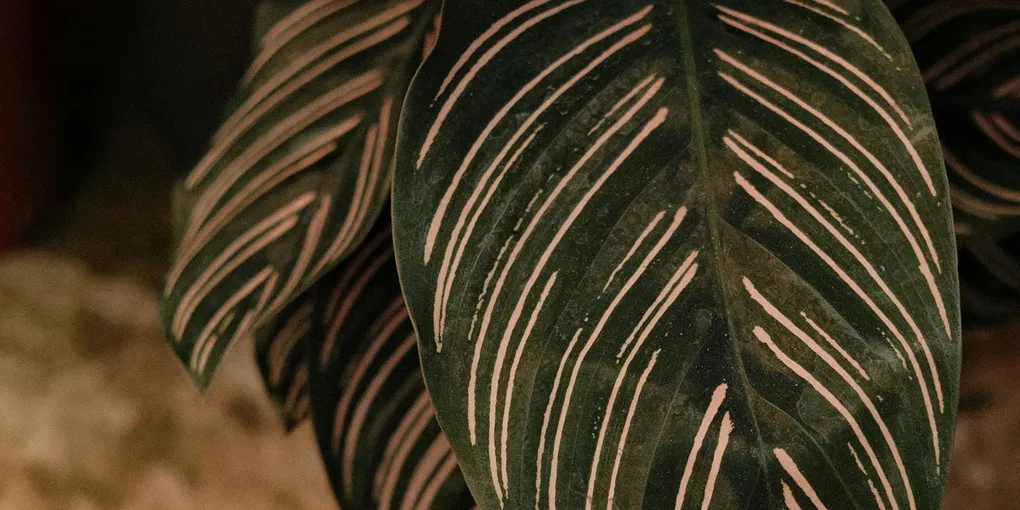
Calatheas are grown for their leaves — bold stripes, feathering, and patterns in deep greens, purples, and silvers that look almost painted on. They’re also prayer plants in the loose sense: the leaves fold upward at night and lower back out during the day, a movement called nyctinasty that’s genuinely fun to watch once you notice it happening on your own schedule. None of that comes free, though. Calathea has earned its reputation as the drama queen of the houseplant world, and if you’ve kept a pothos alive without much thought, this is a different kind of plant. The good news: the fussiness comes down to two things, humidity and water quality, and once those are dialed in, a Calathea is far more stable than its reputation suggests.
Light
Calatheas want medium, bright indirect light — a spot a few feet from an east- or north-facing window, or set back from anything brighter. Direct sun is the bigger risk: even a couple of hours of hot afternoon sun will bleach and fade the leaf pattern, sometimes permanently, since scorched sections don’t recover their color. Too little light causes the opposite problem — the pattern goes muted and the colors flatten out, and the plant will visibly reach for whatever light it can find. Bright but indirect is the narrow window you’re aiming for, and it’s worth erring toward too little light rather than too much if you’re unsure.
Watering
Keep the soil lightly and evenly moist — not soaked, not allowed to dry out completely. Calathea roots are thin and don’t store water the way a succulent’s do, so a full dry-out stresses the plant fast, while soggy soil invites rot just as quickly. Check the top inch with a finger and water once it starts to feel dry, rather than sticking to a fixed schedule; see watering houseplants the right way for how to judge this by feel instead of the calendar. The bigger issue for Calathea specifically is water quality: it’s sensitive to the chlorine, fluoride, and dissolved minerals in most tap water, which show up as crispy, browned leaf edges over time. Filtered water, distilled water, or rainwater left to reach room temperature will spare you a lot of this. If you only make one change from how you water your other plants, make it this one.
Humidity
This is the make-or-break factor. Calatheas want humidity well above what most homes naturally sit at — ideally 50% or higher — and when the air is too dry, crispy or curling leaf edges are usually the first and most reliable sign, arriving well before the plant looks like anything else is wrong. Before you troubleshoot watering or light, check humidity first; it’s the more common culprit. Grouping plants together, running a pebble tray, or using a humidifier all help, and a humidifier is genuinely the difference-maker if you’re keeping more than one humidity-loving plant. Full methods, including which ones don’t actually work, are in how to increase humidity for houseplants.
Soil and pot
Calatheas want a light, well-draining mix that still holds onto moisture — a peat or coco coir base cut with perlite works well, giving the roots something to hold water without ever going airless or waterlogged. A drainage hole is essential, since this is a plant that wants consistent moisture but has no tolerance for standing water at the bottom of the pot.
Toxicity
Calatheas are non-toxic to cats and dogs, which makes them a reasonably safe pick if pets like to chew on leaves — though a curious cat swatting at those moving leaves is still worth watching. See pet-safe houseplants for cats and dogs for more options if you’re building out a pet-friendly collection.
Common problems
Curling, crispy brown edges are almost always low humidity, hard tap water, or both — the two most common culprits by far. Check humidity levels first, then switch to filtered or distilled water if you haven’t already.
Leaves staying folded during the day can mean the plant is stressed by light or temperature swings, but it’s often just a response to low light. It’s not always an emergency — give it a day before assuming something’s wrong.
Fading, washed-out pattern points to a light problem in either direction: too much direct sun bleaches it out, too little mutes it. Adjust placement and watch how the next few leaves come in.