Calathea vs. Prayer Plant: What's the Difference?
Walk into any plant shop and you’ll see both Calathea and Maranta leuconeura labeled “prayer plant” on the same shelf, sometimes on the same table. It’s not a labeling mistake exactly — both plants really do fold their leaves upward at night and lower them back out during the day, a movement called nyctinasty, and that shared party trick is why the name gets applied to both. But they’re different plants with different care demands, and knowing which one you actually have changes how much work you’re signing up for.
Are they the same plant?
No, though the confusion is understandable. Maranta leuconeura is the plant most specifically called “the prayer plant” — it’s practically synonymous with the name. Calathea is a related but distinct genus; both belong to the same plant family, which is why they look and behave so similarly, but they aren’t different names for the same species. You’ll also see Calathea listed under the genus name Goeppertia in newer botanical references, since a lot of the plants long sold as Calathea have been reclassified — but for houseplant purposes, the shop label and the common name “Calathea” aren’t going anywhere, and that reclassification doesn’t change anything about how to grow one.
Care difficulty: the real difference that matters
If you only remember one thing from this post, make it this: Calathea is the fussier of the two. Both plants want consistently moist (not soggy) soil, humidity well above what most homes sit at naturally, and water that isn’t straight from the tap — chlorine, fluoride, and dissolved minerals in hard tap water tend to show up as crispy, browned leaf edges on both plants. See the best water for houseplants if you’re not sure what your tap water situation actually calls for.
The difference is in how much lapses cost you. Calathea has earned its reputation as one of the more demanding common houseplants — a few days of low humidity or a couple of waterings with hard tap water will show up fast as curled, crispy edges. Prayer plant wants the same things but tolerates small slips better; it’s noticeably more forgiving if you forget to top off the humidifier for a few days or occasionally water straight from the tap. Neither plant is low-maintenance compared to something like a pothos, but there’s a real gap between them.
Growth habit and leaf pattern
The two also look and grow differently once you know what to check.
- Growth habit. Maranta (prayer plant) grows low and spreading, with stems that can trail nicely over the edge of a pot or hanging planter. Calathea tends to grow more upright, with leaves rising on longer stalks from a central clump rather than sprawling outward.
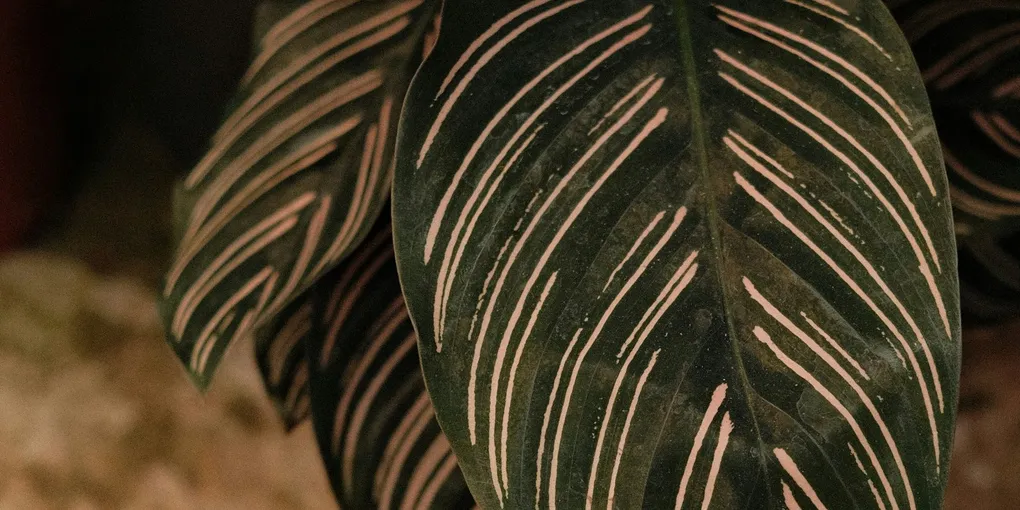
- Leaf pattern. Maranta leuconeura varieties, like the classic rabbit’s foot pattern with dark blotches tracing the veins, tend toward a fairly uniform, symmetrical look leaf to leaf. Calathea patterns are usually bolder and more varied — feathering, striping, or painted-looking markings that differ more dramatically between species. Calathea orbifolia is a good example of just how dramatic those patterns can get, with huge silver-striped leaves that look almost hand-painted.
- Size. Calathea generally grows a bit larger and more upright overall, while prayer plant stays more compact and low.
Which one should you get?
If you’re newer to fussier tropical foliage plants, or you’ve killed a Calathea before and want to try the “prayer plant” look again, get the Maranta. It gives you the same nightly leaf-folding behavior and a similar patterned look with meaningfully more tolerance for an off week.
If you’ve already got the humidity and water routine dialed in — a humidifier running, filtered or rested water on hand — and you want the most dramatic leaf pattern you can get, go with Calathea, especially one of the bolder varieties like orbifolia. The payoff in pattern and color is real, but only if you’re already set up to give it what it wants.
Either way, the two are compatible enough in their needs that there’s no reason not to eventually own both. They’ll sit happily side by side under the same light and humidity setup, folding their leaves up together every night.