Why Are My Houseplant's Leaves Turning Brown?
Browning is different from yellowing — it’s dead tissue, not a color shift, and it doesn’t reverse once it’s there. But where the brown shows up on the leaf and how it’s shaped tells you almost exactly what caused it. Look at the pattern before you change anything.
Brown, crispy tips
If just the very tip of the leaf is brown and dry, and the rest of the leaf still looks fine, the most common cause is low humidity. Plants lose water fastest at the leaf’s edges and tip, and in dry indoor air — especially in winter with heating running — they can’t replace it fast enough there, so that tissue dies first. This shows up most on plants with thin or strappy leaves, like spider plants, dracaenas, and prayer plants.
A close second cause is mineral or fertilizer salt buildup. Tap water contains dissolved minerals, and fertilizer leaves behind salts; both accumulate in the soil and get pulled into the leaf, where they concentrate at the tip and become toxic to that tissue. A white, crusty buildup on the soil surface or around the drainage holes is a good sign salt is part of the problem.
Fix: raise humidity around the plant — see our guide to increasing humidity for houseplants for what actually works versus what doesn’t. For salt buildup, flush the pot by running water through the soil until it drains freely from the bottom, repeat a few times, and consider switching to filtered or distilled water — our guide to the best water for houseplants covers which tap water is safe to use as-is.
Brown edges with a yellow halo
When browning runs along the whole edge of the leaf rather than just the tip, with a band of yellow between the brown and the healthy green, this usually points to inconsistent watering — letting the plant get bone dry, then soaking it, instead of watering on a steady rhythm. The plant sheds water from its outer tissue first during the dry stretches, and the yellow band marks where the damage is actively spreading.
Fix: check the soil with a finger before watering rather than going by a fixed schedule, and water thoroughly when you do. Our full guide to watering houseplants covers how to build that habit and avoid swinging between the two extremes.
Brown spots on the leaf surface
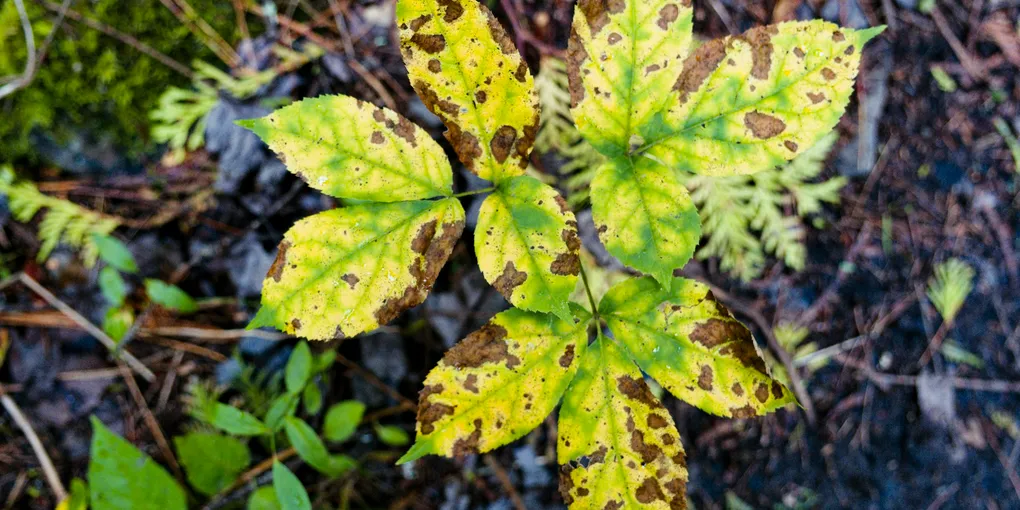
Spots differ from tips and edges because they start in the middle of the leaf, not at its extremities. Small, roughly circular brown or black spots, sometimes ringed with yellow, usually mean a fungal or bacterial leaf spot disease. It takes hold when water sits on the leaf surface too long — from overhead watering, misting, or leaves crowded together with poor airflow — letting spores or bacteria establish on the wet tissue.
Fix: remove badly affected leaves, avoid getting water on the foliage when you water (aim at the soil instead), and space plants out or improve airflow around them. If it’s spreading fast across multiple leaves, a copper-based fungicide can help, but airflow and dry leaves prevent most cases before they start.
Whole leaves turning brown and falling off
If an entire leaf browns rather than just part of it, especially alongside limp texture or general wilting, look at the roots before anything else. This is a classic sign of root damage — either from prolonged overwatering that rotted the roots, or a stretch of severe underwatering that killed off fine root hairs. Either way, the roots can no longer support the leaf, so it dies all at once instead of thinning gradually at the edges.
Fix: unpot the plant and check the roots. Firm, white or light tan roots are healthy; soft, brown, or mushy roots mean root rot, which needs trimming and a soil change to fix, not just a change in watering habits.
Brown patches after moving the plant
Irregular, flat, bleached-looking brown or tan patches that appeared after you moved the plant, rearranged furniture, or the seasons changed are almost always sunburn. Leaves that developed in low or indirect light don’t have the defenses to handle sudden direct sun, and the tissue actually cooks — this is physical damage, not a disease, and it won’t spread once you fix the light.
Fix: move the plant out of direct sun or add a sheer curtain to diffuse it, especially for a plant you just brought home or just moved to a brighter spot. Give plants a few weeks to adjust gradually to a brighter location rather than moving them straight into full sun — our guide to acclimating a new houseplant covers how to do that without shocking it.
When it’s just old age
One lower, older leaf browning and dropping while the rest of the plant looks healthy is normal aging, not a problem to solve — plants regularly shed their oldest leaves to put energy into new growth. Only worry if multiple leaves are affected at once, new growth is also browning, or the pattern matches one of the causes above.
Putting it together
Tips and edges point to water and humidity; spots point to disease from wet foliage; whole leaves browning at once point to root damage; and patchy, irregular browning after a move points to sunburn. Once you match the pattern, the fix is usually straightforward — and since brown tissue is dead, the goal isn’t to reverse existing damage but to stop it from spreading to the rest of the leaf and the leaves that follow.