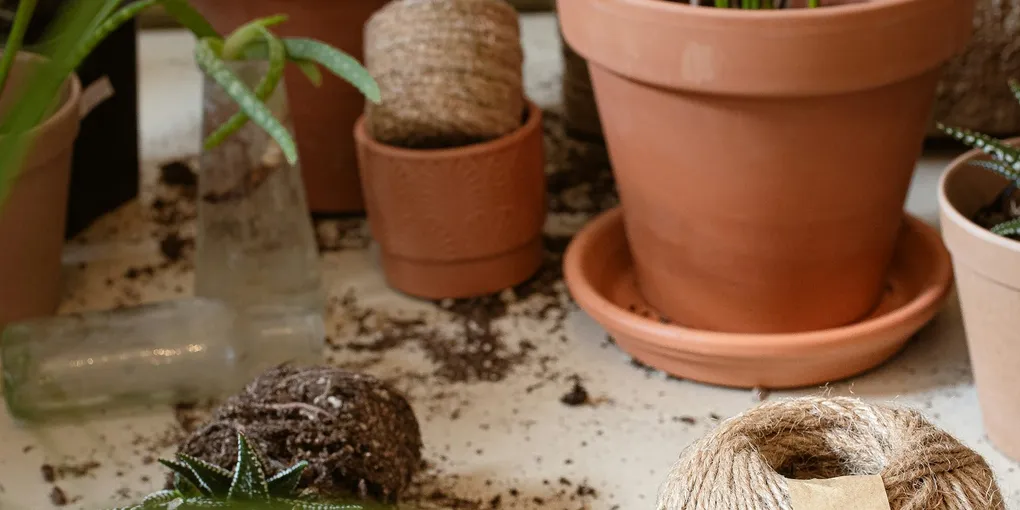
How to Divide a Houseplant
Division is different from taking a cutting: instead of rooting a piece of the plant, you’re separating a plant that has naturally grown multiple independent crowns or rosettes into two or more complete plants, each with its own roots, ready to grow on its own immediately. It’s one of the easiest ways to get more plants for free, and for some species it’s also routine maintenance that keeps an overcrowded pot healthy.
Which plants can be divided
Division works on plants that grow as multiple crowns, rosettes, or offsets sharing one root system rather than a single central stem. Good candidates include:
- Snake plant — multiple upright rosettes emerging from the same rhizome
- Peace lily — clumps of stems that separate into smaller clumps, each with roots and leaves
- Ferns — many types grow as multiple crowns that pull or cut apart cleanly
- Spider plant — the main clump divides, separately from the babies it sends out on runners
- ZZ plant — grows from multiple rhizomes that can be split apart
- Calathea — clumping growth habit similar to peace lily
- Bird of paradise — mature plants form multiple offsets around a main stem
- Cast iron plant — slow-growing clumps that divide much like snake plant
- Aloe — pups growing at the base can be separated from the parent
Plants with a single stem and no offsets or side rosettes — most vines, most trees like a fiddle leaf fig, most single-stem philodendrons — can’t be divided this way; propagate those from cuttings instead.
Signs it’s time to divide
- Multiple distinct crowns or rosettes are visible at the soil surface, rather than one central growth point
- The plant has become dense and crowded, with growth slowing despite good care
- It’s already due for repotting and you’d rather end up with two manageable plants than one oversized one
- Roots are tightly packed and circling, with visible separate root masses under each crown
A plant with just one growth point isn’t a candidate yet, even if it’s rootbound — that’s a signal to repot up a size, not to divide.
Step-by-step division
- Water the day before. Damp soil holds together better and roots separate with less tearing than when they’re bone dry.
- Remove the whole plant from its pot, tipping it sideways and easing it out rather than pulling on the stems.
- Loosen the soil around the roots with your fingers, or gently hose it off, until you can see how the crowns are connected underground.
- Find the natural separation points. Most clumping plants have visible gaps between crowns where the root systems are only loosely tangled rather than truly fused — these are the easiest places to divide.
- Pull or cut apart. Many plants — spider plant, peace lily, ferns — separate by hand with gentle pulling and teasing apart of the roots. Tougher, denser root masses like snake plant or ZZ plant rhizomes may need a clean, sharp knife to cut through. Aim to give each division a fair share of healthy roots and at least one full growth point.
- Trim away damaged roots or leaves that got torn or crushed during separation.
- Pot each division separately in fresh soil, at the same depth it was growing before, in a pot sized to the division’s root mass rather than the original pot size.
Aftercare
Water each new division thoroughly right after potting to help the soil settle. Keep divided plants out of direct, intense light for a week or two while they recover from the root disturbance — some temporary drooping or a slightly wilted look is normal and should pass as new roots establish. Hold off on fertilizing for about a month to give the roots time to recover before pushing new growth.
For species-specific care once your divisions are established, see our guides on snake plants, peace lilies, ZZ plants, spider plants, bird of paradise, and cast iron plants.