How to Care for a Peace Lily
Peace lilies (Spathiphyllum) are forgiving, low-maintenance, and — unlike most houseplants — genuinely easy to read. They don’t hide how thirsty they are. They tell you, loudly, by drooping, which makes them a good plant to learn on if you’ve struggled to time watering correctly with anything else.
Light
Peace lilies tolerate low to moderate indirect light and will survive in a dim corner that would stall out plenty of other plants. But “tolerate” is doing a lot of work in that sentence — a peace lily kept in low light will stay green and alive without ever blooming. If you want the white flowers, move it somewhere with brighter indirect light. Avoid direct sun, which scorches the leaves. If your space genuinely doesn’t get much natural light anywhere, it’s worth reading about low-light houseplants to see how a peace lily compares to other options.
Watering
This is where peace lilies stand out. When they get thirsty, the leaves droop dramatically and unmistakably — the whole plant looks collapsed within a day or two of drying out. It looks alarming the first time you see it, but water the plant and it perks back up within a few hours. Most houseplants hide overwatering and underwatering until the damage is already done; a peace lily tells you exactly what it needs before any real harm occurs, which makes it one of the more forgiving plants to keep on a loose schedule rather than a rigid one.
That said, don’t treat the droop as a watering method on purpose. Letting it wilt repeatedly still stresses the plant over time. Check the soil when the leaves start looking tired, water thoroughly until it drains out the bottom, and let the top inch or two dry out before the next watering. For the general principles behind this, watering houseplants the right way covers the habits that make this easier across your whole collection.
Humidity
Peace lilies come from tropical understories and appreciate higher humidity than the average home provides. In dry air, expect brown, crispy leaf tips even when watering is otherwise fine. This isn’t usually serious, but if it bothers you, grouping plants together, using a pebble tray, or running a humidifier nearby will help. See increasing humidity for specific setups.
The bloom
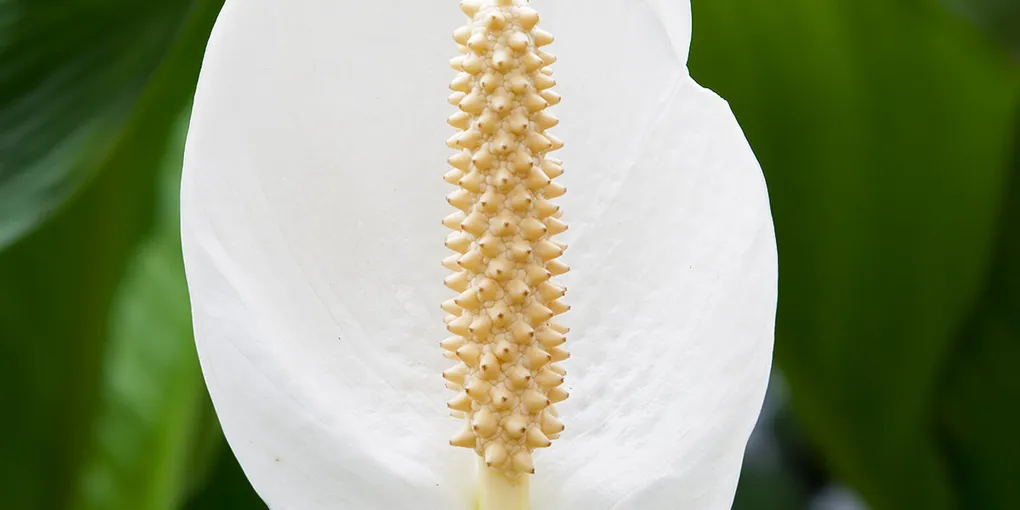
The white “flower” people associate with a peace lily isn’t actually a flower — it’s a modified leaf called a spathe, curved around a spike called a spadix. The true flowers are the tiny bumps covering that central spike; the white spathe is just there to make them more visible to pollinators. Blooms typically last several weeks before fading to green and eventually browning, at which point you can cut the stalk at its base.
If your peace lily isn’t blooming, the almost-always answer is insufficient light, not a lack of fertilizer. Move it somewhere brighter before you reach for plant food.
A note on pets
Peace lilies are mildly toxic to cats, dogs, and people if chewed, due to calcium oxalate crystals in the leaves — typically causing mouth irritation and stomach upset rather than anything severe, but worth keeping out of reach of curious pets. For a fuller list of safer alternatives, see pet-safe houseplants.
Common problems
- Yellow leaves: usually overwatering, or too much direct sun. Check the soil first — if it’s staying wet, cut back before anything else.
- Drooping leaves: almost always underwatering. Water thoroughly; it should recover within hours.
- No blooms: insufficient light. Move the plant somewhere brighter rather than fertilizing.
- Brown leaf tips: low humidity, or a buildup of minerals from tap water. Try filtered water and see the humidity section above.
Peace lilies reward attention without demanding much of it. Watch the leaves, water when they droop, and give them a bit more light than you think they need if you want to see them bloom.