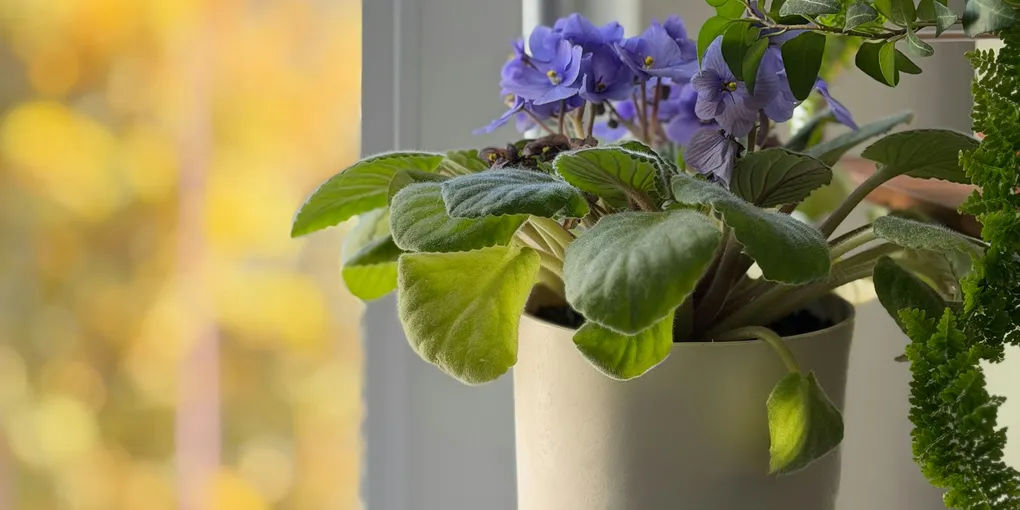
How to Care for an African Violet
African violets (Saintpaulia, now technically reclassified as Streptocarpus ionantus but still sold under the old name everywhere) have a reputation as a fussy, old-fashioned windowsill plant. In reality they’re forgiving once you understand the two things that make them different from most houseplants: the fuzzy leaves hate getting wet, and they actually want a snug pot. Get those two details right and an African violet will reward you with near-constant blooms for years.
Light
African violets need bright, indirect light to flower — this is the single biggest factor in whether a plant blooms or just sits there green. An east-facing windowsill is close to ideal, giving several hours of gentle morning sun. A few feet back from a south or west window also works, as long as the light is diffused by a sheer curtain. Avoid direct sun, especially midday and afternoon sun through unfiltered glass — it scorches the soft, fuzzy leaves, leaving pale or brown patches. If your windows don’t offer enough natural light, African violets also do well under a grow light kept a few inches above the leaves for 12-14 hours a day. For general guidance on reading light levels in your space, how much light do houseplants actually need is a good starting point.
Watering
This is where African violets differ most from typical houseplants. Water that sits on the leaves or in the crown (the center where new leaves emerge) causes unsightly pale spots, and worse, can lead to crown rot that kills the plant outright. Two approaches avoid this:
- Bottom watering: set the pot in a saucer or tray of room-temperature water for 20-30 minutes, letting the soil soak it up through the drainage hole, then remove it and let it drain fully. This is the most reliable method and the one most experienced growers rely on.
- Top watering carefully: if you water from above, use a narrow-spouted container and pour slowly at the soil line, keeping water off the leaves and away from the crown entirely.
Always use room-temperature water — cold water striking the leaves causes the same ring-shaped spotting as splashing, even in small amounts. Let the top inch of soil dry out between waterings; African violets like consistent light moisture but not a soggy pot. For the broader principles behind this, watering houseplants the right way covers habits worth applying across your whole collection.
Soil and pot
Use a light, well-draining mix — a bagged African violet potting mix or a peat-based mix cut with perlite both work well. Regular dense potting soil holds too much water around the roots and invites rot. Whatever mix you use, the pot needs a drainage hole.
Unlike many houseplants, African violets actually prefer being slightly root-bound and tend to bloom best in a snug pot — they often flower more reliably when a little pot-bound than when freshly repotted into something roomy. Size up only when roots are clearly circling the bottom or the plant is drying out unusually fast; a good rule of thumb is a pot no more than a third of the plant’s own diameter.
Humidity
African violets come from humid forest environments in Tanzania and Kenya and appreciate moderate to higher humidity, roughly 40-60%. Average home humidity is usually tolerable, but very dry air — common in winter with the heat running — can cause slower growth and crispy leaf edges. Skip misting, though: wetting the leaves creates the same spotting risk as splashing them during watering. Instead, group plants together, use a pebble tray, or run a humidifier nearby. See how to increase humidity for houseplants for methods that don’t involve getting the foliage wet.
Toxicity
African violets are non-toxic to cats and dogs, making them a safe choice for plant shelves in homes with curious pets. For other options if you’re building out a pet-friendly collection, see pet-safe houseplants for cats and dogs.
Common problems
- Crown or stem rot: usually caused by water sitting in the crown or leaves staying wet for extended periods. Switch to bottom watering and keep the crown completely dry. Once rot sets in, it’s often unrecoverable — prevention is the real fix.
- No blooms: almost always insufficient light. Move the plant somewhere brighter or add a grow light before reaching for fertilizer.
- Leggy, stretched growth with long gaps between leaves: another light issue — the plant is reaching toward whatever light it can find. See how to fix a leggy houseplant for how to correct it.
- Pale ring-shaped spots on leaves: caused by cold water or splashes landing on the foliage. Switch to room-temperature water and water at the soil line or from the bottom.
- Powdery mildew or leaf spot: both thrive on foliage that stays damp, whether from misting, splashing, or poor air circulation. Keep leaves dry and give the plant some airflow.
Once you’ve got the watering habit down — dry leaves, wet roots — African violets are far less demanding than their reputation suggests, and a happy one will bloom in flushes almost year-round.