How to Care for a Philodendron Brasil
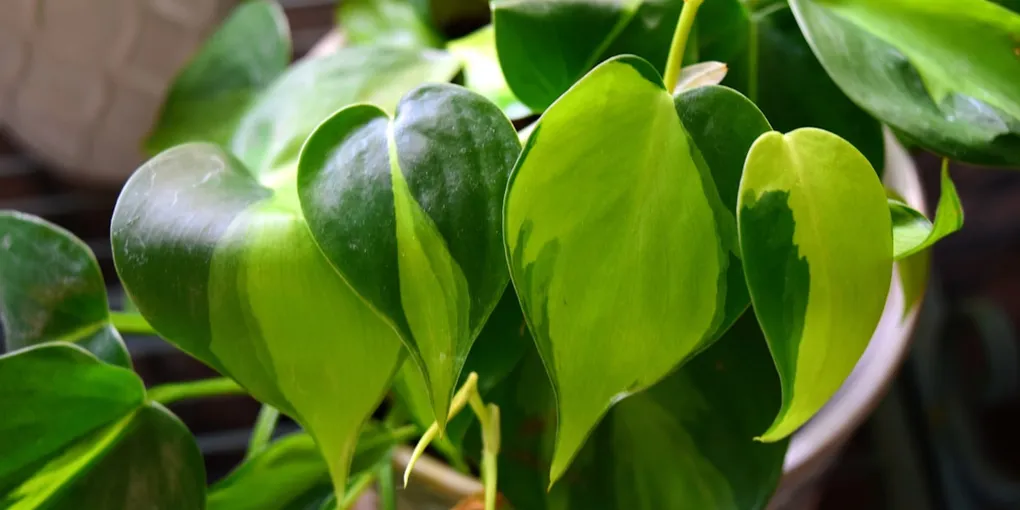
Philodendron hederaceum ‘Brasil’ is a variegated heartleaf philodendron, named for the broad lime-green and yellow stripe running down the center of each dark green, heart-shaped leaf — a color combination that echoes the green and yellow of the Brazilian flag. Compared to trickier variegated aroids, Brasil is forgiving: it holds its pattern with far less fuss than something like Pink Princess Philodendron, which makes it a good entry point if you want variegation without the extra vigilance.
Light
Bright, indirect light keeps the variegation crisp. In lower light, new leaves tend to come in more solid green — the plant reverting to the most efficient way to photosynthesize, since variegated tissue lacks chlorophyll and produces less energy. A spot a few feet from an east- or south-facing window, without direct midday sun on the leaves, gives you the best shot at holding onto strong striping.
Watering
Let the top 1-2 inches of soil dry out before watering again — the same routine as a standard philodendron or Philodendron Micans. Brasil isn’t especially fussy about watering, but it doesn’t tolerate soil that stays soggy, so err on the side of underwatering rather than over.
Soil and pot
A chunky, well-draining aroid mix works well — standard potting soil cut with perlite and orchid bark strikes the right balance. Use a pot with a drainage hole; wet, compacted soil is the fastest way to lose roots.
Growth habit and support
Brasil grows as a vining trailer and looks great cascading from a hanging pot or a high shelf. If you’d rather it climb, training it onto a moss pole encourages larger leaves and a fuller shape, similar to how Philodendron Birkin responds to support.
Propagation
Brasil propagates the same way as other philodendrons: take a stem cutting with at least one node attached and root it in water or moist soil. When choosing a cutting, pick a section that already shows good variegation — cuttings taken from an all-green section of vine usually keep growing all-green, since the variegation is tied to that section’s genetics rather than the plant as a whole. Full method here: how to propagate houseplants from cuttings.
Toxicity
Like all philodendrons, Brasil contains calcium oxalate crystals and is toxic to cats and dogs if chewed, causing oral irritation, drooling, and vomiting. Keep it out of reach of curious pets, or see pet-safe houseplants for cats and dogs for alternatives.
Common problems
Leaves reverting to solid green is the most common complaint, and it usually traces back to low light rather than a mistake elsewhere. Once you notice a stem producing consistently green leaves, prune it back to the last node that still shows variegation — this redirects growth and typically brings back striped leaves from that point forward.
Legginess with long bare stems between leaves means the plant isn’t getting enough light and is stretching to find it. Move it closer to a bright window and trim back leggy growth once conditions improve; the cuttings root easily if you want to fill the pot back out.
Yellowing leaves point to overwatering rather than a light or nutrient problem. Let the soil dry out further between waterings and confirm the pot actually drains.
Small or curled new leaves can signal low humidity or a recent move to a drier spot. Brasil tolerates average household humidity fine, but a sudden drop in moisture — like a heater kicking on for the season — can show up in new growth before the plant otherwise looks stressed.