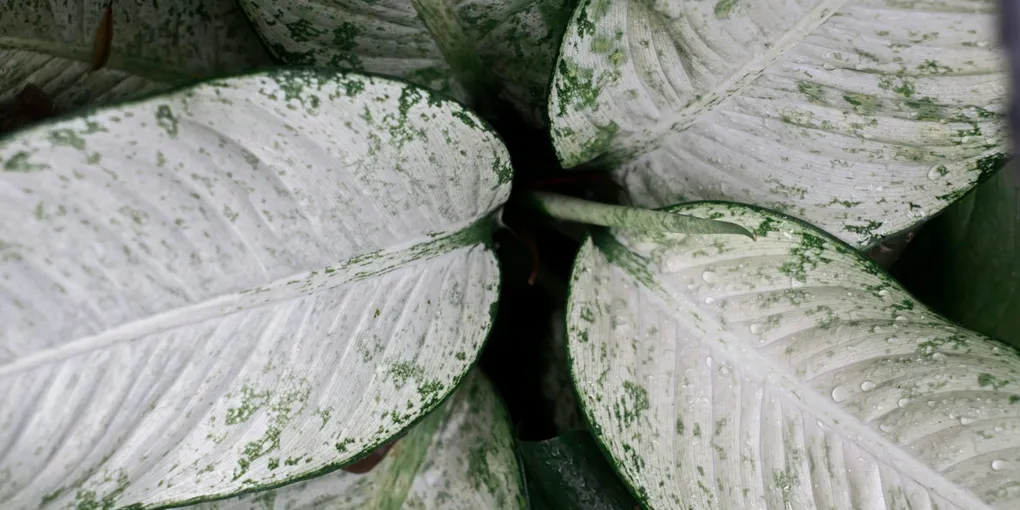
How to Care for a Philodendron Birkin
Philodendron Birkin stands out from most philodendrons for two reasons: it doesn’t vine or climb like a heartleaf philodendron does, instead growing as a compact, upright rosette, and its dark green leaves are striped with crisp white pinstripes. It isn’t a naturally occurring species — it showed up as a spontaneous mutation of Philodendron ‘Rojo Congo’ and got propagated from there, which is part of why its variegation pattern isn’t fully locked in.
Light
Bright, indirect light matters more for this plant than for a typical solid-green philodendron. The white-striped parts of each leaf have little to no chlorophyll, so they can’t photosynthesize on their own — the green portions have to work harder to support the whole leaf, and they need good light to do it. Too little light slows growth and seems to push new leaves toward reverting to solid green, since an all-green leaf is more efficient to produce than a striped one. See how much light do houseplants need for help judging what a given spot actually provides.
Watering
Let the top 1-2 inches of soil dry out before watering again, the same routine as most other philodendrons. It tolerates missed waterings better than it tolerates soil that stays wet, so when in doubt, wait a bit longer rather than watering on a fixed schedule.
Soil and pot
A well-draining, slightly chunky aroid mix works well — standard potting soil cut with perlite and a bit of bark is a reasonable approximation. A pot with a drainage hole is essential, since standing water at the roots is the faster way to lose this plant than underwatering ever is.
Propagation
Philodendron Birkin propagates the same way as other philodendrons: snip a stem cutting with at least one node, and root it in water or moist soil. For the full method, see how to propagate houseplants from cuttings.
Variegation stability
New leaves on a Birkin don’t always come in with the same pinstripe pattern as the last one. Some leaves emerge solid green — this is normal genetic drift in an unstable variegated cultivar, not a sign of disease or poor care, and there’s no product or technique that guarantees the pattern back. If you want to discourage more green leaves, you can prune the stem back to the last well-patterned leaf or node, which redirects the plant’s growth from that point instead of the reverted tip.
Less commonly, a leaf can drift the other way and come in almost entirely white. That’s actually more of a problem than a plain green leaf, since a leaf with little to no green tissue can’t produce much energy for the plant. It’s fine to prune that growth point back too — the plant can’t sustain much all-white growth long-term, and removing it lets the plant put its energy into leaves that can actually support it.
Toxicity
Philodendron Birkin is toxic to cats and dogs if chewed, causing oral irritation, drooling, and vomiting from the calcium oxalate crystals in its tissue, the same as other philodendrons. Keep it out of reach of curious pets — see pet-safe houseplants for cats and dogs for alternatives if that’s a concern in your home.
Common problems
Solid green new leaves are the most common thing people ask about with this plant, and they’re almost always normal variegation drift rather than a problem to fix. See the section above if you want to try steering new growth back toward the striped pattern.
Brown, crispy leaf tips and edges usually point to low humidity or mineral buildup from tap water rather than underwatering.
Yellowing lower leaves are a common sign of overwatering — check that the soil is actually drying out between waterings and that the pot drains freely.
Slow growth or leaves coming in smaller than expected almost always trace back to insufficient light, which this plant is less tolerant of than an all-green philodendron.