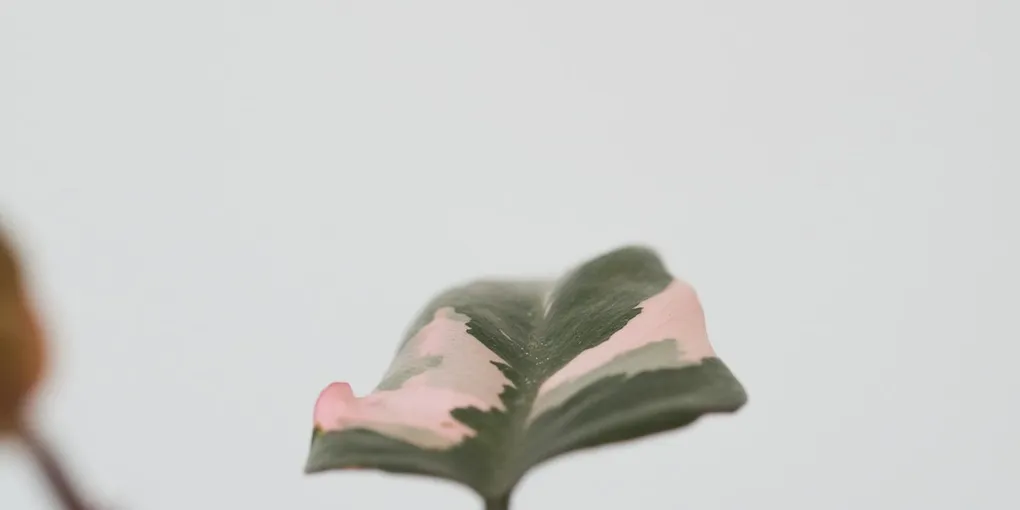
How to Care for a Pink Princess Philodendron
Philodendron erubescens ‘Pink Princess’ is grown for one reason: the hot-pink splashes and streaks across its otherwise near-black, dark green leaves. That variegation is unstable and genetically random, which is exactly what makes this plant both desirable and a little frustrating to keep looking the way you bought it. Most of the care is standard philodendron routine — the variegation is the part that needs deliberate attention.
Light
Bright, indirect light is non-negotiable if you want to keep the pink. Variegated tissue lacks chlorophyll, so it produces less energy for the plant than plain green tissue does, and in low light the plant responds by growing leaves that are more green and less pink — reverting to the more efficient option. A spot a few feet from an east- or south-facing window, with no direct midday sun on the leaves, gives you the best shot at holding onto strong variegation. See how much light do houseplants need if you’re unsure what your space actually provides.
Watering
Let the top 1-2 inches of soil dry out before watering again, the same routine as a standard philodendron. Pink Princess is not more finicky about watering than its all-green relatives, but it is less tolerant of soggy soil — variegated tissue is more prone to rot and disease than solid green tissue, so err on the side of underwatering rather than over.
Soil and pot
Use a chunky, well-draining aroid mix — standard potting soil cut with perlite and orchid bark works well. A pot with a drainage hole is essential; wet, compacted soil is the fastest way to lose roots and, with them, the whole plant.
Growth habit and support
Pink Princess grows as a vining climber and tends to get leggy and vine-like without something to climb. Training it onto a moss pole encourages larger leaves and a fuller, more upright shape, and in practice plants grown on a pole tend to hold their variegation better than ones left to sprawl, likely because the plant is putting more energy into fewer, larger leaves.
Humidity
Average household humidity is tolerated, but this plant does better above 50%. Low humidity shows up as crispy edges on new leaves before it becomes a bigger issue. See how to increase humidity for houseplants for simple ways to raise it around the plant.
Propagation
Pink Princess propagates the same way as other philodendrons: take a stem cutting with at least one node attached and root it in water or moist soil. When choosing a cutting, pick a section that already shows some pink variegation on its leaves — cuttings taken from an all-green section of vine will usually grow all-green going forward, since variegation is tied to that section’s genetics, not the plant as a whole. Full method here: how to propagate houseplants from cuttings.
Toxicity
Like all philodendrons, Pink Princess contains calcium oxalate crystals and is toxic to cats and dogs if chewed, causing oral irritation, drooling, and vomiting. Keep it out of reach of curious pets, or see pet-safe houseplants for cats and dogs for alternatives.
Common problems
Leaves reverting to solid green is the most common complaint with this plant, and it’s not a care mistake so much as the plant’s unstable genetics reasserting themselves, often triggered by low light. Once you notice a stem producing consistently green leaves, prune it back to the last node that still shows pink variegation — this redirects growth and usually brings back variegated leaves from that point forward. Left alone, an all-green stem will keep growing green and can eventually take over the plant.
Leaves that are mostly or entirely pink look striking but are a problem in the other direction — they contain little to no chlorophyll and can’t photosynthesize well, which drains energy from the rest of the plant to support them. If a stem is producing consistently pale pink or white leaves, it’s usually best to prune it back to a leaf with a healthier mix of green and pink.
Yellowing leaves and root rot point to overwatering rather than a light or nutrient problem. Let the soil dry out further between waterings and confirm the pot actually drains.
Small, oddly spaced leaves with long bare stem between them means the plant isn’t getting enough light and is stretching to find it — move it closer to a bright window and consider pruning the leggy growth once conditions improve.