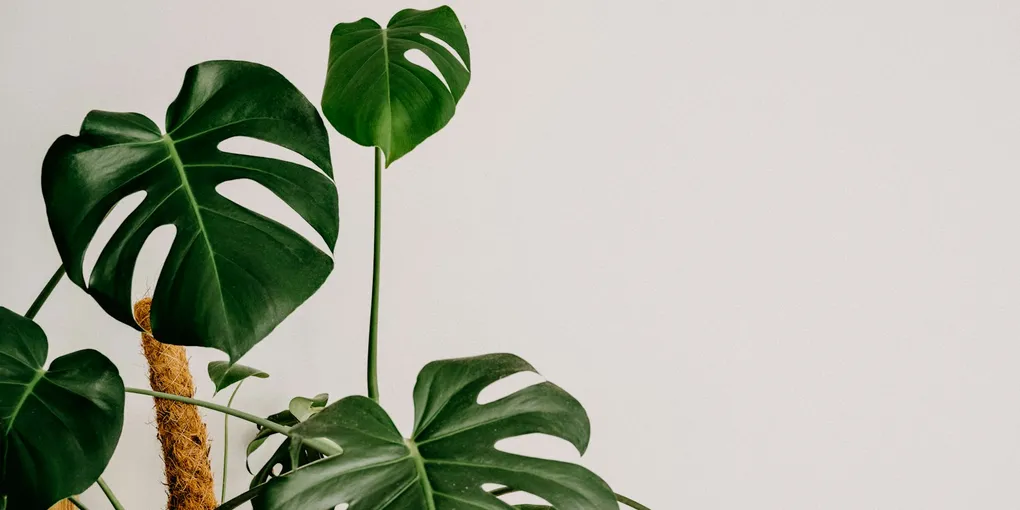
How to Use a Moss Pole for Climbing Houseplants
Plants like monstera, philodendron, and pothos are climbers by nature. Left to trail off a shelf or spill over the edge of a pot, they’ll survive just fine, but they won’t grow the way they would if given something to climb. A moss pole gives them that something, and the difference it makes to leaf size and overall growth is bigger than most people expect.
Why a moss pole helps
In the wild, climbing aroids grow up tree trunks, anchoring themselves with aerial roots and pushing out progressively larger leaves as they climb toward better light. A plant left to trail instead of climb never gets that cue, and tends to keep producing smaller, more juvenile-looking leaves indefinitely. Giving a monstera or philodendron a moss pole to grip onto reproduces that climbing behavior, and it’s common to see leaf size increase noticeably within a few months of the plant actually attaching to the pole and climbing it.
Setting one up
Insert the pole carefully. Push it into the soil near the base of the plant, angling it away from the main root mass rather than straight down through the center of the pot, so you’re not slicing through roots. For an established plant, it’s easier to do this at repotting time when you can see where the roots actually are.
Attach the stem loosely. Use soft plant ties, strips of cloth, or plant clips to secure the stem to the pole, leaving enough slack that the stem isn’t pinched. As the plant grows, add new ties higher up rather than relying on the first one or two to hold the whole thing.
Point new growth toward the pole. Aerial roots and new stems don’t automatically find the pole on their own — gently guide them toward it as they emerge, and they’ll usually take it from there once they make contact.
Keeping the moss damp
A dry moss pole doesn’t do much good. Aerial roots attach to and draw moisture from damp moss, so keeping it consistently damp — not soaking wet — is what actually gets the plant to root into it rather than just growing past it. Misting the pole directly every few days works for most setups, and some poles have a hollow core you can pour water into periodically for a deeper soak. In naturally humid rooms this takes less upkeep; in dry air, see how to increase humidity for houseplants for ways to keep both the moss and the surrounding air from drying out too fast.
Ongoing care
Keep redirecting new growth toward the pole as the plant produces it — it’s an easy step to forget once the plant is established, and stems left untrained will happily flop back over the side of the pot instead of continuing to climb. Once the plant reaches the top of the pole, you have two options: extend the pole with an add-on section so the plant keeps climbing, or let it top out and switch to guiding new growth back down or trimming it. Regular pruning also helps keep a climbing plant looking full rather than leggy near the base, where leaves are more likely to be shed as the plant puts its energy into new growth up top.
Common mistakes
Tying too tightly. A tie that fits snugly when you attach it can girdle the stem as it thickens, cutting into the tissue and restricting growth above that point. Check ties periodically and loosen or replace any that have gotten tight.
Letting the moss dry out completely. A pole that’s allowed to dry out repeatedly won’t hold aerial roots the way a consistently damp one will, and a plant that never successfully attaches gets little benefit from the pole beyond basic physical support.
Using a pole that’s too short. Fast growers like monstera can reach the top of a short pole within a single growing season, after which new growth has nothing left to climb and starts flopping over again. Sizing up, or planning to add an extension, saves you from redoing the setup sooner than expected.