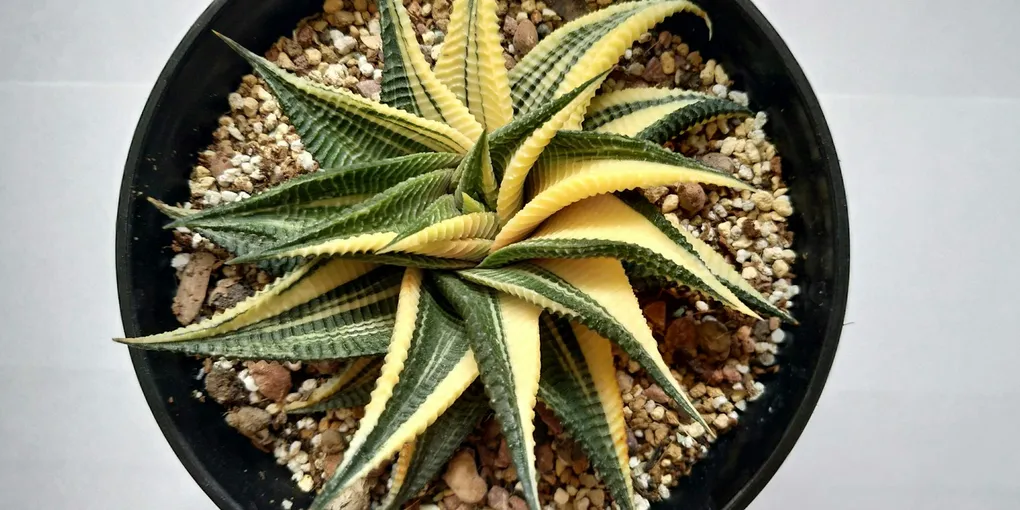
How to Care for a Haworthia
Haworthia — the small, striped “zebra plant” (Haworthia fasciata) and its softer, translucent-leaved cousin Haworthia cooperi are among the most forgiving succulents you can grow indoors. Both form tight, low rosettes that rarely outgrow a coffee mug, and both come from the same trick of habitat that makes them different from the succulents you’re used to: in the wild, they grow tucked under rocks and shrubs, not out in open sun. That single fact changes almost everything about how to place one.
Light
Most succulents want as much direct sun as you can give them. Haworthia is the exception. It wants bright, indirect light — an east-facing window, or a few feet back from a south- or west-facing one. Hours of direct, hot sun can scorch it, turning leaves reddish, orange, or brown as a stress response. That’s the opposite problem from what you’d expect with succulents in general, so don’t assume a Haworthia needs the same blasting windowsill spot as an echeveria or a jade plant.
That said, Haworthia also tolerates lower light better than most succulents, which is part of why it does well as a desk or shelf plant. It won’t thrive in a dim corner, but it’s more forgiving there than almost anything else in the succulent world. The trade-off: in light that’s too low, the rosette loosens and stretches instead of staying tight and compact, reaching toward whatever light it can find. If you’re unsure how much light a given spot actually provides, see how much light do houseplants need before picking a window.
Watering
Watering follows the classic succulent pattern: soak and dry, not a schedule. Water thoroughly until it runs out the drainage hole, then let the soil dry out completely before watering again — check by sticking a finger a couple inches into the mix, not just eyeballing the surface. Haworthia is very drought tolerant and stores water in its thick leaves, so it’s far more likely to suffer from too much water than too little.
Overwatering, and the root rot that follows, is the main way Haworthia plants die. If soil stays damp for days at a time, roots start to break down before you ever see a problem on top. Cut watering back even further in winter, when growth slows to a crawl and the plant simply isn’t using much water. If you’re already seeing trouble, how to identify and fix root rot covers what to look for and how to intervene.
Soil and pot
A fast-draining cactus or succulent mix is essential — regular potting soil holds too much moisture around Haworthia’s compact root system and sets up rot even with careful watering habits. If you want to build your own blend, the best soil mix for houseplants has a starting ratio you can adjust with extra perlite or coarse sand.
Because Haworthia has a shallow, compact root system, it doesn’t need a deep pot — a shallow dish or squat pot suits it better than a tall one, and it also dries out more evenly. Whatever container you choose, make sure it has a drainage hole; a Haworthia sitting in a sealed pot with no way for water to escape is on a short timeline no matter how carefully you water.
Toxicity
Haworthia is non-toxic to cats and dogs, which makes it one of the better succulent choices if you have pets that like to investigate plants. For more options along the same lines, see pet-safe houseplants for cats and dogs.
Common problems
Mushy or translucent leaves mean overwatering, usually heading toward root rot. Stop watering, let the soil dry out fully, and check the roots if the problem doesn’t resolve quickly.
Leaves turning reddish, orange, or brown are a sun stress response, not disease — it usually means the plant is getting more direct light than it wants. Move it a little farther from the window and the color should settle back to green over the next few weeks. A little color shift isn’t necessarily bad, but genuine bleaching or crisp, dry patches mean actual scorch.
A loose, stretched-out rosette with leaves splaying outward instead of staying tight means the plant isn’t getting enough light. Move it somewhere brighter — indirect, not direct — and new growth will come in more compact.
Slow growth is normal. Haworthia is a slow grower even in ideal conditions, so don’t mistake a lack of visible progress for a problem — as long as leaves are firm and green, the plant is doing fine.