The Best Succulents for Low-Light Rooms
“Low-light succulent” is close to a contradiction in terms. Most succulents evolved in open, sun-baked habitats, and in a dim room they do the same thing any sun-loving plant does when starved of light: they stretch, or etiolate, growing tall and thin with wide gaps between leaves as they reach for whatever brightness they can find. If you’ve bought a compact little succulent and watched it turn leggy and pale on a shelf away from a window, that’s exactly what happened — see how to fix a leggy houseplant for what to do once it’s already stretched. The honest answer for most succulents is that they need bright, direct light, full stop, and no amount of clever placement changes that.
That said, a handful of plants sold and grown as succulents are genuine exceptions, usually because they’re not desert plants in the strict sense or because they store water in a way that buys them a lot of slack. None of these will look quite as compact or vividly colored as they would in bright light, but they’ll actually survive and grow in a dim room instead of just limping along.
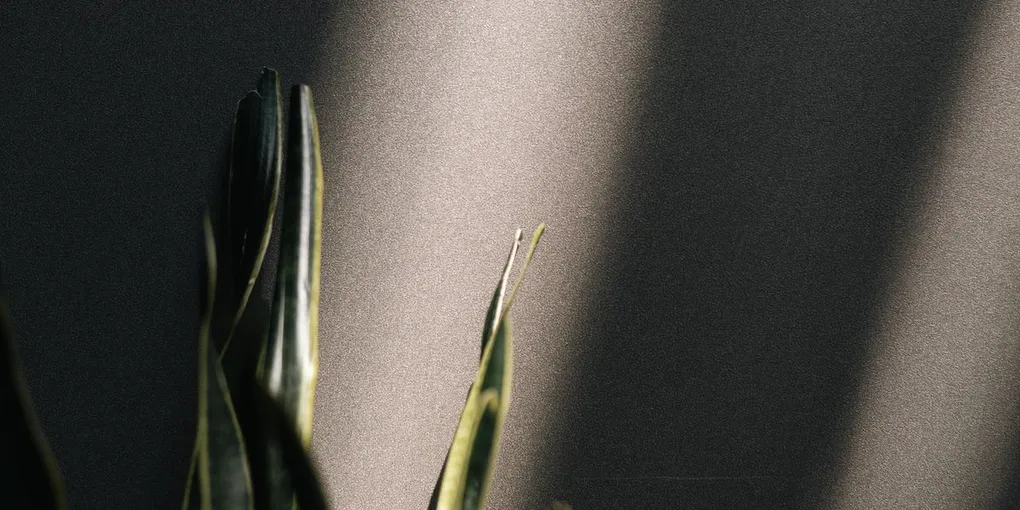
Snake plant (Sansevieria)
Snake plant is about as close as this list gets to a plant that genuinely doesn’t mind low light. Its thick, upright leaves store water efficiently, and it tolerates deep shade and irregular watering better than almost anything else you can grow indoors. See how to care for a snake plant for the full rundown — the main thing to get right in low light is watering even less than you would in a bright spot, since growth slows and the soil stays wet longer.
ZZ plant
ZZ plant isn’t a true succulent, but it shares the same water-storing logic — its underground rhizomes hold enough reserve that the plant can coast through weeks of low light and inconsistent watering without much complaint. See how to care for a ZZ plant for care details. Growth will be noticeably slower in a dim room, but slow is different from struggling, and this plant genuinely does fine there.
Christmas cactus
Unlike the desert cacti most people picture, Christmas cactus grows naturally as an epiphyte in the dappled light of a rainforest canopy, not in open desert sun. That background makes it far more tolerant of moderate or indirect light than a true desert succulent would be. See how to care for a Christmas cactus for watering and bloom-triggering details — just know that very low light will still suppress flowering even if the plant itself survives.
Haworthia
Haworthia is more shade-tolerant than most true succulents, but it’s worth being precise here: “more tolerant” doesn’t mean it wants deep shade. It does best a few feet back from a bright window rather than directly in one, and it will still slowly stretch and lose its tight rosette shape in a genuinely dim room. See how to care for a haworthia for the specifics — think of this one as the succulent that tolerates a slightly dimmer spot than its relatives, not one that thrives in true low light.
If none of these fit your space
If your room is dimmer than even these plants can handle, the honest options are to pick a different plant entirely — see the best houseplants for low-light rooms for options that were never succulents to begin with — or to add a grow light so you can actually grow the sun-loving succulents you want instead of settling for a short list of exceptions.