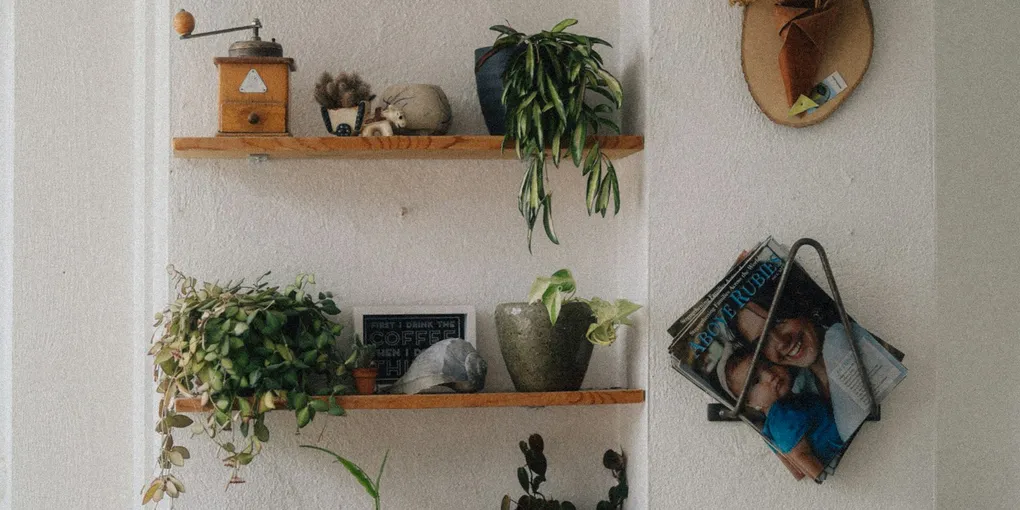
Best Houseplants for a Bookshelf or Plant Shelf
Open shelving is one of the best display spots a home has for plants, but it comes with a different set of constraints than a windowsill or plant stand: limited depth, a weight limit, and often light that’s inconsistent since most shelves aren’t sitting directly in front of a window. The right mix of plants can turn a bookshelf or floating shelf into the best-looking corner of a room; the wrong ones just look sparse or start dying within a month.
Trailing plants for cascading over the edge
- Pothos — The easiest trailing plant to find and keep alive, and it tolerates the uneven light most shelves get better than almost anything else on this list. Let a vine hang over the edge and it’ll keep growing longer with basically no intervention.
- String of Pearls — Bead-like succulent strands that drape dramatically over a shelf edge, but only if the shelf gets real light — several hours of direct or very bright indirect sun. Low light leaves the strands stretched and sparse.
- String of Hearts — Thin wiry vines with small heart-shaped leaves, often marbled with silver or purple. Wants a similar full dry-out between waterings as string of pearls, and tolerates a bit less light.
- String of Dolphins — Leaves shaped like tiny leaping dolphins on trailing succulent stems. Same bright-light, dry-between-waterings care as its string-of relatives, and a good way to add visual variety if you’re already growing pearls or hearts elsewhere on the shelf.
Compact upright plants for the shelf surface
- Haworthia — Small, slow-growing, and tolerant of the inconsistent light many shelves get, since it doesn’t demand the intense direct sun some other succulents need.
- Peperomia — Stays compact, doesn’t mind a bit of shade, and comes in enough leaf shapes and colors to fill a shelf with variety without anything outgrowing its spot.
- A small snake plant — Upright, narrow, and one of the few plants that genuinely tolerates low light rather than just surviving it, which makes it a safe pick for the dimmer end of a shelf.
Tips for actually living with a plant shelf
Mind the weight. Floating shelves and most bookshelf brackets have a real weight limit, and wet potting soil is heavier than it looks — a fully watered 6-inch pot can weigh several pounds. Stick to small pots on floating shelves, and save anything larger for shelving with solid support underneath.
Plan for watering before you need to. A shelf mounted above head height means pulling pots down every time they need water, which gets old fast. Either keep shelf plants within easy reach, use pots light enough to lift down one-handed, or lean toward slower-drinking succulents and snake plants that only need watering every couple of weeks.
Space trailing plants so they don’t tangle. Two trailing plants on the same shelf will eventually grow into each other if they’re placed too close, and untangling a string of pearls from a pothos vine is a good way to snap both. Give each trailing plant its own end of the shelf, or alternate a trailer with an upright plant to create a natural gap.
How this differs from our other shelf guides
Our best hanging and trailing houseplants guide covers a similar cast of plants, but it’s aimed at hanging baskets and macrame hangers specifically — pots suspended in open air. This post is about shelf styling: a mix of trailing and upright plants sitting on a solid surface, with the specific constraints that come with that (weight limits, reaching pots to water them, spacing plants so they don’t tangle). If you’re working with shelving that’s out of easy reach altogether, our best houseplants for high shelves guide covers plants that tolerate going longer between waterings, which matters more the harder a shelf is to get to.