How to Care for a String of Hearts
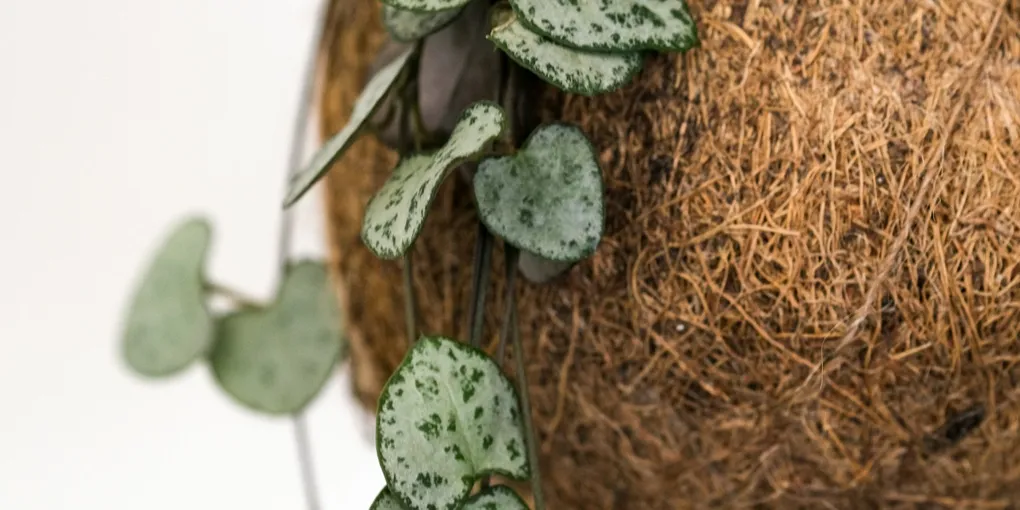
String of Hearts (Ceropegia woodii), also sold as Rosary Vine or Chain of Hearts, is a semi-succulent trailing vine with thin wiry stems and small, heart-shaped leaves marbled in silvery-green and purple. It stores water in both its leaves and a tuber that often forms at the soil line, which makes it one of the more drought-tolerant houseplants you can own. Most problems come from treating it like a regular tropical plant instead of the succulent it actually is.
Light
Give a string of hearts as much bright light as you can, including a few hours of gentle direct sun from an east- or south-facing window. This isn’t a low-light plant — it tolerates dim spots without dying, but the leaves lose their crisp marbling and turn a flat, dull green, and the vines stretch out with long bare gaps between leaves instead of growing dense. If your plant looks washed out or sparse, more light is almost always the fix; see how to fix a leggy houseplant if the vines have already stretched out.
Watering
Let the soil dry out completely before watering again, then water thoroughly and let it drain. This plant behaves like a succulent, not a typical trailing houseplant — it would rather go too long between waterings than sit in damp soil. During the growing season that’s often every 1-2 weeks; in winter, when growth slows way down, stretch it out further. If you’re used to watering on a fixed schedule, see watering houseplants the right way for how to judge by feel instead.
Soil and pot
Use a fast-draining, succulent-style mix — the same kind you’d use for succulents, such as a standard potting mix cut with extra perlite or pumice. Dense, moisture-retentive soil is the fastest way to rot the tuber and roots. Whatever pot you choose needs a drainage hole, and a shallower, wider pot works well since the roots and tuber don’t grow especially deep. Terracotta is a good choice if you tend to run heavy-handed with the watering can, since it lets extra moisture evaporate through the sides.
Humidity
Average room humidity is fine. String of hearts is adapted to survive dry stretches, so unlike many trailing tropicals it doesn’t need extra humidity to look its best — good light and correct watering matter far more here.
Propagation
String of hearts is easy to propagate and one of the most reliable candidates for it. Snip a stem with a few leaf pairs, let the cut end callus over for a day, and either lay it across moist succulent soil (it roots readily at the nodes) or place it in water until roots form. It also produces small round tubers along mature vines that can be pinned down onto soil to root in place — a common way to fill out a hanging pot with a fuller, more layered look. For general technique, see how to propagate houseplants from cuttings. Because it trails rather than climbs, it’s also a natural pick if you’re building out a collection of hanging and trailing houseplants.
Toxicity
String of hearts is considered non-toxic to cats and dogs — the ASPCA toxic and non-toxic plants database lists it as safe — making it a reasonable choice for pet-safe houseplants — though as with any plant, it’s still best to keep trailing vines out of reach of pets that like to chew.
Common problems
Shriveled, thin, or wrinkled leaves mean the plant has gone too long without water and is pulling on its stored reserves. A thorough soak should plump the leaves back up within a day or two.
Translucent, mushy, or yellowing leaves point to overwatering, usually from soil that hasn’t been allowed to dry out between waterings. Cut back on frequency and check that the pot actually drains; if it’s progressed further, see how to identify and fix root rot.
Leggy vines with big gaps between leaves happen in low light — the plant stretching to find more of it. Move it somewhere brighter, and trim back any bare vines to encourage bushier new growth from lower down.
Loss of leaf variegation is also a light issue. New leaves growing in solid green or losing their silver marbling means the plant needs brighter light, not more water or fertilizer.