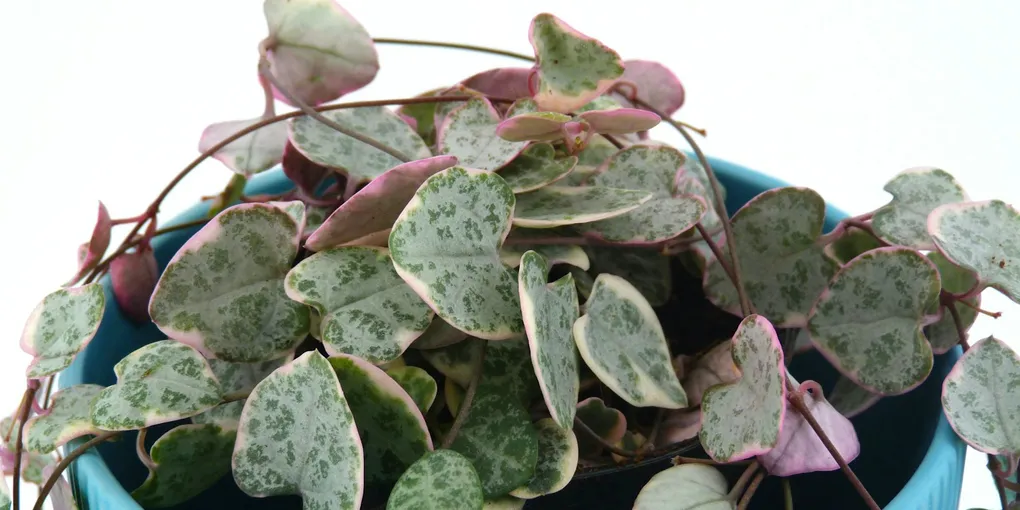
How to Care for a String of Dolphins
String of dolphins (Senecio peregrinus) is a trailing succulent whose small, curved, beaked leaves really do look like a pod of tiny dolphins leaping along a thin, draping stem. It’s a hybrid between string of pearls and a plant called candle plant, and it shares string of pearls’ care needs almost exactly — if you’ve grown that plant before, this one will feel immediately familiar.
Light
String of dolphins wants bright, indirect light, with a little gentle direct sun in the morning or late afternoon being fine. Enough light matters for keeping the plant compact and well-shaped — in lower light, the stems stretch out with leaves spaced further apart, and the “dolphins” themselves lose some of their tight, distinct shape as the plant prioritizes reaching for light over filling out densely.
Watering
Treat it like a succulent: let the soil dry out most of the way between waterings, then water thoroughly and let it drain fully. The leaves store water, similar to string of pearls, which makes this plant considerably more tolerant of a missed watering than of soil that stays consistently damp. Overwatering — soil that never gets a real chance to dry out — is the most common way this plant runs into trouble, usually showing up as soft, mushy, translucent leaves and stems that rot at the base.
Soil and pot
Use a fast-draining succulent or cactus mix, or a standard potting mix cut with extra perlite. A pot with a drainage hole is essential, since the thin stems and small root system don’t leave much margin for error if they’re sitting in wet soil for long.
Toxicity
String of dolphins is mildly toxic to cats and dogs if chewed, similar to string of pearls, typically causing mouth irritation or an upset stomach rather than anything more serious. Keep it out of reach of pets that like to chew on trailing foliage.
Propagation
Propagation works the same way as string of pearls and string of hearts: snip a length of stem with several leaves attached, let the cut end callous over for a day, and lay it on top of moist, well-draining soil. Roots typically form along the stem within a couple of weeks, and laying several cuttings across a pot is the fastest way to fill it out densely. See how to propagate houseplants from cuttings for the general method.
Common problems
Mushy, translucent leaves and stems are the clearest sign of overwatering, often with rot starting at the base. Let the soil dry out fully going forward, and if rot has already set in, cut back to healthy stem tissue — the salvageable pieces can be propagated into a fresh, healthy plant if the damage is extensive.
Shriveled, wrinkled leaves point to underwatering, though this is far less common than overwatering issues with this plant. A thorough soak should plump the leaves back up within a day or so if the roots are still intact.
Stretched-out stems with sparse, less-defined “dolphins” mean the plant isn’t getting enough light. Move it somewhere brighter, and trim back the leggiest stems to encourage fuller, denser new growth from lower down.
Leaf drop from handling happens because the leaves are only loosely attached to the stem, similar to a burro’s tail. Keep the plant somewhere it won’t be brushed against often, and try to move or repot it as little as possible — a few dropped leaves aren’t a sign of a health problem, just a side effect of handling a delicate trailing succulent. For more trailing options in this style, see best hanging and trailing houseplants.