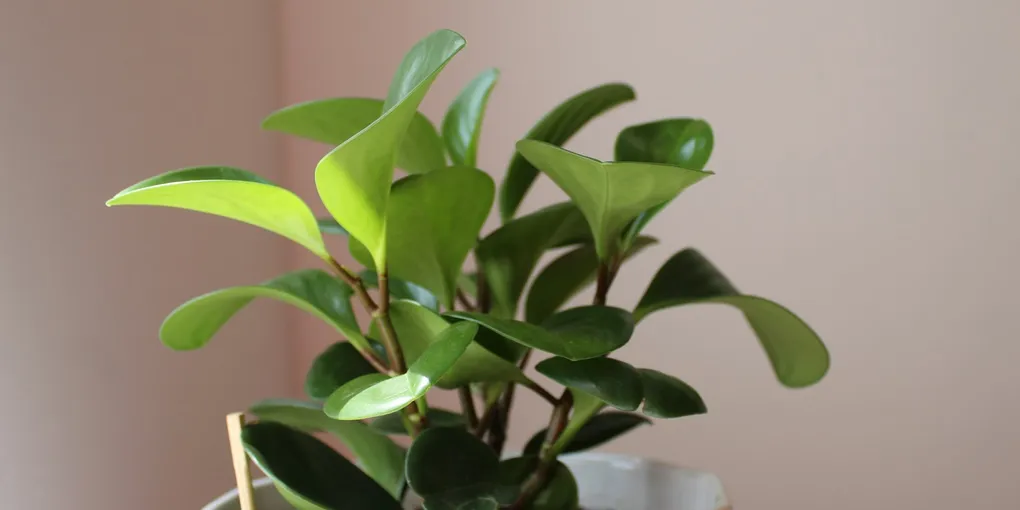
How to Care for a Peperomia
Peperomia is less a single houseplant than a whole category of them. The genus includes hundreds of species that look nothing alike — watermelon peperomia with its striped, football- shaped leaves, the glossy, upright peperomia obtusifolia (often sold as baby rubber plant), trailing peperomia rotundifolia, and the crinkled, heart-shaped leaves of ripple peperomia. The good news is that despite the variety, peperomia care is close to identical across species, because nearly all of them are semi-succulent: they store water in thick leaves or stems and are far more forgiving than a typical tropical houseplant.
Light
Bright, indirect light produces the best growth and, on variegated varieties, the strongest color. A spot near an east-facing window or a few feet back from a south- or west-facing one works well. Peperomias also tolerate medium light better than most houseplants — growth just slows and leaves come in smaller. Avoid harsh direct sun, which scorches the thinner-leaved varieties like ripple peperomia, though the thicker-leaved ones can handle a little more of it.
Watering
This is where treating a peperomia like a regular tropical houseplant gets people into trouble. Because the leaves and stems hold water, peperomias want to dry out most of the way between waterings — let the top half of the soil go dry, and check with a finger rather than watering on a schedule. This is closer to succulent care than to something like a peace lily. Soft, mushy, or translucent leaves are the clearest sign of overwatering; a slightly wrinkled or thinner-feeling leaf usually means it’s time to water, not that something is wrong.
Soil and pot
Use a well-draining mix rather than standard potting soil straight from the bag. Cutting a regular mix with perlite, or using one formulated for succulents or cacti, gives roots the drainage they need. A pot with a drainage hole is close to mandatory here — peperomia roots are thin and rot quickly if they sit in wet soil. These plants also stay fairly small and are slow growing, so they rarely need repotting; sizing up a pot isn’t urgent unless you see roots circling at the bottom or growing out of the drainage hole.
Humidity
Average household humidity is fine for peperomia — this isn’t a plant that needs a pebble tray or humidifier to thrive. Thinner-leaved varieties like ripple peperomia appreciate slightly higher humidity and will tell you if the air is too dry with crispy leaf edges, but for the thicker, more succulent varieties it barely matters. If you’re already running a humidifier for other plants, see how to increase humidity for houseplants for options that work across a whole plant shelf.
Common varieties
A few of the most commonly sold peperomias:
- Watermelon peperomia (Peperomia argyreia) — round, pointed leaves striped silver and dark green like a watermelon rind, on thin red stems.
- Baby rubber plant (Peperomia obtusifolia) — thick, glossy, spoon-shaped leaves on an upright plant; one of the toughest and most common varieties.
- Peperomia rotundifolia — a trailing variety with tiny round leaves, good for hanging pots or shelves.
- Ripple peperomia (Peperomia caperata) — deeply crinkled, heart-shaped leaves in dark green or near-black, more compact and slightly more particular about humidity than the others.
Whichever one you have, the light, watering, and soil guidance above applies with only minor adjustments.
Toxicity
Peperomias are non-toxic to cats and dogs, which makes them a solid choice if you’re building out a plant collection with pets in the house. See pet-safe houseplants for cats and dogs for other options that are safe to grow around animals.
Common problems
Mushy stems or leaves, or leaves dropping off with little pressure point to overwatering and often root rot at this stage. Pull the plant and check the roots — if they’re brown and mushy rather than firm and pale, see how to identify and fix root rot. Cut back watering frequency and make sure the pot actually drains.
Wrinkled, thin, or curling leaves almost always mean the plant is underwatered or has gone too long between waterings for its pot size. Since these plants store water in their leaves, this look is a much more reliable underwatering signal than it would be on a thinner-leaved plant. Water thoroughly and the leaves should plump back up within a day or two.
Leggy growth with long gaps between leaves is a light issue — the plant is stretching toward a light source instead of filling out compactly. Move it closer to a window; for existing leggy growth, see how to fix a leggy houseplant.