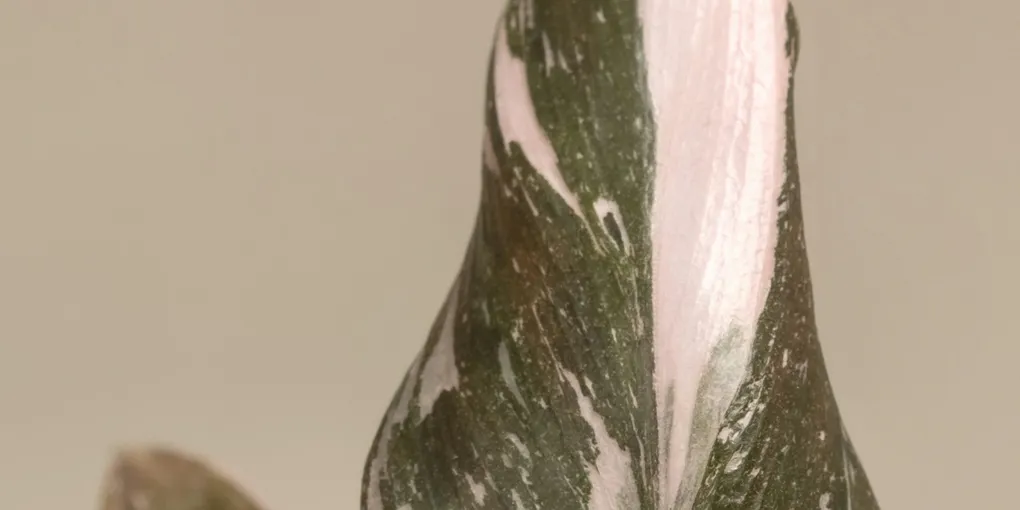
How to Care for a Philodendron White Princess
Philodendron erubescens ‘White Princess’ is a variegated climbing Philodendron hybrid grown for its thin, arrow-shaped leaves in dark green and deep burgundy, splashed and streaked with clean white and, occasionally, soft pink. It’s often confused with two other variegated erubescens hybrids. Philodendron White Knight is the closest look-alike — White Knight tends to have noticeably thicker, sturdier leaves and less red or burgundy coloring in its new growth and petioles than White Princess, which runs thinner-leaved and redder overall. It’s a different plant entirely from the Pink Princess Philodendron, despite the similar name — Pink Princess is a separate cultivar with near-black leaves and hot pink (rather than white) variegation. White Princess is the fussier of the two when it comes to light and leaf care, mostly because of how easily its white sections scorch.
Light
Bright, indirect light is essential, and it needs to be handled carefully. The white sections of a White Princess leaf contain no chlorophyll, which means that unlike the green tissue around them, they have no natural sunscreen — direct sun burns white variegation almost immediately, leaving brown, crispy patches that never recover. At the same time, too little light causes new leaves to come in more solid green, since the plant reverts toward the more efficient, less variegated growth when energy is scarce. A spot a few feet back from an east- or south-facing window, with bright but filtered light, threads that needle better than anywhere close to direct sun.
Watering
Let the top 1-2 inches of soil dry out before watering thoroughly. White Princess isn’t dramatically different from other philodendrons here, but variegated tissue is generally more prone to rot and disease than solid green tissue, so it pays to err toward underwatering rather than over. See watering houseplants the right way for a feel-based approach.
Soil and pot
A chunky, well-draining aroid mix — potting soil cut with perlite and orchid bark — keeps roots aerated and reduces rot risk. A pot with a drainage hole is essential. Size up only modestly when repotting; a large volume of slow-drying soil around a modest root system invites the kind of wet, compacted conditions that variegated philodendrons handle worse than all-green ones.
Growth habit and support
White Princess is a climbing vine and grows fuller, larger leaves when trained onto a moss pole rather than left to trail. Climbing plants also tend to hold their variegation a little better, likely because a plant putting energy into fewer, larger leaves has less incentive to revert to all-green growth.
Humidity
Average household humidity is tolerated, but this plant does better above 50%, with larger leaves and less crisping at the white, more fragile leaf margins. See how to increase humidity for houseplants for ways to raise it around the plant.
Toxicity
Like all philodendrons, White Princess contains calcium oxalate crystals and is toxic to cats and dogs if chewed, causing oral irritation, drooling, and vomiting. Keep it out of reach of curious pets, or see pet-safe houseplants for cats and dogs for alternatives.
Common problems
Brown, crispy patches specifically on the white sections of a leaf almost always means direct sun exposure. Move the plant further from the window rather than assuming it’s a watering or humidity issue.
New leaves coming in solid green with no white is the plant reverting due to insufficient light or, less often, unstable genetics in that particular stem. Once a stem is consistently producing all-green leaves, prune it back to the last leaf with real variegation — this typically encourages variegated growth to resume from that point.
Leaves that are mostly or entirely white can’t photosynthesize well and drain energy from the rest of the plant. Prune stems producing mostly white leaves back to a leaf with a healthier green-to-white ratio.
Yellowing leaves and a soft stem point to overwatering rather than a light problem. Let the soil dry out further between waterings and confirm the pot actually drains.
Leggy growth with long bare stretches between leaves means the plant needs more light or something to climb — add a moss pole and move it closer to a bright window if both are missing.