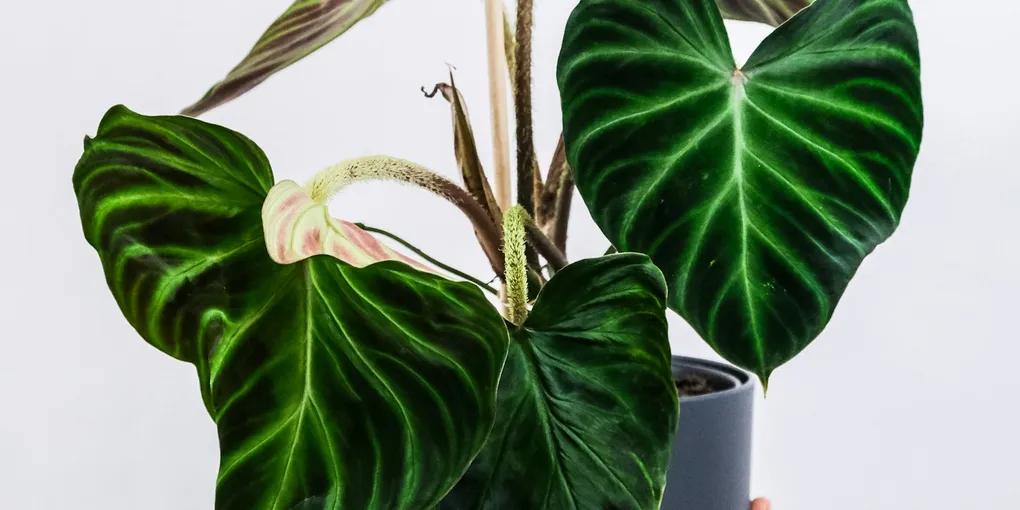
How to Care for a Philodendron Verrucosum
Philodendron Verrucosum is a climbing species prized for its heart-shaped, velvety dark green leaves with pale yellow-green veining, set off by distinctively fuzzy, hairy petioles and stems — the “verrucosum” in its name refers to those wart-like hairs. It belongs to the same broad velvet-leaf group as Philodendron Micans and Philodendron Hastatum, but has a reputation for being noticeably fussier than either — it wants consistently high humidity and doesn’t tolerate neglect the way many easier Philodendrons do. This is a plant for someone ready to monitor conditions closely rather than water it occasionally and forget about it.
Light
Bright, indirect light is important for keeping the velvety texture and vein contrast pronounced. A spot a few feet back from a south- or west-facing window, or closer to an east-facing one, works well. Direct sun scorches the delicate leaf surface quickly, while too little light causes small, dull leaves and weak, stretched growth.
Watering
Keep the soil lightly, consistently moist — water when the top inch feels dry, rather than letting the whole pot dry out the way you might with a tougher aroid. This plant sits in a narrower band than most Philodendrons: it doesn’t want to dry out completely, but it’s also genuinely vulnerable to root rot in soggy soil, so good drainage matters as much as watering frequency. See how to identify and fix root rot if leaves start yellowing or the stem feels soft.
Soil and pot
Use a very chunky, fast-draining aroid mix — potting soil cut generously with orchid bark, perlite, and a handful of sphagnum moss for some moisture retention without staying soggy. See how to make a chunky aroid potting mix for ratios. A pot with a drainage hole is non-negotiable given how sensitive this plant is to wet roots.
Humidity
This is the single biggest factor in growing Verrucosum successfully. It wants humidity well above what most homes offer naturally — 60-70% is a good target. Below that, expect crispy leaf edges and stalled growth even if watering and light are dialed in. A humidifier running nearby is the most reliable fix; see how to increase humidity for houseplants for setup options, since occasional misting alone won’t sustain the humidity this plant actually needs.
Support
As a climber, Verrucosum produces larger, more mature leaves when given something to climb rather than left to trail. A moss pole that you can mist along with the plant helps keep aerial roots and the surrounding air humid at the same time.
Toxicity
Philodendron Verrucosum is toxic to cats and dogs. It contains calcium oxalate crystals that cause oral irritation, drooling, and swelling if chewed, so keep it well out of reach of curious pets.
Common problems
Crispy, browning leaf edges are almost always a humidity problem with this species. Raise humidity before troubleshooting anything else.
Yellowing leaves with a mushy stem point to root rot from soil staying wet too long. Check the roots, trim away anything soft and brown, and repot into fresh, fast-draining mix.
Small, dull new leaves with poor vein contrast usually mean insufficient light. Move the plant closer to a bright window.
Stalled growth over winter is common and largely normal, since lower light and humidity indoors during colder months slow this plant down more than tougher Philodendrons. Hold off on fertilizing and avoid overwatering during this slower stretch — see winter houseplant care for more.