How to Care for a Peperomia Hope
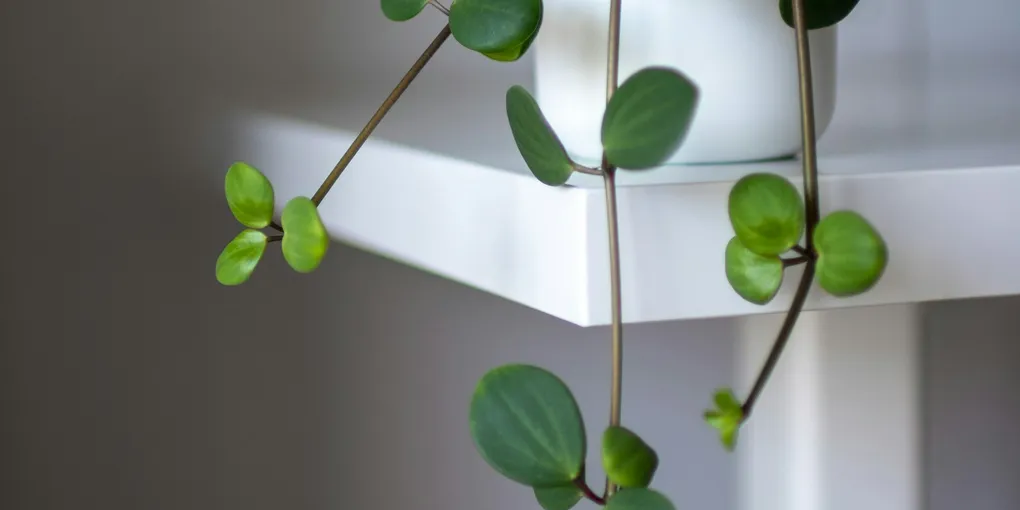
Peperomia Hope is a trailing hybrid (believed to be a cross between Peperomia rotundifolia and Peperomia quadrifolia) grown for its small, round, glossy leaves that grow in whorls along thin, cascading stems. Unlike the upright, broad-leaved varieties in the Peperomia family — think baby rubber plant or watermelon peperomia — Hope trails and spills over the edge of its pot, which makes it one of the better small houseplants for a hanging basket. It’s also semi-succulent, storing water in its leaves the way Peperomia Rosso does, so it tolerates missed waterings far better than most trailing houseplants.
Light
Bright, indirect light produces the fullest growth and keeps the leaves close together along the stem. A spot near an east-facing window, or a few feet back from a south- or west-facing one, works well. Peperomia Hope also tolerates medium light better than most trailing plants — it just grows slower and the gaps between leaves get a little longer. Avoid intense, direct sun, which can bleach or scorch the leaves; a few hours of gentle morning sun is fine, but harsh afternoon sun through an unfiltered south or west window is not.
Watering
Because the leaves store water, Peperomia Hope wants to dry out most of the way between waterings — let the top half to two-thirds of the soil go dry before watering again, checking with a finger rather than watering on a fixed schedule. This is a succulent-adjacent watering routine, closer to how to care for succulents than to a typical tropical houseplant, and it’s the single most important thing to get right. Overwatering is by far the more common way this plant runs into trouble; see overwatering vs. underwatering houseplants if you’re not sure which one you’re dealing with. Soft, mushy, or translucent leaves mean too much water. A wrinkled or noticeably thinner leaf means it’s time to water.
Soil and pot
Use a well-draining mix rather than dense, water-retentive potting soil. Cutting a standard mix with perlite, or using one formulated for succulents or cacti, gives the thin roots the drainage they need. A pot with a drainage hole is close to essential, since these roots rot quickly in soil that stays wet. Peperomia Hope is naturally compact and slow-growing, so it rarely needs repotting — a hanging basket or shallow pot it can trail out of works well for years before sizing up is necessary.
Humidity
Average household humidity is enough for Peperomia Hope to do well; it doesn’t need a humidifier or pebble tray to thrive. A bit of extra humidity can make the leaves look a touch glossier and plumper, but this isn’t a plant that suffers in normal indoor air the way a thin-leaved tropical would. If you’re already boosting humidity for other plants nearby, see how to increase humidity for houseplants for options.
Propagation
Peperomia Hope is one of the easiest trailing houseplants to propagate, which is part of why it’s so widely shared and traded among plant collectors. Snip a few inches of stem with two or three leaf nodes attached, strip the bottom leaf or two, and root it in water or moist, well-draining soil. Roots usually show up within a couple of weeks. Because the stems trail and can get long and sparse over time, propagating the tips back into the same pot is also a good way to keep the plant looking full. See how to propagate houseplants from cuttings for the general method, and best hanging and trailing houseplants for other plants that make good companions in a basket or on a shelf.
Toxicity
Peperomia Hope is non-toxic to cats and dogs, making it a solid choice for a hanging basket in a home with curious pets underneath it. See pet-safe houseplants for cats and dogs for more options if you’re building out a pet-friendly collection.
Common problems
Mushy stems or leaves that fall off with little pressure point to overwatering, and often root rot at this stage. Pull the plant and check the roots — if they’re brown and mushy instead of firm and pale, see how to identify and fix root rot. Let the soil dry out more between waterings and confirm the pot actually drains.
Wrinkled, thin, or curling leaves almost always mean the plant has gone too long without water. Since the leaves store water, this look is a more reliable underwatering signal here than it would be on a thinner-leaved plant. A thorough soak should plump the leaves back up within a day or two.
Long, bare stretches of stem with few leaves signal too little light — the plant is stretching to reach a light source instead of filling out. Move it closer to a window; trimming back leggy stems and propagating the cuttings is the fastest way to fill the pot back in.
Leaf drop after a move or repotting is usually transplant shock and resolves on its own within a few weeks as the plant adjusts. Keep watering light during this period rather than compensating with extra water.