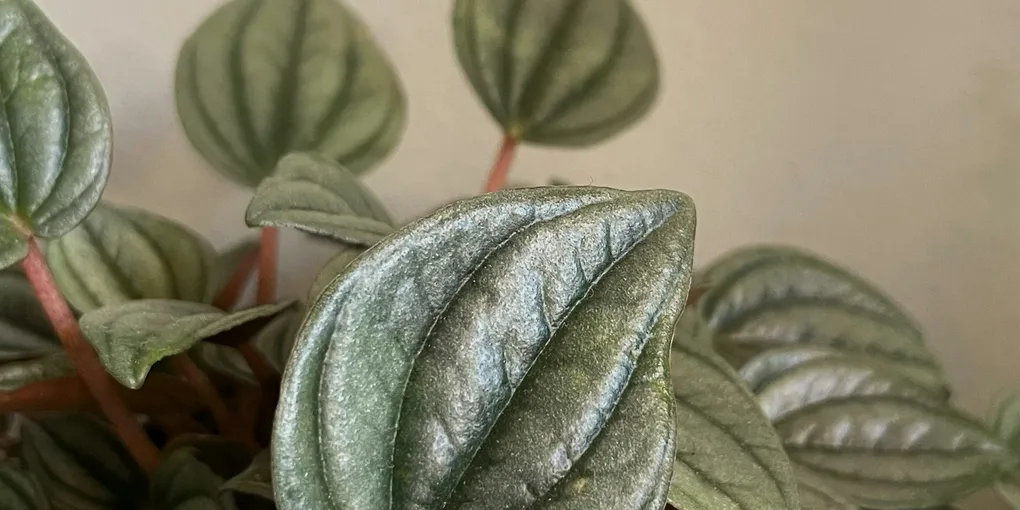
How to Care for a Peperomia Rosso
Peperomia Rosso (Peperomia caperata ‘Rosso’) is a compact plant with dark, forest-green leaves that have a deeply ridged, almost pleated surface on top and a rich burgundy-red underside, held up on upright reddish stems. It’s part of the broad Peperomia family, most of which are semi-succulent — they store water in their thick leaves and stems, which makes them naturally more tolerant of missed waterings than most tropical houseplants. Rosso stays small and compact, making it a good fit for shelves, desks, and other tight spaces.
Light
Bright, indirect light keeps growth compact and the leaf color rich. A spot near an east-facing window, or a few feet back from a south- or west-facing one, works well. Low light causes leggy growth with longer stems and smaller, less vibrant leaves. Direct, hot sun can scorch the leaves, so filtered or indirect brightness is the sweet spot.
Watering
Let the top 1-2 inches of soil dry out before watering. Because the leaves and stems store water, this plant is genuinely more tolerant of underwatering than overwatering — soggy soil is by far the more common way it runs into trouble, showing up as soft, mushy stems or yellowing leaves. See watering houseplants the right way for a feel-based approach.
Soil and pot
Use a well-draining potting mix — regular potting soil cut with perlite works well, since this plant’s thick roots don’t tolerate staying wet. A pot with a drainage hole is important, and there’s no need to size up aggressively when repotting, since Rosso is a naturally compact, slow-growing plant.
Humidity
Average household humidity is generally fine for this plant. A bit of extra humidity helps keep leaves looking their glossiest, but this isn’t a demanding factor the way it is for many tropical aroids. See how to increase humidity for houseplants if you want to give it a boost.
Toxicity
Peperomia Rosso is non-toxic to cats and dogs, making it a solid choice for homes with pets that like to investigate houseplants. See pet-safe houseplants for cats and dogs for more options.
Propagation
Rosso propagates readily from leaf cuttings — a single leaf with a bit of stem attached, placed in water or moist soil, will often root and eventually form a new plant. See how to propagate houseplants from cuttings for the general process.
Common problems
Soft, mushy stems near the soil line point to overwatering or root rot. Let the soil dry out more between waterings and check that the pot drains freely.
Leggy growth with long gaps between leaves signals insufficient light. Move the plant closer to a bright window to encourage more compact growth.
Dropping lower leaves in small numbers is normal as the plant matures, but widespread leaf drop usually points to a watering problem — check the soil before assuming pest issues.
Curling or wrinkled leaves typically mean the plant has gone too long without water. Since this species stores water in its leaves, a thorough soak after a dry spell usually brings it back within a few days.