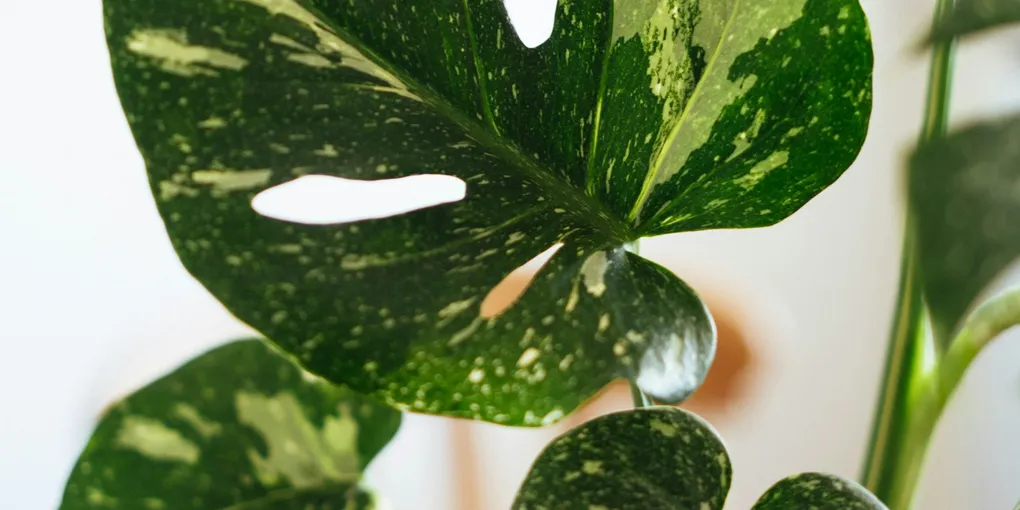
How to Care for a Monstera Thai Constellation
Monstera Thai Constellation is a variegated cultivar of Monstera deliciosa covered in irregular cream and yellow speckles and splashes across dark green, fenestrated leaves — the pattern is often compared to stars scattered across a night sky. Unlike Monstera Albo, which comes from a naturally occurring and unstable genetic mutation, Thai Constellation was developed through tissue culture in a lab in Thailand, and its variegation is chimeric but far more stable — it’s much less prone to reverting to solid green or throwing all-white, self-destructive leaves. That stability is a big part of why it costs less than an Albo of similar size, even though it’s still a genuinely variegated, slower-growing plant.
Light
Bright, indirect light is essential. A spot a few feet back from a south- or west-facing window, or closer to an east-facing one, keeps growth full and the variegation crisp. Cream and yellow sections carry little to no chlorophyll, so — like any variegated plant — Thai Constellation is running on a smaller solar panel than an all-green Monstera and needs more total light to keep pace. Too little light causes new leaves to come in mostly green as the plant prioritizes photosynthesis over pattern; too much direct sun scorches the pale sections, which burn faster than green tissue.
Watering
Let the top 2-3 inches of soil dry out before watering thoroughly until water runs from the drainage hole. The variegated sections use less water than green tissue, so this plant is a little more susceptible to overwatering than a standard Monstera deliciosa — check with a finger rather than sticking to a fixed schedule. See watering houseplants the right way for more on judging this by feel.
Soil and pot
A chunky, fast-draining aroid mix is ideal — potting soil cut generously with orchid bark, perlite, and a bit of charcoal. See how to make a chunky aroid potting mix for ratios. Make sure the pot has a drainage hole, and avoid sizing up too aggressively when repotting, since excess soil volume holds moisture longer than the roots can use.
Humidity
Aim for 50-60% humidity if you can manage it. Higher humidity supports fuller growth and larger fenestrations, and it reduces the crispy, browning edges that show up on variegated sections first. See how to increase humidity for houseplants for practical ways to raise it around this plant.
Support
Thai Constellation is a climber in nature, sending out aerial roots to grip a surface as it grows taller. Giving it a moss pole to climb encourages larger, more mature leaves with deeper fenestration than a plant left to sprawl unsupported.
Variegation
Because Thai Constellation’s variegation comes from stable tissue culture rather than a random genetic mutation, it’s far less likely to throw a fully white leaf that can’t sustain itself or revert an entire stem to solid green — the two problems that plague Monstera Albo. That said, light still shapes how much variegation shows: too little light and new leaves trend greener; consistently bright light keeps the cream speckling prominent. No pruning is needed to “protect” variegation the way it sometimes is with Albo.
Toxicity
Monstera Thai Constellation is toxic to cats and dogs. It contains calcium oxalate crystals that cause oral irritation, drooling, and swelling if chewed, so keep it out of reach of curious pets.
Common problems
Leaves coming in mostly green usually means the plant isn’t getting enough light. Move it somewhere brighter before assuming anything else is wrong.
Brown, crispy patches on the cream sections are typically sun scorch — pale tissue burns faster than green tissue in direct sun. Pull the plant back from harsh light even if the green areas look unaffected.
Slower growth than a green Monstera deliciosa is normal, not a problem. Less chlorophyll means less total photosynthesis, so temper growth expectations accordingly.
Yellowing leaves point to overwatering most of the time. Let the soil dry out further before the next watering and confirm the pot drains freely.