How to Care for an Echeveria
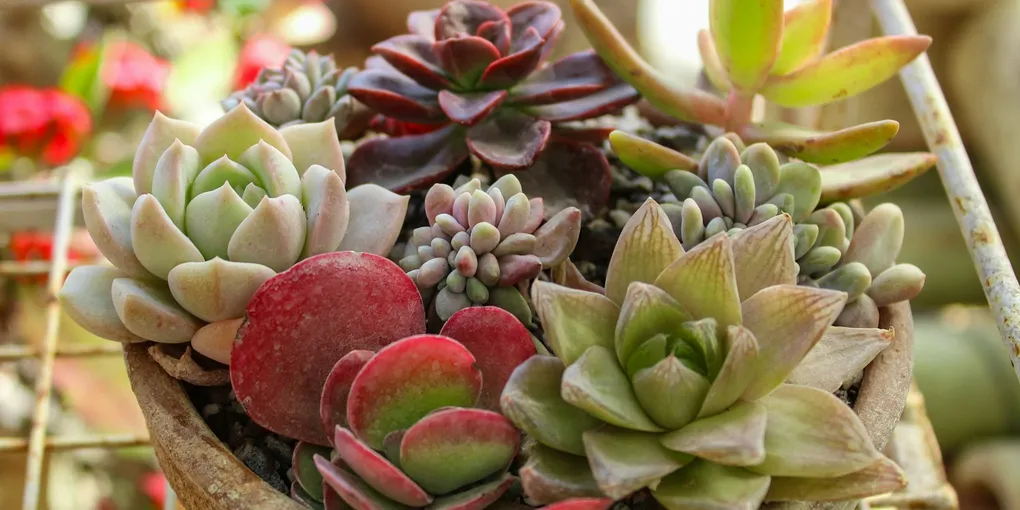
Echeveria is the succulent most people picture when they think “succulent” — tight rosettes of thick, often pastel-colored leaves stacked in a near-perfect spiral. That geometric shape isn’t guaranteed, though. It depends almost entirely on getting the light right, more so than most other succulents.
Light
Echeveria needs bright light, ideally with several hours of direct sun a day. This is the single biggest factor in whether a rosette stays tight and compact or stretches out and loses its shape. Indoors, a south- or west-facing windowsill is usually the best spot. If you’re moving a plant that’s been in lower light into direct sun, do it gradually over a week or two rather than all at once — leaves that have adapted to shade can scorch if suddenly exposed to full sun. For the general approach to succulents this plant belongs to, see how to care for succulents.
Watering
Let the soil dry out completely between waterings, then water thoroughly. Echeveria’s thick leaves store water, which makes it far more tolerant of a missed watering than of soil that stays damp. Watering directly onto the rosette rather than the soil is worth avoiding too — water that pools between the leaves can cause rot or leave water spots, so aim for the base of the plant instead.
Soil and pot
Use a fast-draining succulent or cactus mix, or a standard potting mix cut heavily with perlite or coarse sand. A pot with a drainage hole is essential — echeveria’s roots are quick to rot in soil that holds moisture for long. See the best soil mix for houseplants for how to adjust the ratio toward the gritty, fast-draining mix this plant wants.
Propagation
Echeveria is one of the easiest succulents to propagate from a single leaf. Gently twist a healthy leaf off near the base of the rosette, making sure it comes away whole, then let it sit somewhere dry out of direct sun for a few days until the cut end calluses over. Lay the leaf on top of well-draining soil and mist occasionally — small roots and a tiny new rosette will form at the base of the leaf over the following weeks. Offsets, the small rosettes that form around a mature plant’s base, can also be separated and potted individually. For cutting-based propagation of other houseplants, see how to propagate houseplants from cuttings.
Toxicity
Echeveria is non-toxic to cats and dogs, which makes it a solid choice if you want a striking succulent without worrying about curious pets nibbling on it — see pet-safe houseplants for cats and dogs for more options in the same spirit.
Common problems
A stretched-out, loose rosette — where the leaves spread apart and the stem elongates instead of staying tight and compact — is called etiolation, and it’s almost always a sign of insufficient light. Moving the plant somewhere brighter stops further stretching, though the existing growth won’t tighten back up on its own; many people simply behead the rosette and re-root it at a more compact height once this happens.
Soft, mushy, translucent leaves point to overwatering, particularly soil that isn’t drying out between waterings. Cut back on frequency and confirm the pot actually drains.
Sunburned patches — pale or bleached spots on leaves — happen when a plant is moved into direct sun too abruptly, especially after time spent indoors or in a shadier spot. Ease plants into brighter light gradually to avoid this, similar to the acclimation approach used for a haworthia.
Mealybugs can hide in the tight, layered leaves of the rosette, where they’re easy to miss. Check between the leaves periodically, especially near the base, and treat with insecticidal soap or rubbing alcohol on a cotton swab if you spot the small, white, cottony clusters they leave behind.