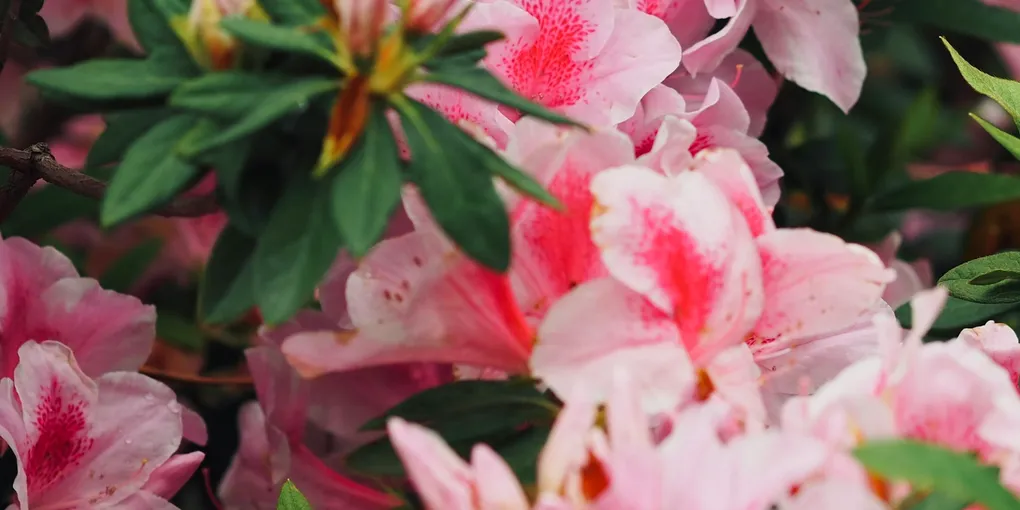
How to Care for an Azalea
Potted florist azaleas (Rhododendron simsii) show up everywhere around the holidays and in early spring, covered in ruffled blooms, then often get tossed once the flowers drop because people assume they’re disposable. They’re not — with the right conditions an azalea can rebloom for years. The catch is that azaleas are genuinely fussier than most houseplants about two things: soil acidity and water quality. Get those right and the rest of the care is fairly ordinary.
Light
Azaleas want bright, indirect light — near an east or north-facing window, or a few feet back from a brighter south or west one. Direct sun through glass scorches the flowers and leaves; too little light leads to sparse growth and fewer blooms next season. See how much light do houseplants actually need for a rundown on reading light levels by eye. In summer, azaleas do well moved outdoors to a shaded or dappled spot — the extra brightness compared to indoors helps set buds for the next bloom cycle.
Watering
Keep the soil consistently moist — never bone dry, never waterlogged. Azaleas have shallow, fine roots that dry out fast and don’t tolerate either extreme. Check the top inch of soil and water once it starts to feel dry rather than sticking to a fixed schedule; see watering houseplants the right way for that approach in general.
Water quality matters more here than with almost any other common houseplant. Azaleas are sensitive to the chlorine, fluoride, and dissolved minerals in tap water, which build up in the soil over time and show up as browned leaf tips or a slow decline. Rainwater or distilled water is ideal; if you only have tap water, let it sit out uncovered overnight so chlorine can dissipate. This is one of the few houseplants where hard tap water causes real problems rather than just a cosmetic mineral crust — see hard water vs. soft water for houseplants and best water for houseplants if yours runs hard.
Soil and pot
This is the detail that trips up most people new to azaleas: they need acidic soil, roughly pH 4.5 to 6.0, well below the range most houseplants tolerate. Standard all-purpose potting mix is usually too close to neutral and will hold the plant back even if light and water are otherwise fine. Use a mix formulated for azaleas, camellias, and rhododendrons, or build your own from equal parts peat moss (or coco coir) and pine bark fines with a handful of perlite for drainage. Whatever mix you use, the pot needs a drainage hole — azalea roots rot easily in saturated soil.
Soil pH and fertilizing
Because azaleas need acidic soil to absorb iron and other nutrients properly, a mix that drifts toward neutral pH causes yellowing leaves even when nutrients are technically present — the plant just can’t take them up. Feed with a fertilizer formulated for acid-loving plants during active growth in spring and summer, and skip feeding while the plant is in bloom or dormant. See how to choose the right fertilizer for matching a formula to a plant’s needs. If leaves yellow between the veins despite regular feeding, the soil has likely drifted too alkaline — a diluted acidifying feed or repotting into a fresh acidic mix corrects it.
Humidity
Moderate humidity, roughly 40-50%, keeps an azalea comfortable. Average home humidity is usually adequate; dry winter heating can cause crispy leaf edges and shortened bloom life. A pebble tray or humidifier helps in dry rooms — just avoid sealing the plant into stagnant, poorly ventilated air, which invites fungal problems on top of consistently moist soil.
Toxicity
Azaleas are seriously toxic to both pets and people if eaten, not just mildly irritating like many common houseplants. Every part of the plant contains grayanotoxins, which can cause vomiting, drooling, weakness, and in significant ingestions, heart rhythm problems and seizures. Keep an azalea well out of reach of curious cats, dogs, and small children, and consider skipping it entirely where that’s hard to guarantee — see pet-safe houseplants for cats and dogs for safer alternatives.
Common problems
Yellow leaves with green veins point to iron deficiency from soil that’s too alkaline — common with ordinary potting mix or hard tap water over time. Repot into an acidic mix and switch to rainwater or distilled water.
Brown, crispy leaf tips usually trace back to mineral buildup from tap water, low humidity, or both. Flush the soil occasionally with distilled water and raise humidity if the air is dry.
Flowers dropping quickly or failing to open often follows a sudden change in environment — a cold draft, a hot dry room, or a move right as buds were forming. Azaleas prefer stable, cool-ish conditions (around 60-65°F) while in bud and bloom.
Wilting despite moist soil signals root rot from soil that stayed too wet for too long. Check that the pot drains freely and ease back on watering; badly affected roots may need trimming at repotting.
No new blooms after the first flush usually means the plant didn’t get a cool rest period — azaleas need several weeks of cooler temperatures to set buds for the next bloom cycle, which a shaded spell outdoors over summer helps provide.