How to Choose the Right Fertilizer for Houseplants
Picking a fertilizer is a different question than how often to use it — that’s a timing question, this one is about what actually goes in the bottle or bag. Get the product right first, and the schedule is easy to figure out from there.
What the numbers on the label mean
Every fertilizer lists three numbers, something like 10-10-10 or 20-10-10. That’s the NPK ratio, and it stands for:
- Nitrogen (N) — drives leafy green growth. This is what most foliage houseplants (pothos, philodendron, monstera, ferns) are using the most.
- Phosphorus (P) — supports root development and flowering.
- Potassium (K) — supports overall plant health and resistance to stress.
For most foliage houseplants, a balanced ratio like 10-10-10 or 20-20-20 covers what the plant needs. If you’re growing something that flowers — a peace lily, an orchid, an African violet — a formula with a higher middle number (more phosphorus, like 10-30-20) will support blooming better than a balanced one. Outside of bloomers, don’t overthink the ratio. A balanced, general-purpose fertilizer is the right default.
Liquid, granular, or organic
- Liquid fertilizer is diluted into water and applied when you water. It’s fast-acting and lets you control the dose precisely, which makes it the easiest option to get right — and the easiest to correct if you get it wrong. This is the best starting point if you’re new to fertilizing.
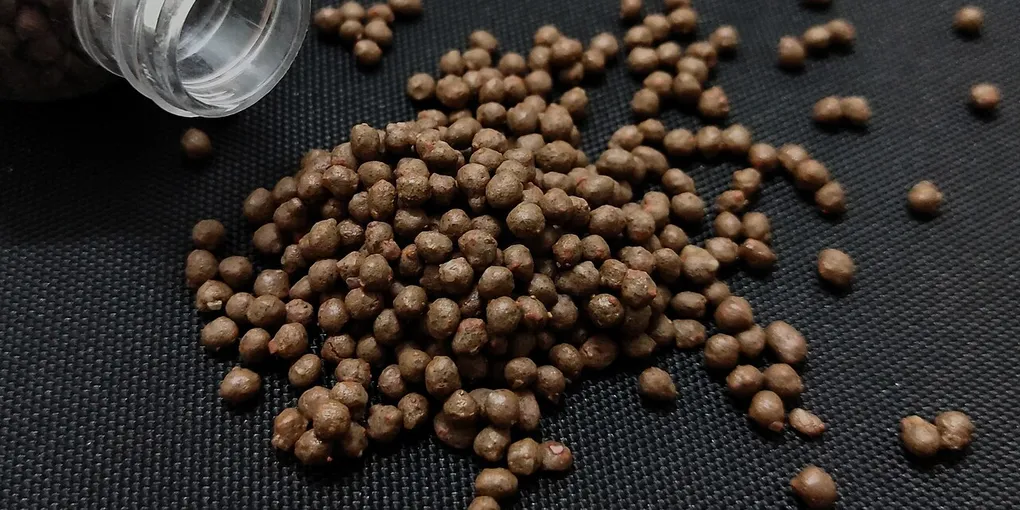
- Slow-release granules or spikes get mixed into the soil or pushed into the pot and feed the plant gradually over weeks or months. Low effort, since you’re not mixing anything at watering time, but harder to adjust once they’re in the soil — you can’t easily reduce the dose partway through.
- Organic options like compost or worm castings release nutrients slowly and gently. They’re lower-risk for root burn than synthetic fertilizers, but the nutrient content is less precise and harder to dial in for a specific plant’s needs.
None of these is objectively “best” — liquid gives you the most control, granules give you the least hassle, and organic gives you the lowest risk. Pick based on how closely you want to manage feeding, not brand marketing.
Reading the label and diluting correctly
Fertilizer labels are usually written for garden beds and outdoor containers, not a 6-inch pot with a fraction of the soil volume. If you follow the label’s full-strength instructions on a houseplant, you’re very likely overfeeding it.
- Look for the dilution ratio (often something like “1 tsp per gallon”) and mix to half that strength for houseplants as a safe default.
- Check whether the fertilizer is meant to be applied at every watering or only periodically — some liquid formulas are diluted weak enough to use every time, others are concentrated and meant for occasional use only.
- If a granular product lists a feeding duration (“feeds for up to 3 months”), don’t add more until that window has actually passed, even if the plant looks like it could use a boost.
More fertilizer doesn’t mean faster growth
This is the mistake that causes the most damage: assuming that if a little fertilizer helps, more must help faster. It doesn’t. Plants can only take up nutrients at a certain rate, and everything beyond that just accumulates in the soil as excess salts.
Signs of salt buildup from over-fertilizing:
- Crispy, browned edges or tips on leaves, even when the soil is moist
- A white or crusty film forming on the soil surface or around the drainage holes
- Wilting despite the plant being watered on schedule
If you see this, stop fertilizing and flush the pot — run plain water through the soil several times, letting it drain fully each time, to wash out the built-up salts. In more severe cases, or if the buildup has been going on for months, repotting into fresh soil is faster than trying to flush your way out of it.
The safest approach is to under-fertilize slightly and watch the plant. A slightly underfed plant just grows a bit slower. An overfed one is dealing with actual chemical damage to its roots, and that takes real time to recover from.