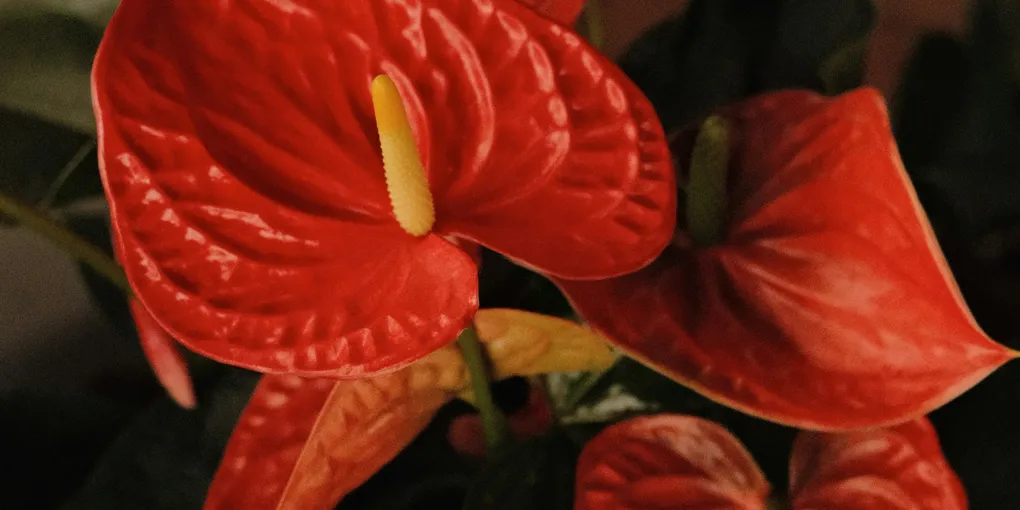
How to Care for an Anthurium
Anthuriums are grown for one thing: those glossy, heart-shaped spathes in red, pink, white, or near-black that look almost artificial. They aren’t petals and they aren’t technically flowers — but they’re the reason this plant is such a popular gift, and the reason people get frustrated when a healthy-looking plant stops producing them. The good news is anthurium care is fairly straightforward once you get the light and watering right.
Light
Bright, indirect light is what keeps an anthurium blooming. A spot near an east-facing window, or a few feet back from a south- or west-facing one, works well. Too little light and the plant will survive but rarely flower — the same tradeoff you see with a peace lily, another aroid that will hang on in a dim corner without ever rewarding you with blooms. Direct, hot sun will scorch the leaves and bleach the spathes, so avoid an unfiltered south window in summer.
Watering
Let the top inch or two of soil dry out before watering again. Anthuriums are epiphytes in the wild, growing on trees with roots exposed to air, so they don’t want to sit in constantly soggy soil any more than a pothos does. Water thoroughly until it runs from the drainage hole, then wait. Consistently wet soil is the fastest way to rot the roots; consistently bone-dry soil for extended periods will cause the leaves to droop and the spathes to shrivel early. If you’re unsure whether a drooping plant needs water or is already overwatered, overwatering vs. underwatering walks through how to tell the difference.
Soil and pot
Because of those aerial-root habits, anthuriums do best in a chunky, fast-draining mix rather than dense potting soil. A blend of standard potting mix with orchid bark, perlite, and a bit of charcoal mimics the loose, airy material they’d grip onto in the wild. If you’re building your own mix rather than buying one labeled for aroids, see the best soil mix for houseplants for a starting ratio you can adjust. Always use a pot with a drainage hole — this plant does not tolerate standing water at the roots.
Humidity
Anthuriums come from humid tropical forests and prefer humidity above what most homes offer naturally. Low humidity shows up as brown, crispy leaf edges and slower growth. It won’t kill the plant outright, but if you want fuller leaves and better bloom production, raise the humidity around it — a pebble tray, grouping plants together, or a small humidifier all work. Increasing humidity for houseplants covers the options in more detail.
Getting it to rebloom
This is the question most anthurium owners eventually have: the plant looks fine, but the spathes have stopped coming. A few things drive reblooming more than anything else:
- Light. This is the single biggest lever. An anthurium in medium or low light will put out leaves indefinitely without ever spiking a new bloom. Move it closer to a bright window before changing anything else.
- Fertilizer. Anthuriums are relatively heavy bloomers and benefit from a phosphorus-leaning fertilizer during the growing season to support flower production, rather than one that’s mostly nitrogen. Feed every 4-6 weeks in spring and summer and taper off in winter. See how often to fertilize houseplants and choosing the right fertilizer if you’re not sure what you’re currently using.
- Maturity and root space. A rootbound anthurium in a pot that’s too small will slow down on blooming. If it’s been in the same pot for a couple of years, check the roots and size up if needed.
- Patience. Individual spathes last for weeks to a couple of months before fading and can be snipped off at the base once they brown. A healthy, well-lit, fed plant will send up new blooms on and off through the growing season rather than all at once.
If you’ve addressed light and feeding and still see nothing, rule out temperature stress — anthuriums dislike being near cold drafts, air conditioning vents, or heating registers, all of which can stall flowering even when everything else looks right.
Toxicity
Anthuriums contain calcium oxalate crystals, the same compound responsible for the mouth and stomach irritation caused by a peace lily. They’re toxic to cats, dogs, and people if chewed, so keep them out of reach of curious pets. If you’re stocking a pet-friendly home, pet-safe houseplants has a list of safer alternatives.
Common problems
Yellowing leaves usually mean overwatering — check that the soil isn’t staying wet and that the pot drains freely. If it’s not watering, see why plant leaves turn yellow for other causes.
Brown, crispy leaf tips point to low humidity, or occasionally a buildup of minerals from tap water. Try filtered water and raise the humidity around the plant.
No new spathes almost always comes back to insufficient light, followed by a lack of feeding during the growing season. Fix light first.
Soft, mushy stems near the soil line signal root rot from overly wet, poorly draining soil. Unpot and check the roots — see identifying and fixing root rot for how to recover a plant that’s already affected.
Anthuriums are less demanding than their showy blooms suggest. Give one bright indirect light, water only once the soil has dried a bit, keep the humidity reasonable, and feed it through the growing season — the spathes will keep coming.