How to Care for a Crown of Thorns
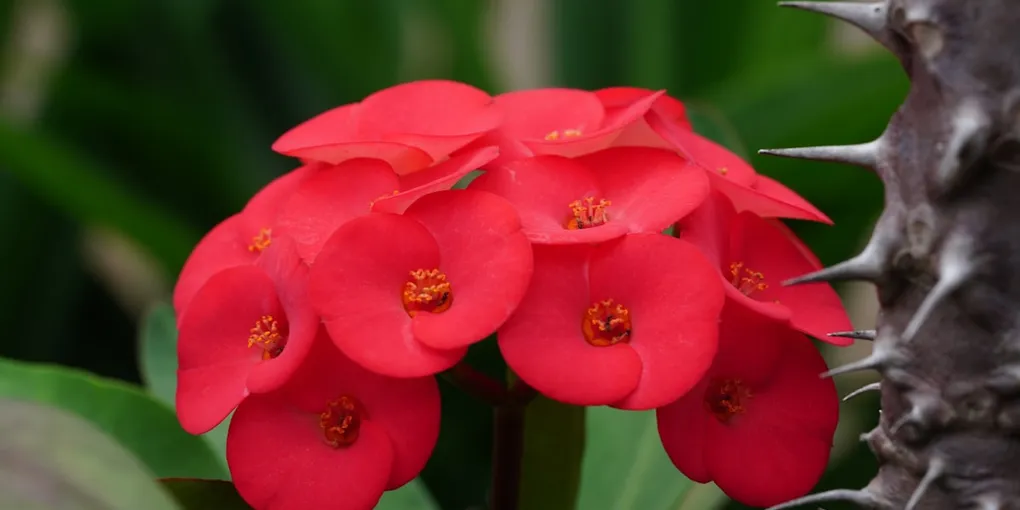
Crown of thorns (Euphorbia milii) is a woody, thorn-covered succulent shrub that produces small flowers in red, pink, yellow, or white for most of the year if it gets enough light. The thorns along its stems are the obvious hazard, but they’re not the only one — the milky sap inside the stems and leaves is a skin and eye irritant, which changes how you should handle pruning, propagation, and placement around kids and pets. Otherwise, this is an easygoing, drought-hardy plant that thrives on the same kind of light-and-neglect regimen as most succulents.
Light
Give crown of thorns as much direct sun as you can — a south- or west-facing window is ideal, and this plant does well outdoors in full sun during the warmer months too. Flowering is directly tied to light: in bright conditions, it can bloom nearly continuously, but in a dim corner it will stop flowering and eventually get sparse and leggy. If your space doesn’t get much natural sun, see how much light do houseplants need for how to judge whether a spot is bright enough, or consider a grow light to keep the blooms coming through winter.
Watering
Let the soil dry out completely between waterings, then water thoroughly and let it drain — the same rule that governs most succulents, discussed in more depth in how to care for succulents. Crown of thorns stores water in its thick stems and tolerates drought well, so when in doubt, wait. Cut back further in winter, when growth slows and the plant needs even less. Root rot from soil that stays wet is a far more common problem than underwatering, and the symptoms of each can look similar at first glance — see overwatering vs. underwatering houseplants if you’re not sure which one you’re dealing with.
Soil and pot
Plant crown of thorns in a fast-draining cactus or succulent mix, or amend a standard potting mix with extra perlite or coarse sand — see the best soil mix for houseplants for how to adjust the ratio. A pot with a drainage hole is essential, since this plant’s roots rot quickly in soil that holds moisture. Terracotta is a good choice, both for the extra drainage and because it adds weight that helps balance a top-heavy, thorny plant.
Fertilizing
Feed with a balanced liquid fertilizer diluted to half strength during spring and summer, roughly once a month, to support steady growth and flowering. Skip fertilizing in fall and winter when the plant is growing slowly or not at all — feeding a dormant plant does more harm than good and can burn the roots.
Toxicity
Crown of thorns is toxic to both people and pets, and the danger isn’t limited to the thorns. The milky white sap inside the stems and leaves is the bigger issue — it’s a skin and eye irritant on contact and causes nausea, vomiting, and mouth or throat irritation if ingested. Wear gloves when pruning or repotting, avoid touching your face until you’ve washed your hands, and keep the plant well out of reach of pets and small children. If you need a spiky-looking plant without a toxic sap risk, browse pet-safe houseplants for cats and dogs for safer alternatives.
Common problems
Dropping leaves is often normal — crown of thorns naturally sheds older leaves along the lower stem as it grows, especially in low light or during winter dormancy. It’s only a concern if the plant is dropping leaves rapidly along with shriveling stems, which points to underwatering, or soft, discolored stems, which points to rot from overwatering.
No flowers almost always comes down to insufficient light. Move the plant to the brightest spot you have, ideally with several hours of direct sun, and blooming should pick back up within a few weeks.
Soft or blackened stem bases are a sign of root rot from soil that isn’t draining or drying out between waterings. Pull the plant from its pot, trim away any mushy roots or stem tissue, and repot into fresh, dry succulent mix.
Sap contact irritation — redness, stinging, or a rash on skin that touched a broken stem or leaf — should be rinsed off promptly with soap and water. If sap gets in the eyes, flush with water right away and seek medical attention if irritation persists.