How to Care for a Guzmania
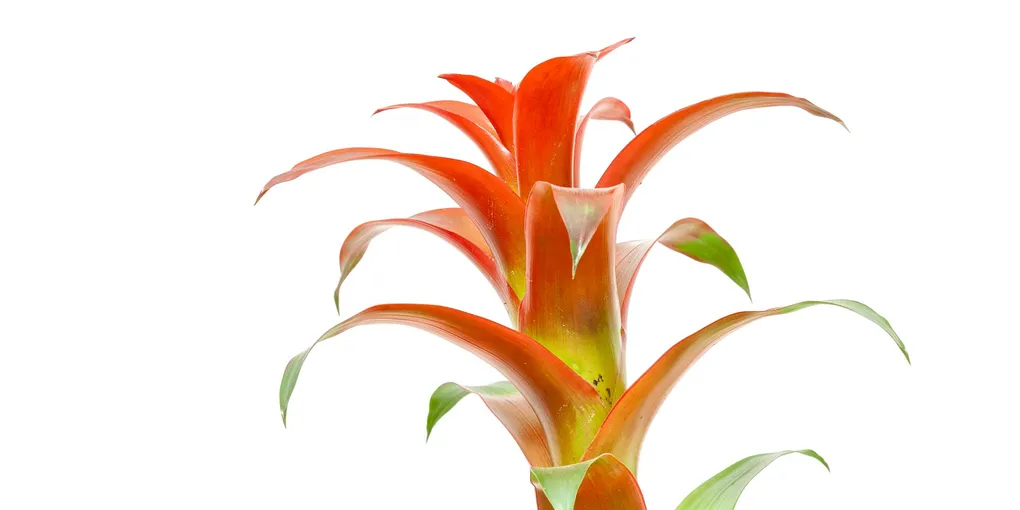
Guzmania is the bromeliad most people picture when they think “bromeliad” at all — a rosette of smooth, strap-like green leaves with a star-shaped spike of bright red, orange, yellow, or pink rising from the center. That spike isn’t a flower in the usual sense; it’s a cluster of bracts (modified leaves) surrounding the true flowers, which are small and easy to miss. The payoff is that the bracts hold their color for months, far longer than an actual flower would, which is why Guzmania shows up everywhere from grocery store checkouts to office lobbies. If you’ve grown other bromeliads before, most of the general habits carry over, but Guzmania has a few quirks — and a very specific end-of-life pattern — worth knowing before you buy one.
Light
Guzmania wants bright, indirect light and tolerates lower light better than most flowering houseplants. An east-facing window, or a spot a few feet back from a south- or west-facing one, works well. Avoid direct sun through glass, which scorches the leaves and can bleach the bract’s color faster than normal. If your Guzmania is in a dim corner it won’t die quickly, but new growth will be weaker and a replacement pup is less likely to rebloom well down the line. See how much light do houseplants need if you’re not sure how your space measures up.
Watering
Like other tank bromeliads, Guzmania collects water in the cup formed at the base of its leaves, and that cup — not the soil — is the plant’s main water source. Keep it filled with an inch or so of water, and every 1-2 weeks tip it out completely and refill with fresh water rather than just topping it off. Standing water that never gets refreshed turns stagnant and is the most common cause of rot in this plant. Use room-temperature water; cold water straight into the cup can shock the plant, especially in a cool room.
The potting mix should stay just barely moist and is genuinely secondary — Guzmania’s roots exist mostly to anchor the plant rather than draw up water, so a light watering every week or two is usually plenty. If you want a broader refresher on getting watering rhythm right across your collection, see watering houseplants the right way.
Soil and pot
Because the roots aren’t doing much absorbing, Guzmania doesn’t need rich, moisture-retentive soil. A chunky, fast-draining mix — orchid bark and perlite blended with a little standard potting soil, or a bagged bromeliad mix — suits it better than dense potting soil, which stays wet around roots that aren’t built to handle it. Use a pot with drainage, and don’t rush to size up: Guzmania is usually sold in a pot that already fits, since the root mass stays small relative to the leaves.
Humidity
Guzmania comes from humid tropical forests and looks better with humidity above typical indoor levels, especially in winter when heating dries the air. It will survive average home humidity, but the leaf tips are more likely to brown and the bract color can look duller when the air is very dry. A bathroom with good light, a pebble tray, or a small humidifier all help — see how to increase humidity for houseplants for practical setups.
Toxicity
Guzmania is non-toxic to cats and dogs, making it a good pick if you want long-lasting color in a home with curious pets. See pet-safe houseplants for cats and dogs for more options.
After it blooms: pups and replacement
This is the single most important thing to understand about growing Guzmania: each rosette produces exactly one bract, and once that rosette has bloomed, it will never bloom again. The color can last three to six months, sometimes longer, but the mother plant itself is done — it will slowly yellow, dry out, and decline over the following months no matter how well you care for it. That’s normal biology, not a care failure.
Before it fades, the mother rosette puts its remaining energy into producing offsets, or “pups,” that sprout around its base. Let a pup grow to about a third to half the size of the parent — this usually takes several months — then cut it away cleanly with its own small root system and pot it in a fresh chunky mix. It will eventually mature and produce its own bract. You can also leave pups in place to form a fuller, multi-rosette clump instead of separating them. Either way, don’t discard the whole plant once the mother rosette starts browning; check for pups first; they’re usually already growing by the time the bract begins to fade, and they’re what carries the plant forward.
Common problems
Rot at the base or center almost always comes back to the cup — stagnant water that’s gone too long without a flush, or cold water added in a cool room. The center turns mushy and dark and can pull loose easily. Flushing and refilling the cup every 1-2 weeks is the main prevention.
Brown, crispy leaf tips usually point to low humidity or mineral buildup from hard tap water sitting in the cup too long. Flush the cup more often, and consider filtered or distilled water if your tap water is heavily mineralized — see best water for houseplants for which sources cause the most buildup.
The bract fading and the leaves browning isn’t a problem — it’s the rosette reaching the end of its one bloom cycle. Check the base for pups before assuming anything has gone wrong, and trim the old rosette away once it’s fully brown and dry.
No bract, or a rosette that never blooms, is usually a young pup that simply hasn’t matured enough yet, or a plant that’s not getting enough light. Be patient with a newly separated pup, and make sure it’s in a bright enough spot to eventually flower on its own timeline.