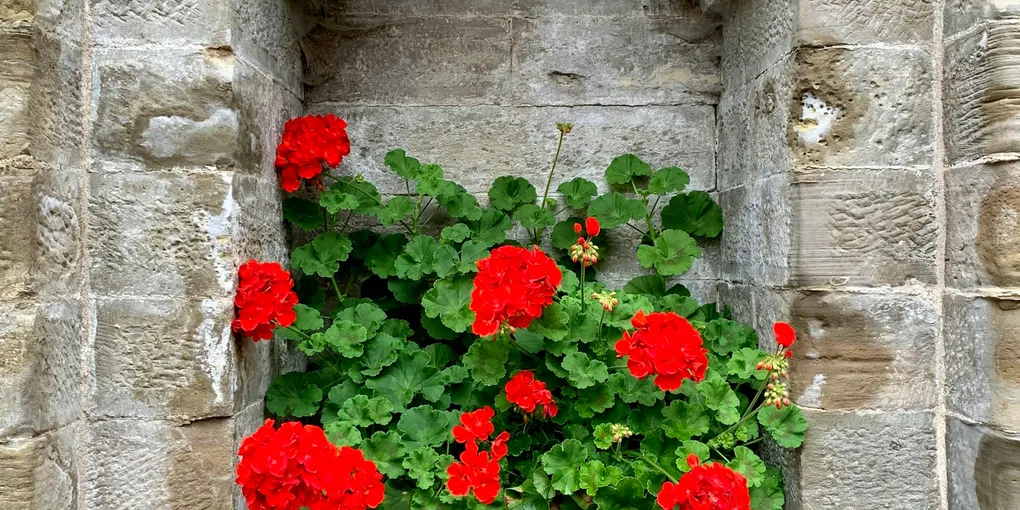
How to Care for a Geranium
Geranium is the common name for Pelargonium, the sun-loving flowering plant you see filling window boxes and porch pots all summer. It’s not related to the hardy garden perennial botanists actually call Geranium, but it’s the one nearly everyone means when they say the word. Grown indoors or moved outdoors seasonally, it rewards strong light and a bit of neglect with near-constant clusters of red, pink, salmon, or white flowers.
Light
Geraniums need as much direct sun as you can give them — a south- or west-facing window with at least 4-6 hours of direct light daily is close to ideal. This is one of the few common houseplants that genuinely wants full sun rather than bright indirect light. Too little light produces a plant that survives but barely flowers, with thin, stretched stems reaching toward the window. For a broader sense of how light requirements vary between plants, see how much light do houseplants actually need. Many people move potted geraniums outdoors for summer to get sun exposure a window can’t match — see moving houseplants outdoors for summer for making that move without shocking the plant.
Watering
Geraniums are drought-tolerant and much happier running slightly dry than sitting wet. Let the top 1-2 inches of soil dry out completely before watering again, then water thoroughly until it drains from the bottom of the pot. Overwatering is the most common way people kill a geranium — soggy soil leads to yellowing lower leaves, soft stems, and root rot fairly quickly. For judging by soil feel rather than a fixed calendar, see watering houseplants the right way.
Soil and pot
Use a well-draining potting mix — a standard mix cut with some perlite or coarse sand works well, since heavy, moisture-retentive soil is exactly what geraniums don’t want around their roots. The pot needs a drainage hole; without one, water has nowhere to go and root rot follows fast. Terracotta is a particularly good match, since the porous material wicks away excess moisture and dries out faster than plastic or glazed ceramic — reinforcing the dry-between-waterings routine this plant prefers.
Humidity
Ordinary home humidity is fine — geraniums don’t need any special humidity boost and actually do better with good airflow than with the still, moist air that helps tropical foliage plants. Damp, stagnant conditions around the leaves and stems tend to invite fungal problems, so avoid crowding geraniums tightly with humidity-loving plants or running a humidifier nearby.
Deadheading and pruning
Deadheading — pinching or snipping off spent flower clusters as soon as they fade — is what keeps a geranium blooming steadily instead of stalling out. Spent blooms left in place put energy into seed production instead of new flowers, so removing them redirects the plant’s energy toward the next flush. Pinch off the entire flower stalk down to where it meets the main stem, not just the faded petals.
Beyond deadheading, pinch back leggy stems periodically to keep the plant bushy and compact — geraniums left unpruned get woody and sparse at the base with growth concentrated at the tips. Cut just above a leaf node and the plant will branch out below the cut. See how to prune houseplants for technique, and how to fix a leggy houseplant if a plant has already gotten thin and stretched.
Toxicity
Geraniums are mildly toxic to cats and dogs — the compounds geraniol and linalool in the foliage can cause vomiting, lethargy, and skin irritation if chewed. It’s not usually life-threatening, but keep pots out of reach of pets that chew on leaves, or choose from pet-safe houseplants for cats and dogs for spaces where pets roam freely.
Common problems
Yellowing lower leaves are the classic sign of overwatering. Check that the soil is actually drying out between waterings and that the pot drains freely before assuming any other cause.
Few or no flowers almost always comes down to insufficient light. A geranium kept in a dim corner or a north-facing window will grow but rarely bloom — move it somewhere it gets several hours of direct sun.
Leggy, sparse growth with bare lower stems happens when light is too low or the plant hasn’t been pinched back. Both more sun and regular pruning help correct it over time.
Fuzzy gray mold on stems or flowers (botrytis) develops in damp, poorly ventilated conditions, often after overwatering or crowding plants together. Remove affected parts, cut back on watering, and improve airflow around the plant.
Aphids are drawn to the soft new growth and flower buds geraniums produce, especially outdoors in summer. See how to get rid of aphids on houseplants for how to clear an infestation before it spreads to flower buds.