How to Get Rid of Aphids on Houseplants
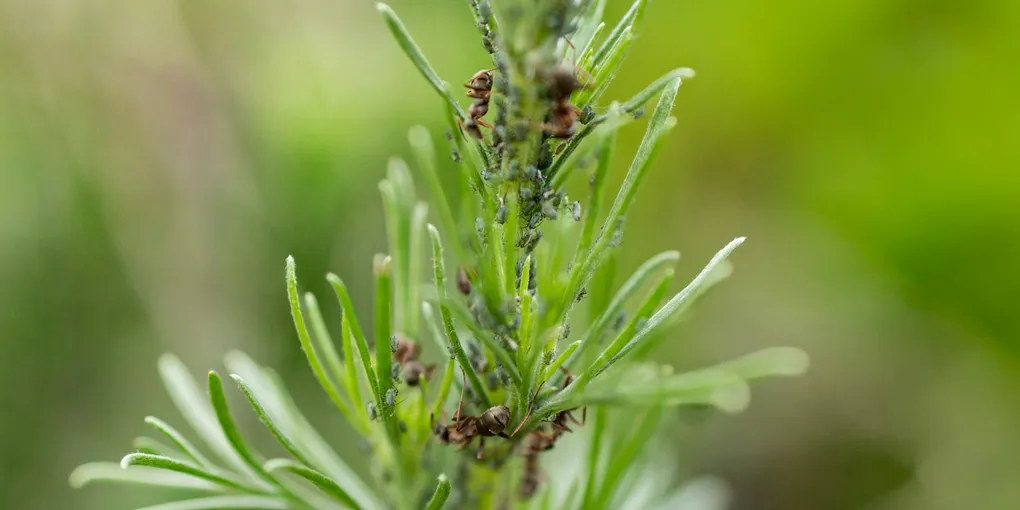
Aphids are one of the easier houseplant pests to spot once you know what you’re looking for, and one of the easier ones to clear up too — provided you catch them before they’ve built up a large colony. They cluster in the open rather than hiding, which works in your favor.
What aphids are
Aphids are small, soft-bodied insects, usually under a quarter inch long, that feed by piercing plant tissue and sucking out sap. They come in green, black, brown, or even pink depending on the species, and they reproduce fast — a few aphids on Monday can be a visible colony by the weekend, since females can give birth to live young without even mating.
How to identify them
Clusters on new growth and buds are the classic sign. Aphids favor the softest, most tender parts of a plant — new leaves, stem tips, and flower buds — because that tissue is easiest to feed on. Check those spots first.
A sticky residue on leaves, called honeydew, is aphid waste. It’s a sugary byproduct of all the sap they’re processing, and it often shows up on leaves before you notice the insects themselves, especially on leaves lower down that catch drips from an infested growth tip above.
Sooty mold sometimes follows honeydew — a black, powdery film that grows on the sugary residue rather than on the plant itself. It looks alarming but is really just a sign that honeydew has been sitting for a while.
Distorted or curled new growth can result from heavy feeding on young leaves before they’ve fully expanded, similar in appearance to some of the other causes covered in why are my houseplant’s leaves curling — aphids are worth ruling out first if the curling is concentrated on the newest growth.
Why they show up
Aphids are drawn to soft, nitrogen-rich new growth, which is part of why plants that have just been fertilized or are pushing a flush of new leaves can attract them more than a slow-growing plant. See how often to fertilize houseplants if you suspect overfeeding is behind an unusually soft, lush growth spurt. They also commonly hitch a ride indoors on a new plant, a bouquet of cut flowers, or a plant that spent time outside on a porch or balcony over summer.
How to get rid of them
Blast them off with water first. For a light infestation, a firm spray from a sink sprayer or in the shower physically removes a large share of the aphids, especially from stem tips and the undersides of leaves.
Wipe or pinch off heavily infested growth. If a single stem tip or bud is covered, it’s often faster to remove that section entirely than to try to clean every insect off it individually.
Treat with insecticidal soap or neem oil. Spray thoroughly, covering stem tips, leaf undersides, and buds — the same contact-based approach used for mealybugs and scale insects. Both need to touch the insect to work, so thorough coverage matters more than the specific product.
Repeat every 5-7 days for two to three rounds. One spray knocks back the visible population, but eggs and any aphids you missed will rebuild it within a week if you stop there.
Rinse off honeydew and sooty mold with a damp cloth once the aphids are under control. Neither one comes back on its own once the insects producing the honeydew are gone.
How to prevent them coming back
Inspect new plants and cut flowers before bringing them near your existing collection, and check plants that have spent time outdoors carefully before bringing them back in for the season. The same inspection habit helps catch other sap-suckers early too, like whiteflies. Avoid overfertilizing, since aphids are drawn to the soft, nitrogen-heavy growth that heavy feeding produces. If ants are showing up alongside the aphids, deal with both together — ants actually farm aphids for their honeydew and will protect a colony from predators, so an ant trail on a plant is often your first clue that aphids are already there. For the broader picture on what else might be bothering your plants, see common houseplant pests and how to get rid of them.
Caught early, aphids are one of the more manageable pests to deal with — a couple of rounds of soap or neem spray usually clears them for good, especially compared to the persistence needed for something like spider mites.